Turning Senior Engineers' Expertise into a Knowledge Base: First-Contact Resolution Up About 15 Points
A company providing technology products and long-term support to business customers organized its product documentation and historical tickets into a reviewed, permission-controlled knowledge search with source citations. First-contact resolution rose by about 15 percentage points, and onboarding time for new staff shortened significantly.
A company providing technology products and long-term after-sales support to business customers had built up a large body of customer issues, product documentation and technical solutions.
Yet customer service still depended heavily on a handful of senior employees.
When new staff ran into a problem, they had to search back and forth through old emails, chat groups, the internal wiki and product documentation.
Even if a customer had raised the same question before, a different employee might investigate it all over again.
The company had a wealth of experience, but had not turned it into a stable, maintainable body of organizational knowledge.
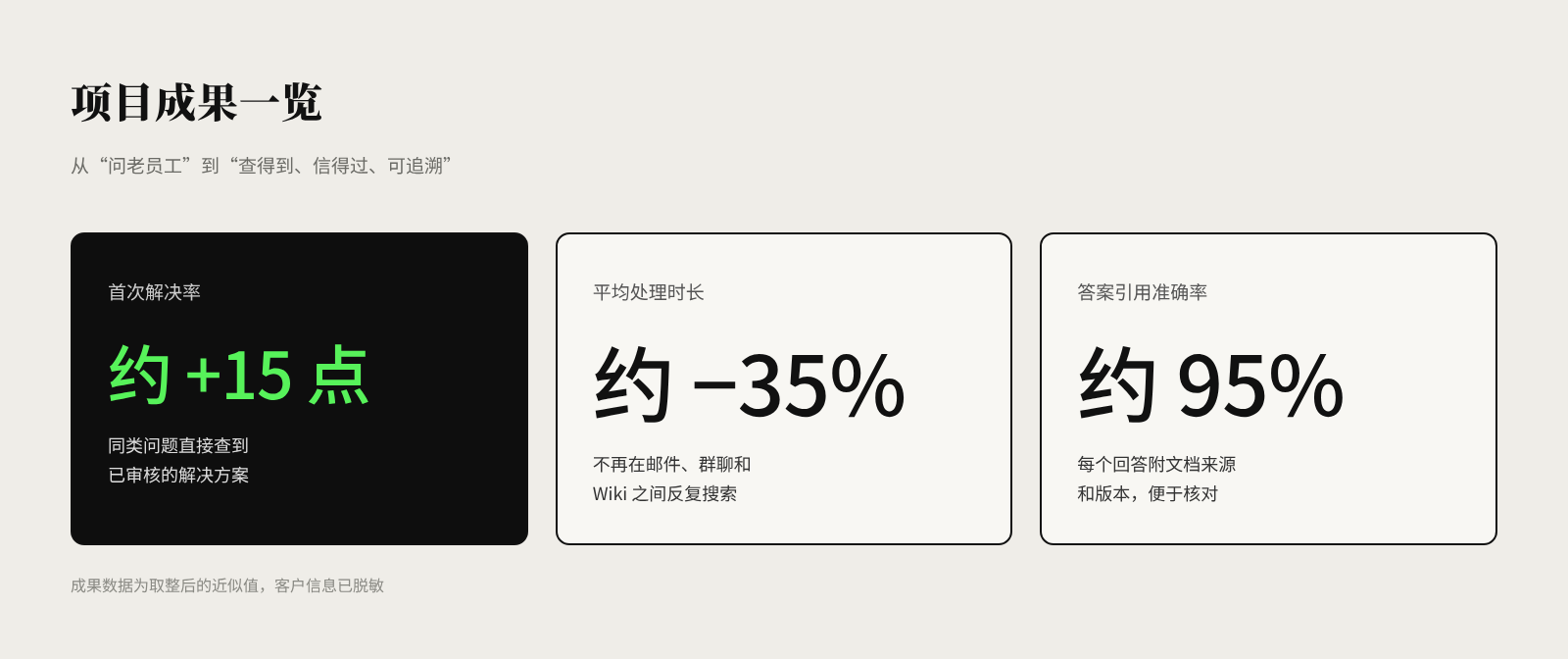
Project results: first-contact resolution about +15 points; average handling time about −35%; answer citation accuracy about 95%
The challenge
Scattered knowledge sources
Product manuals, technical solutions, operating procedures and past customer cases were stored in different tools.
Without unified classification and version control, staff found it hard to tell which document was the latest.
Customer issues were disconnected from knowledge assets
The ticketing system recorded problems and resolutions, but these were never consistently distilled into reusable standard solutions.
Direct AI search could create permission risks
Information about different customers could be commercially sensitive, and some internal documents should not be open to all employees.
Without access controls, a unified knowledge search could risk information leaks.
SHEPHARD's digital solution
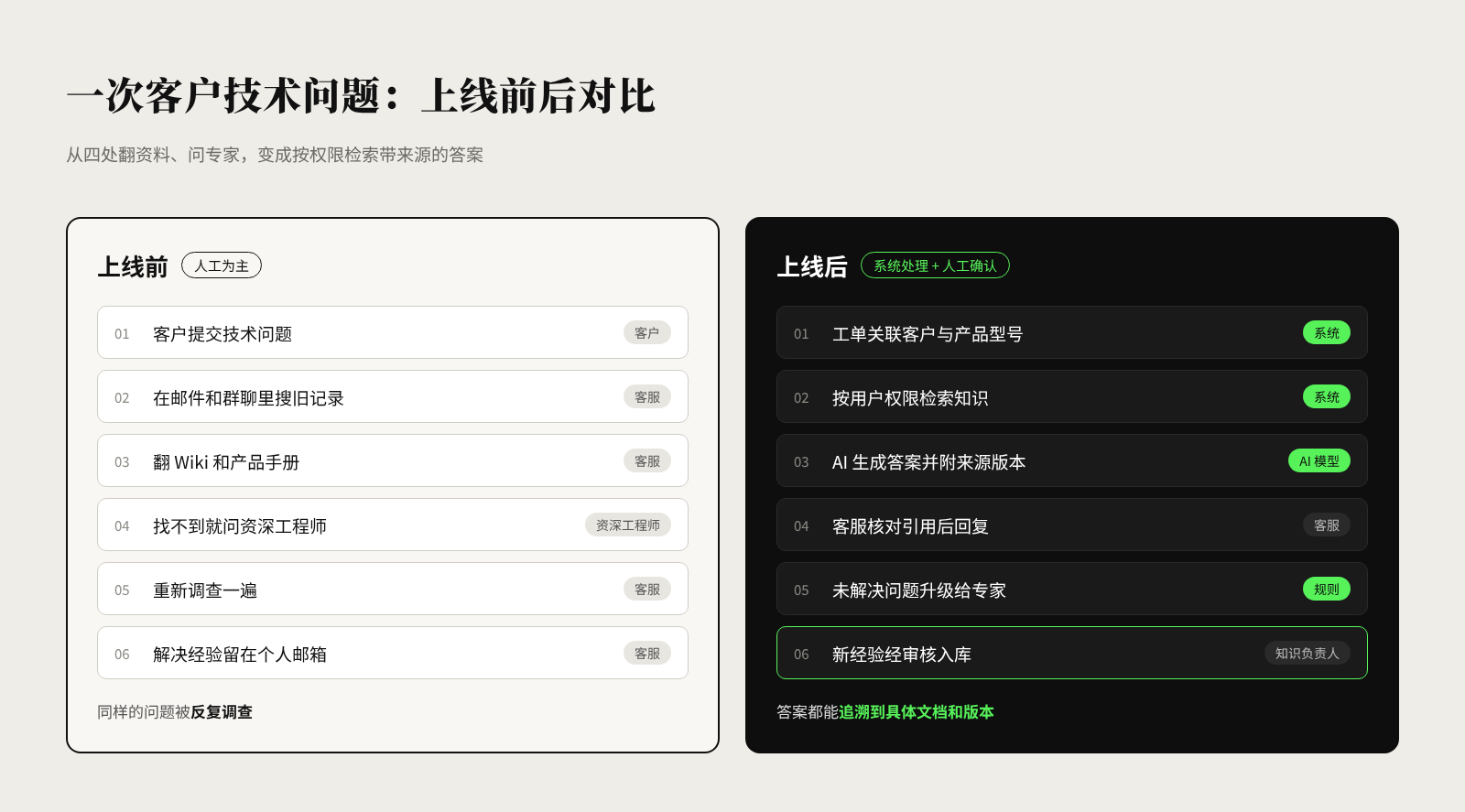
A customer technical issue: before and after go-live
Step 1: Take inventory of knowledge assets
We identified product documentation, standard operating procedures, historical tickets, customer service records and internal technical documents.
These were classified by knowledge type, product version, applicable customer and business scenario.
Step 2: Establish knowledge governance
Each piece of knowledge content has an owner, a scope, a version, a review status and an expiry date.
Valuable resolution experience from historical tickets becomes a formal knowledge article only after review.
Outdated or superseded documents are clearly marked so they are no longer used as a basis for current work.
Step 3: Build permission-aware knowledge search
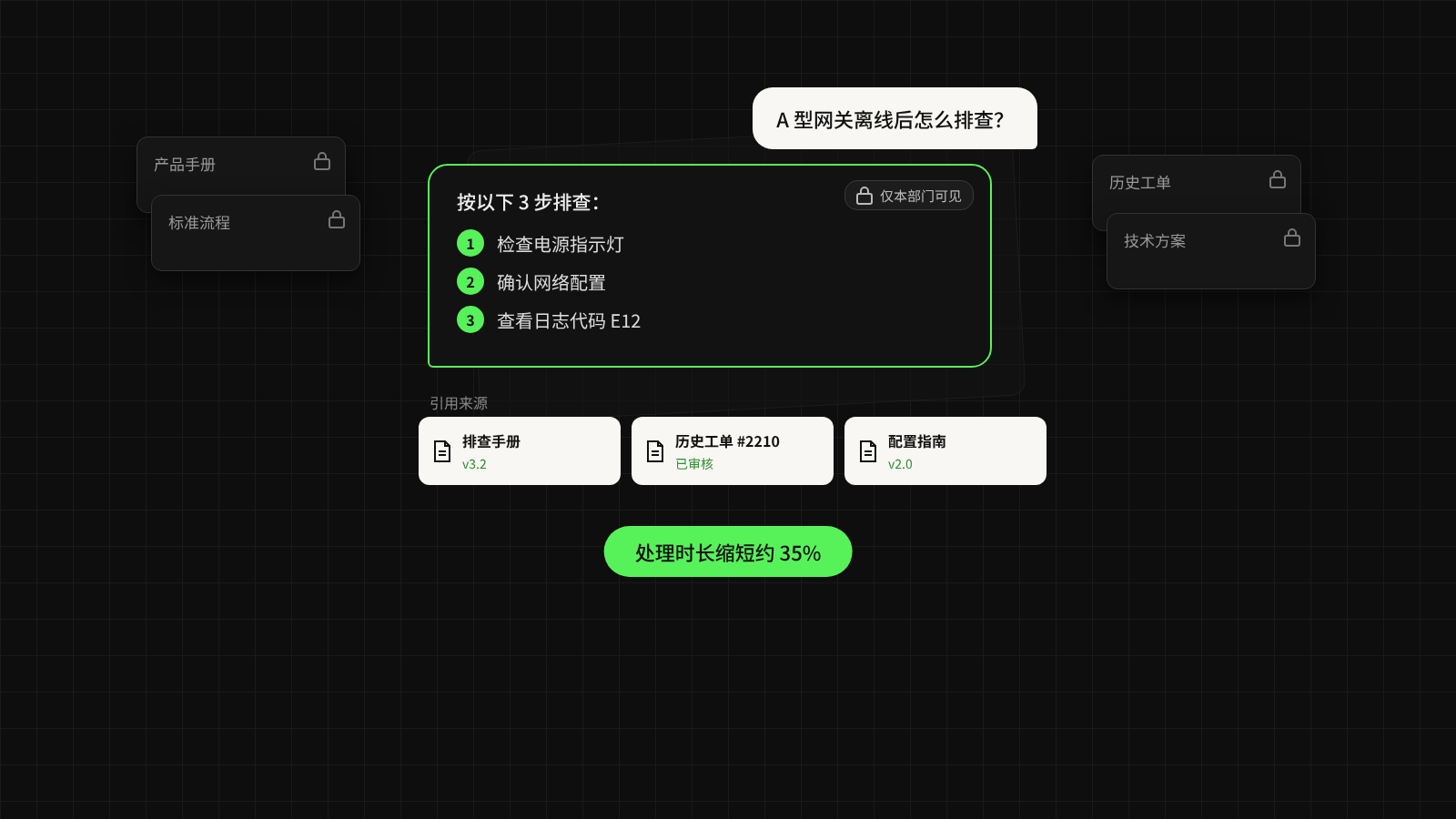
Combining structured search with RAG (retrieval-augmented generation), employees can query internal knowledge in natural language.
Search inherits each user's access rights, restricting access to information across customers and departments.
AI answers come with the corresponding document sources and version information, making human verification easy.
Step 4: Connect CRM and service tickets
The system retrieves relevant solutions based on the current customer, product model, issue type and service history.
Support agents can see similar cases, standard troubleshooting procedures and points to watch directly.
Step 5: Continuously improve knowledge
The system records which issues can be resolved with existing knowledge and which still need escalation to experts.
Frequently unresolved issues are fed back to knowledge owners, who keep adding to and revising the content.
For actions with clear authorization and verifiable rules, knowledge search can be further connected to business tools, while high-risk actions still require human approval.
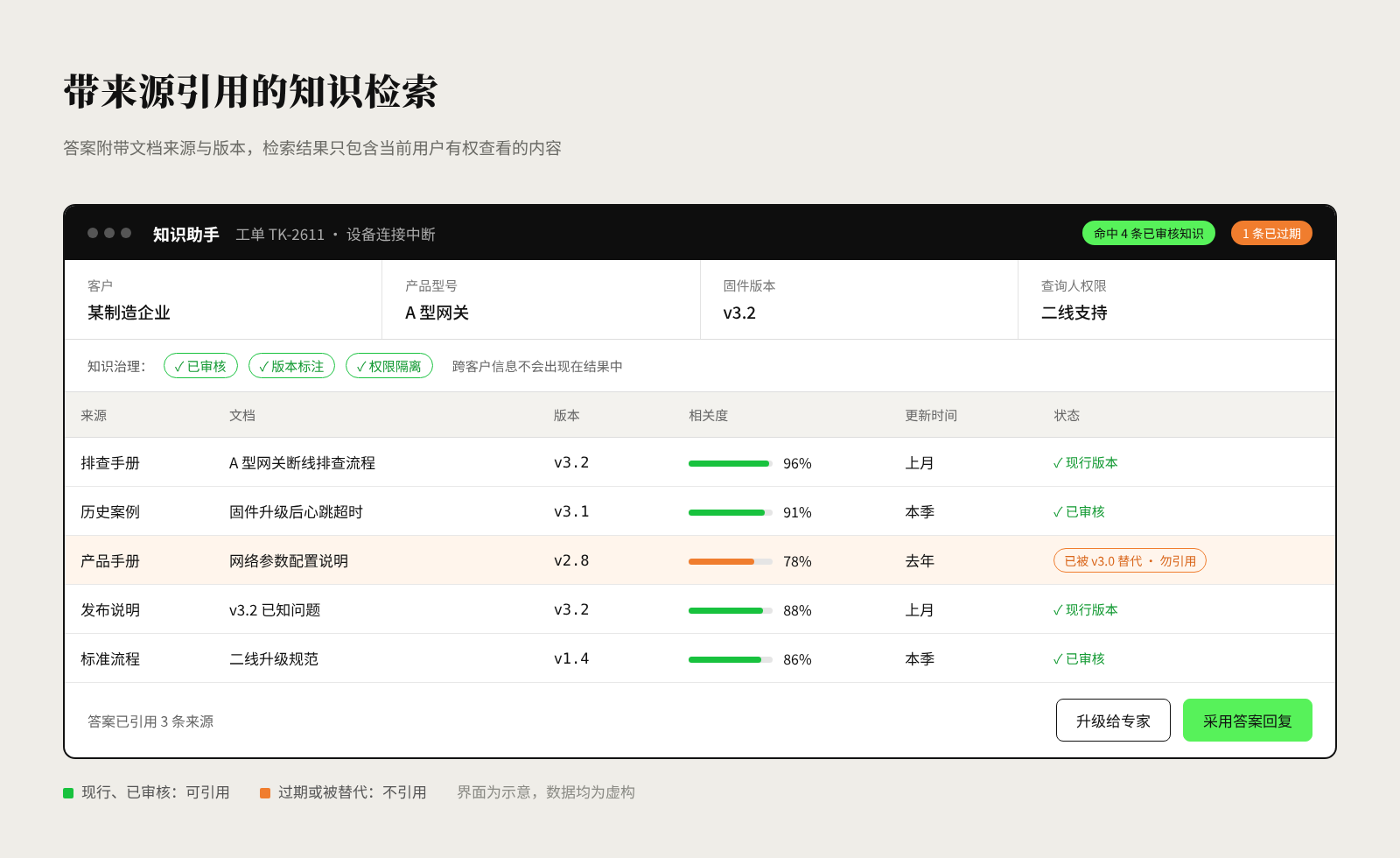
Knowledge search with source citations (illustrative interface, all data fictitious)
Implementation roadmap
We started with a pilot to organize and search knowledge for one category of high-frequency product issues.
A manually labelled question set was used to test retrieval hit rate, answer accuracy, citation quality and permission isolation.
Once acceptance criteria were met, the solution was gradually extended to more business scenarios.
Business value
The company has turned individual experience into reviewed, shareable organizational knowledge.
New staff can find reliable information faster, and senior employees spend less time answering basic questions repeatedly, freeing them for more complex customer needs.
Project results (approximate): first-contact resolution about +15 points; average handling time about −35%; answer citation accuracy about 95%.
Metrics tracked on an ongoing basis: first-contact resolution (FCR), average handling time (AHT), knowledge search effectiveness, knowledge reuse rate, answer citation accuracy, permission violation incidents.
What this case teaches us
An enterprise knowledge base is not about uploading every file to a large language model.
Effective knowledge intelligence requires ongoing content governance, permission management, version control and quality evaluation.
Only when knowledge sources are reliable can AI become a trustworthy assistant for employees.
*To protect client confidentiality, company details in this case study have been anonymized, interface screenshots are illustrative, and results are rounded approximations.*
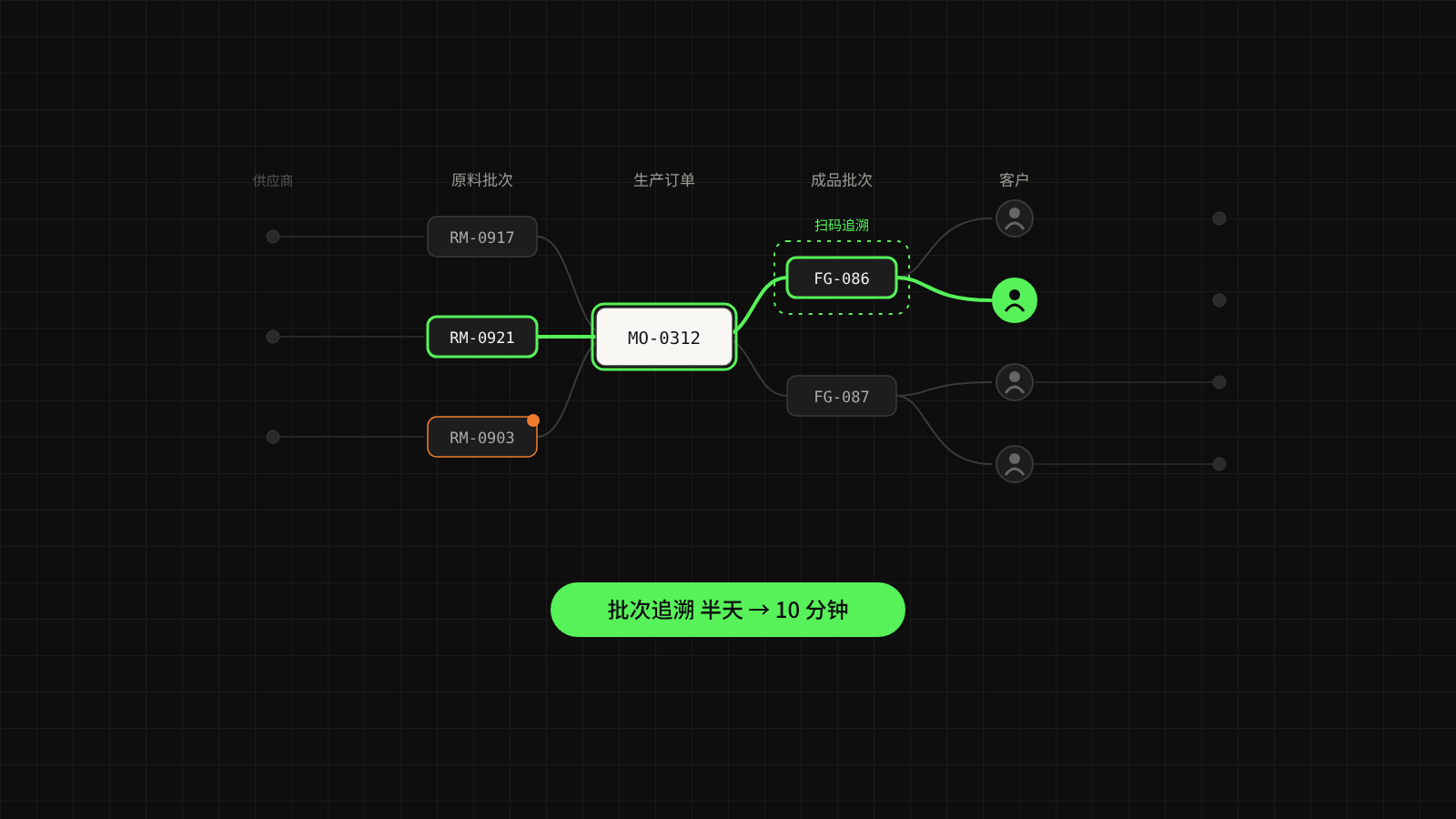
Batch Traceability Cut from Half a Day to 10 Minutes, with Every Batch Accounted For
A multi-category food manufacturer linked purchasing, production, warehousing and sales delivery into a single data chain. Any finished-goods batch can now be traced back to its raw material sources and forward to its customers, and batch traceability has dropped from about half a day to under 10 minutes.
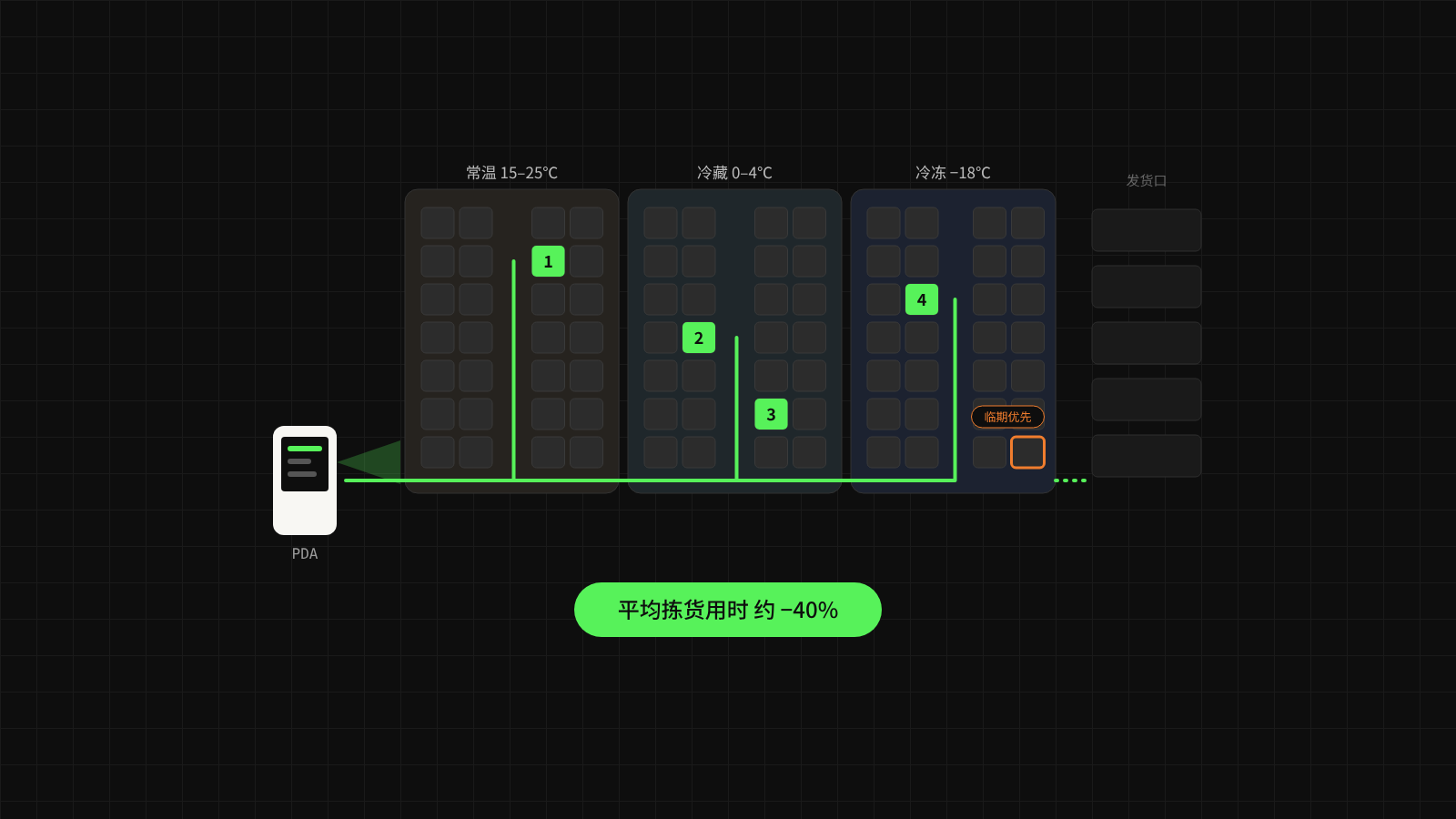
Three-Temperature Inventory Tracked to the Bin, Average Picking Time Down About 40%
A wholesaler of ambient, chilled and frozen food tracked inventory down to bin location and batch, used PDAs for receiving, replenishment and picking, and dispatched stock on a first-expired, first-out basis. Average picking time fell by about 40%, and the value of stock nearing expiry dropped significantly.
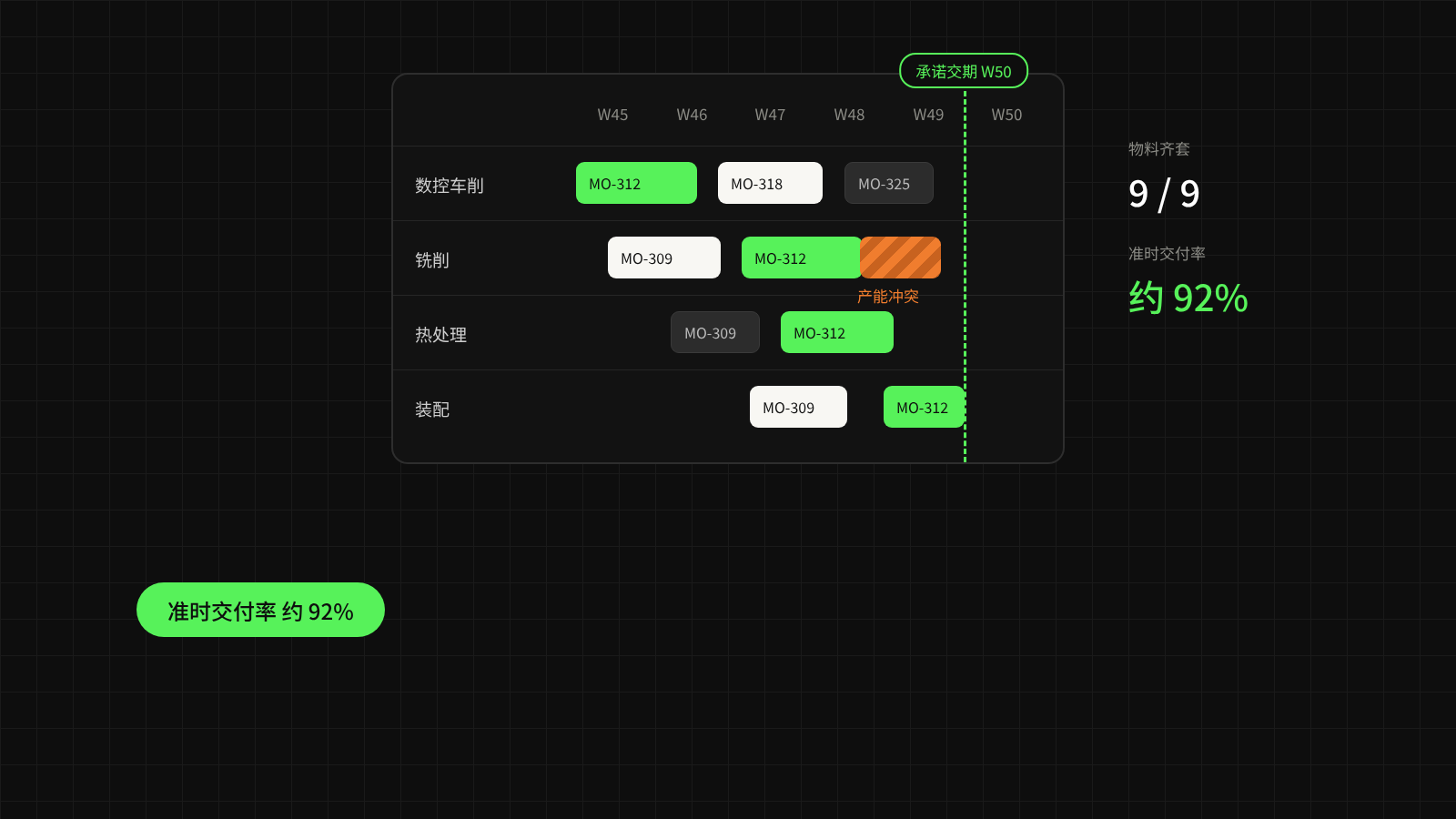
Sales Orders Drive the Production Plan Directly, Lifting On-Time Delivery to About 92%
A high-mix, low-volume machining company let sales orders drive material requirements and capacity checks directly, with shop-floor terminals reporting progress in real time. Delivery promises are now grounded in data, on-time delivery rose from about 75% to about 92%, and stoppages due to material shortages fell markedly.