Sales Orders Drive the Production Plan Directly, Lifting On-Time Delivery to About 92%
A high-mix, low-volume machining company let sales orders drive material requirements and capacity checks directly, with shop-floor terminals reporting progress in real time. Delivery promises are now grounded in data, on-time delivery rose from about 75% to about 92%, and stoppages due to material shortages fell markedly.
A manufacturer supplying machined components to industrial equipment makers dealt with a wide product range, small order batches and widely varying lead times.
The company already used ERP for purchasing, sales and inventory, but production planning still relied mainly on Excel files maintained by planners.
When sales committed to a delivery date, they had to check separately with the shop floor, purchasing and the warehouse. Shop-floor supervisors knew which orders were in production, but struggled to spot material shortfalls and machine loading in time.
As order volumes grew, the company faced frequent changes to the production plan, rush purchases and late deliveries on some orders.
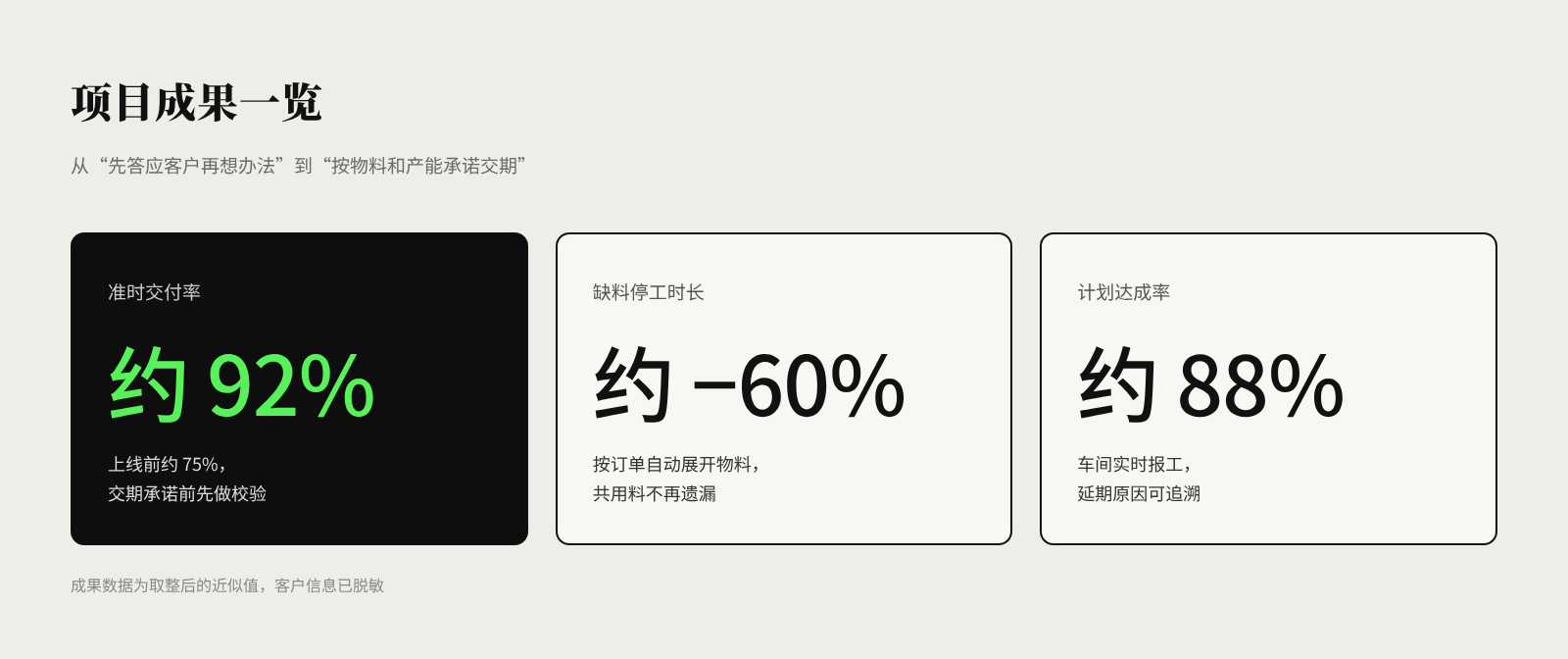
Project results: on-time delivery about 92%; downtime due to material shortages about −60%; plan attainment about 88%
Client background
Companies like this typically combine make-to-order production with some make-to-stock.
Products involve multi-level BOMs, different machining operations, subcontracted processes and a variety of raw material specifications.
What really needs managing is not just order quantities, but how customer demand translates into purchasing, material preparation, production and delivery tasks.
The challenge
Production planning was disconnected from sales orders
When customers requested a delivery date, sales lacked shared material and capacity information and could easily promise more than production could deliver.
Purchase planning relied on individual experience
The same raw material might be used in several products, and some materials had minimum order quantities and long purchasing lead times.
Planners had to compile demand from different orders by hand, making it easy to miss shared materials or buy the same thing twice.
Shop-floor progress was opaque
Orders had been released to the shop floor, but actual operation progress, work-in-progress quantities and rework were not fed back to the system in time.
Management found it hard to tell whether delays came from material shortages, equipment failures or insufficient capacity.
SHEPHARD's digital solution
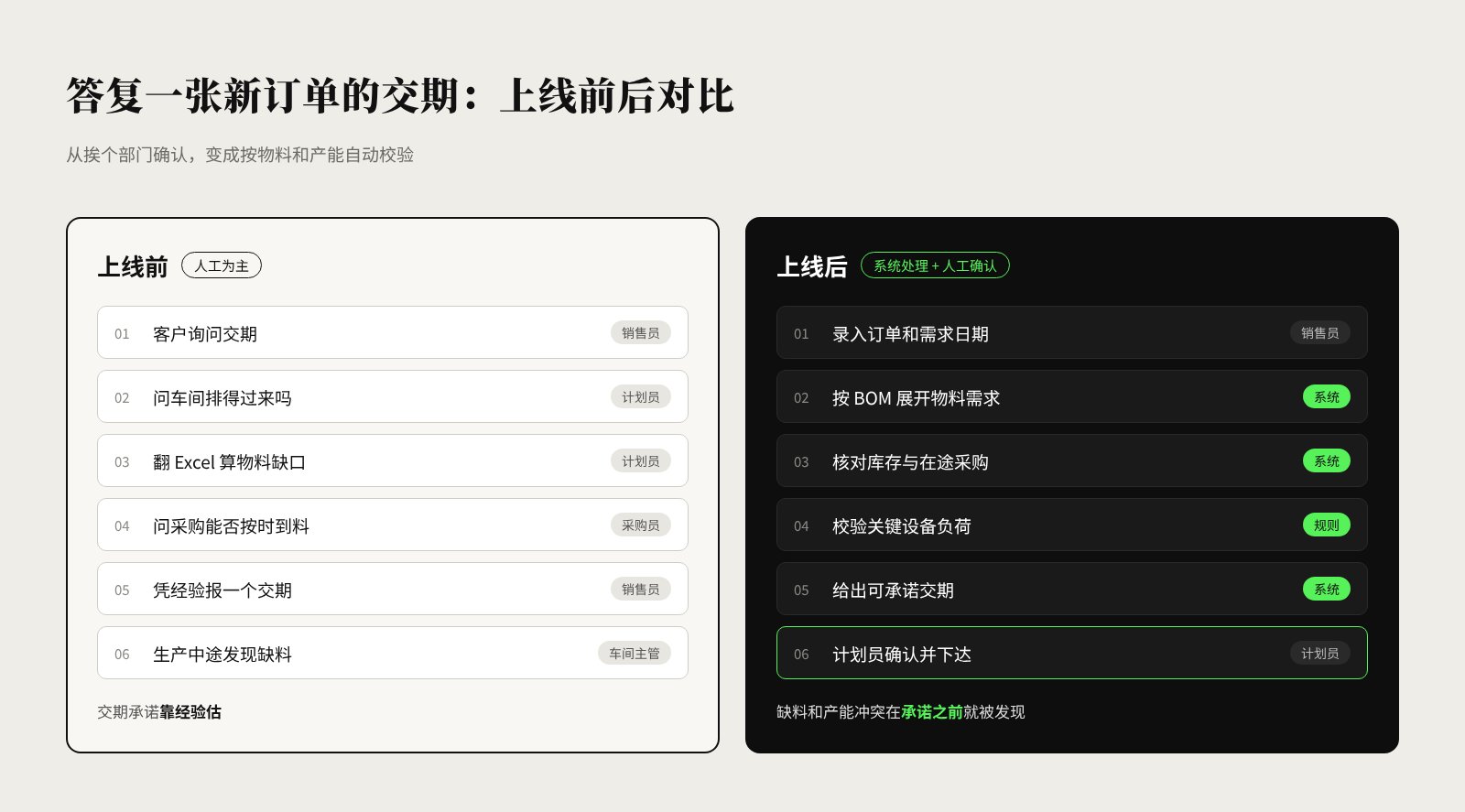
Quoting a delivery date for a new order: before and after go-live
Step 1: Standardize product and routing master data
We standardized material codes, BOMs, routings, work centres and standard times.
BOM version control rules make it clear which version of the product structure applies when an order is produced.
Subcontracted operations have their own dedicated subcontracting process and stock statuses.
Step 2: Implement MRP material requirements calculation
Confirmed sales orders, available stock, purchases in transit and existing production orders all feed into a single material requirements calculation.
The system explodes raw material requirements from the product structure and generates replenishment suggestions based on purchasing lead times and production need dates.
Planners no longer need to calculate material shortfalls by hand from multiple Excel files.
Step 3: Introduce capacity checks and scheduling
Work centres, shifts, standard times and order priorities are built into planning.
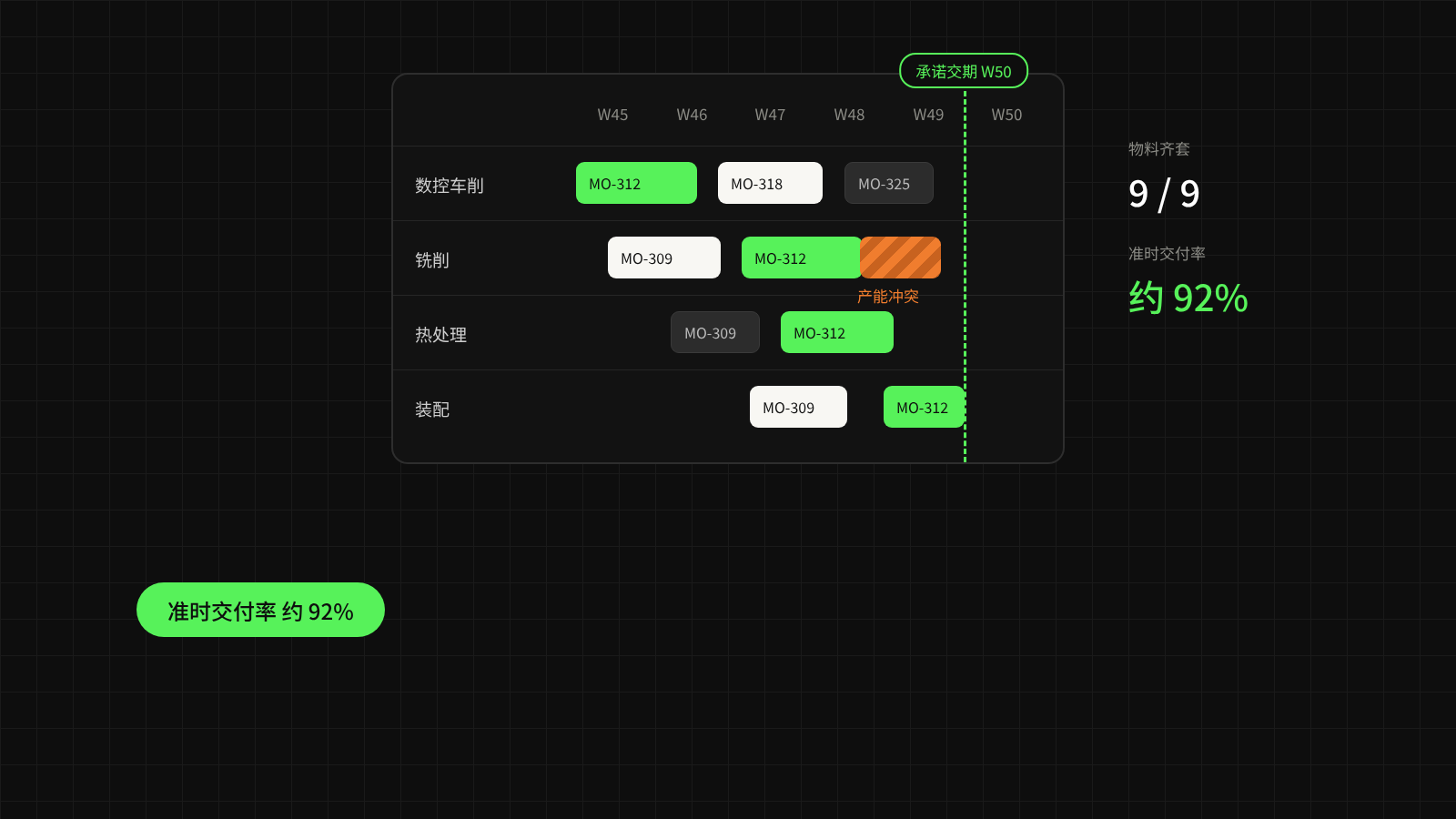
Before a delivery date is promised, it is checked against the load on key equipment and material availability.
For orders with capacity conflicts or material shortages, the system prompts planners to re-prioritize.
Step 4: Build a shop-floor execution process
Workstation terminals or mobile devices record operation start, pause and completion, actual hours, quantities produced and rejects.
Key execution data is written back to ERP, linking production orders, operations and actual consumption.
Step 5: Set up production exception analysis
Alerts cover long waits for materials, operations exceeding planned hours, machine downtime and abnormal losses.
Issues are attributed to the relevant production order and responsible step, providing a basis for delivery coordination and continuous improvement.
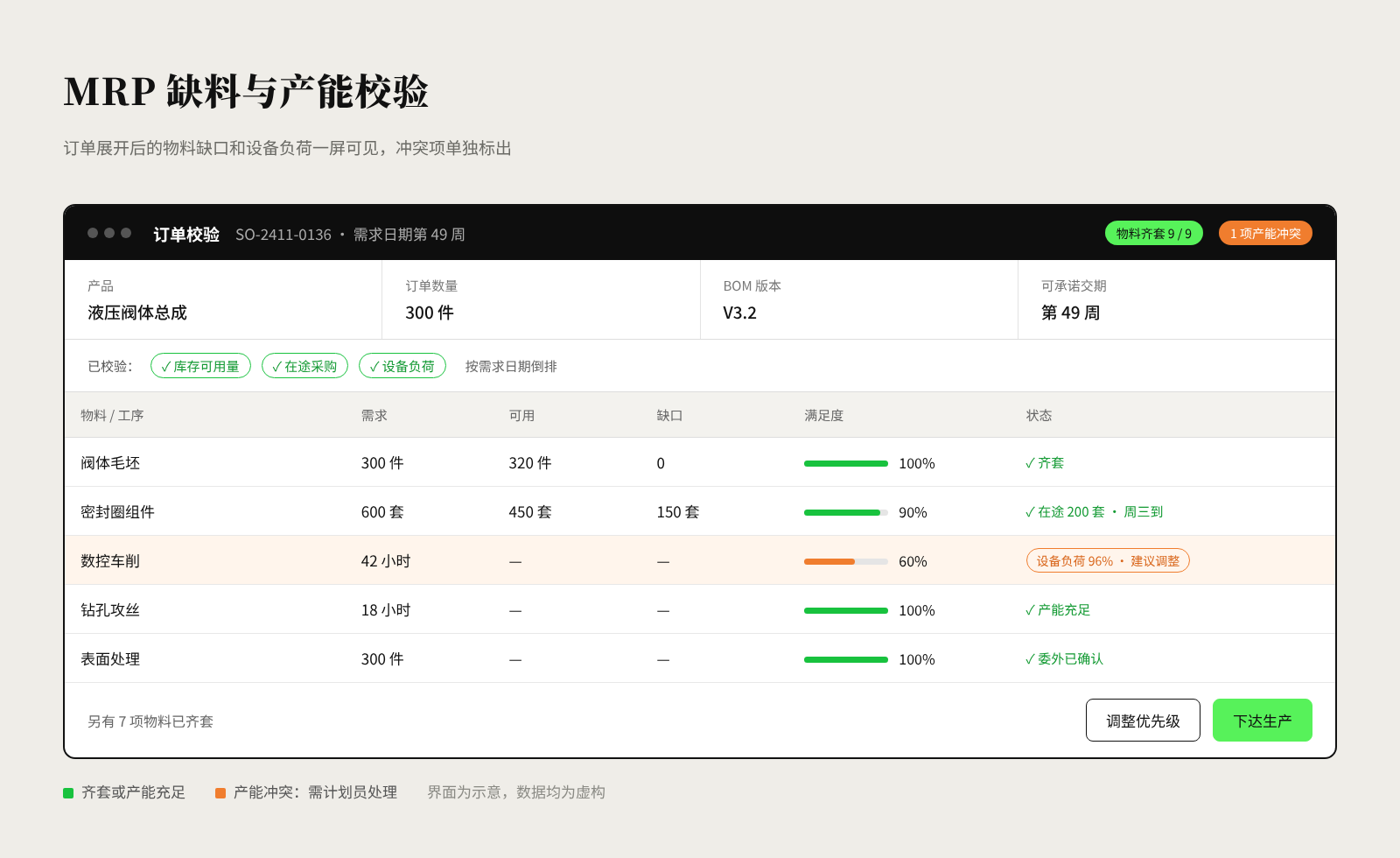
MRP shortage and capacity check (illustrative interface, all data fictitious)
Implementation roadmap
We started by mapping out BOMs and routings for the main products, then established order-driven material requirements management.
Next, we piloted operation-level progress reporting in one workshop to validate actual hours, completed quantities and material consumption.
Finally, capacity analysis, subcontracting management and management dashboards were rolled out step by step.
Business value
Sales can commit to delivery dates on a more reliable data foundation, purchasing knows material requirements in advance, and the shop floor can report production progress promptly.
Management can identify the real causes of late orders, reducing blind chasing and reactive firefighting.
Project results (approximate): on-time delivery about 92%; downtime due to material shortages about −60%; plan attainment about 88%.
Metrics tracked on an ongoing basis: on-time delivery (OTD), production plan attainment, downtime due to material shortages, work-in-progress turnover days, variance between planned and actual hours.
What this case teaches us
Digital transformation in manufacturing is not simply installing production management software; it is about building reliable links between sales commitments, material supply, shop-floor capacity and delivery execution.
*To protect client confidentiality, company details in this case study have been anonymized, interface screenshots are illustrative, and results are rounded approximations.*
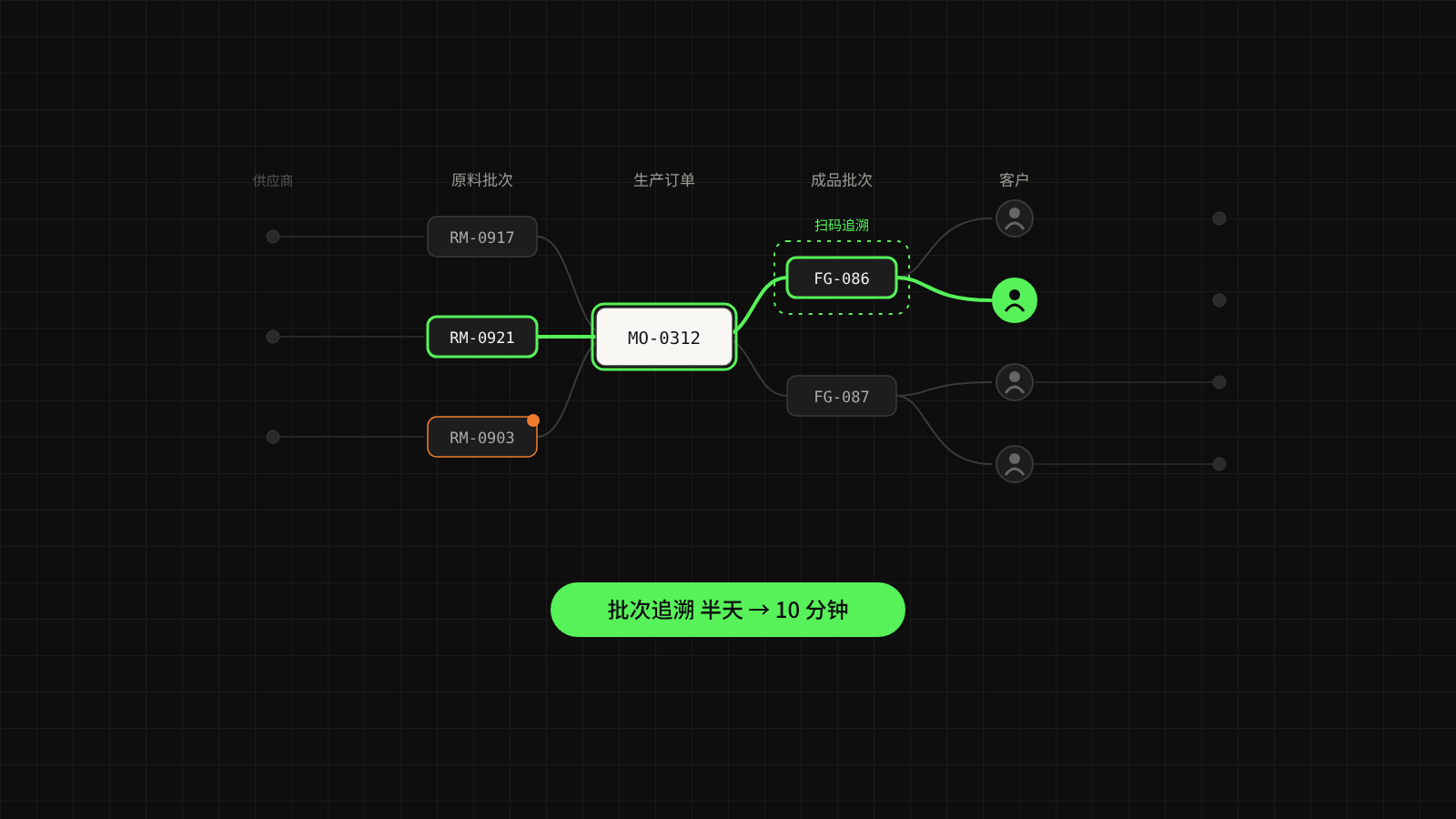
Batch Traceability Cut from Half a Day to 10 Minutes, with Every Batch Accounted For
A multi-category food manufacturer linked purchasing, production, warehousing and sales delivery into a single data chain. Any finished-goods batch can now be traced back to its raw material sources and forward to its customers, and batch traceability has dropped from about half a day to under 10 minutes.
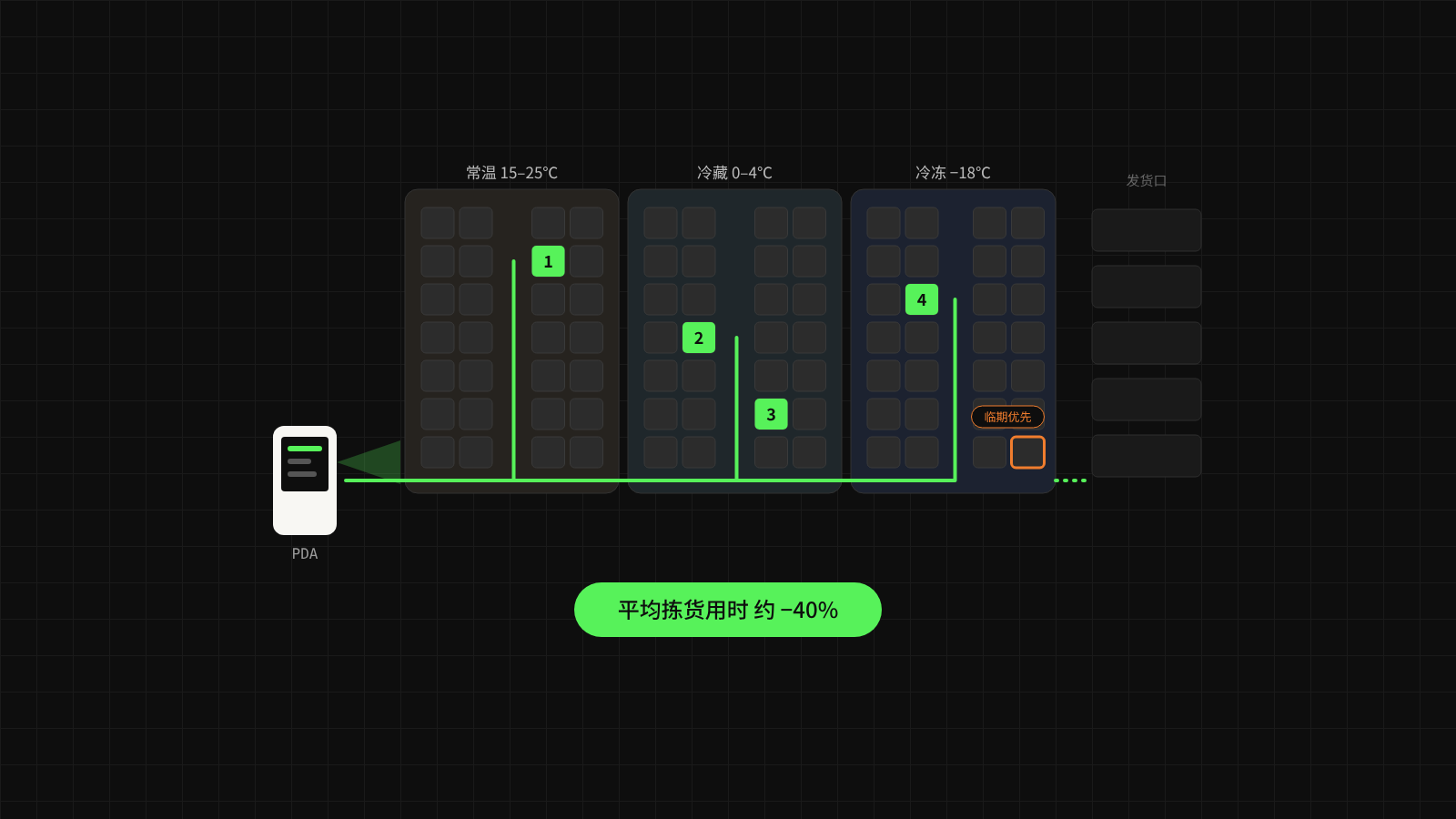
Three-Temperature Inventory Tracked to the Bin, Average Picking Time Down About 40%
A wholesaler of ambient, chilled and frozen food tracked inventory down to bin location and batch, used PDAs for receiving, replenishment and picking, and dispatched stock on a first-expired, first-out basis. Average picking time fell by about 40%, and the value of stock nearing expiry dropped significantly.
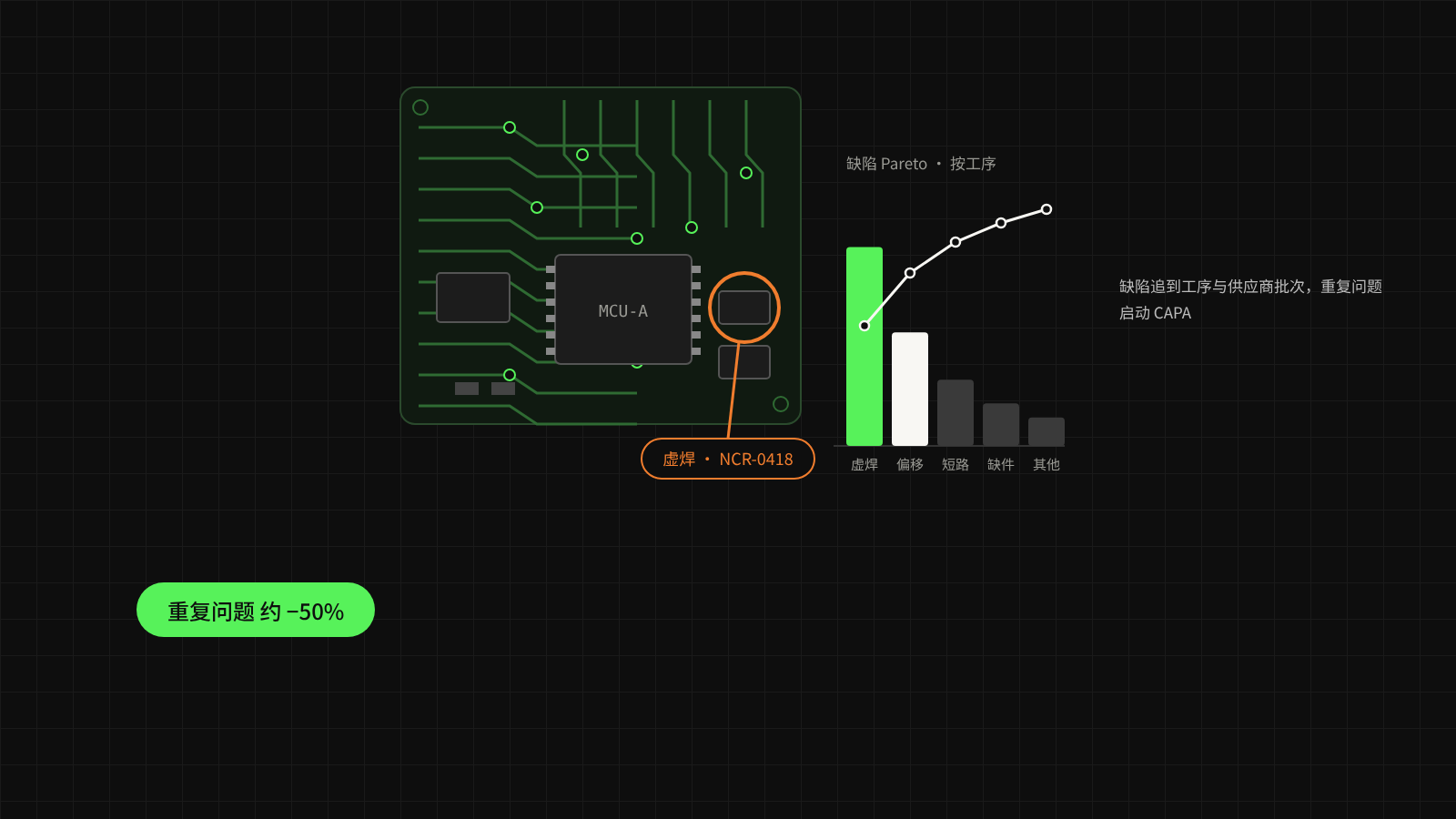
Quality issues traced to process step and supplier batch, with repeat issues down about 50%
A manufacturer of electronic assemblies and control modules linked inspection data to batches and serial numbers, tracked quality incidents through NCRs and launched CAPA for recurring and high-risk issues. Customer complaints can now be traced by serial number, and recurring quality issues have fallen by about 50%.