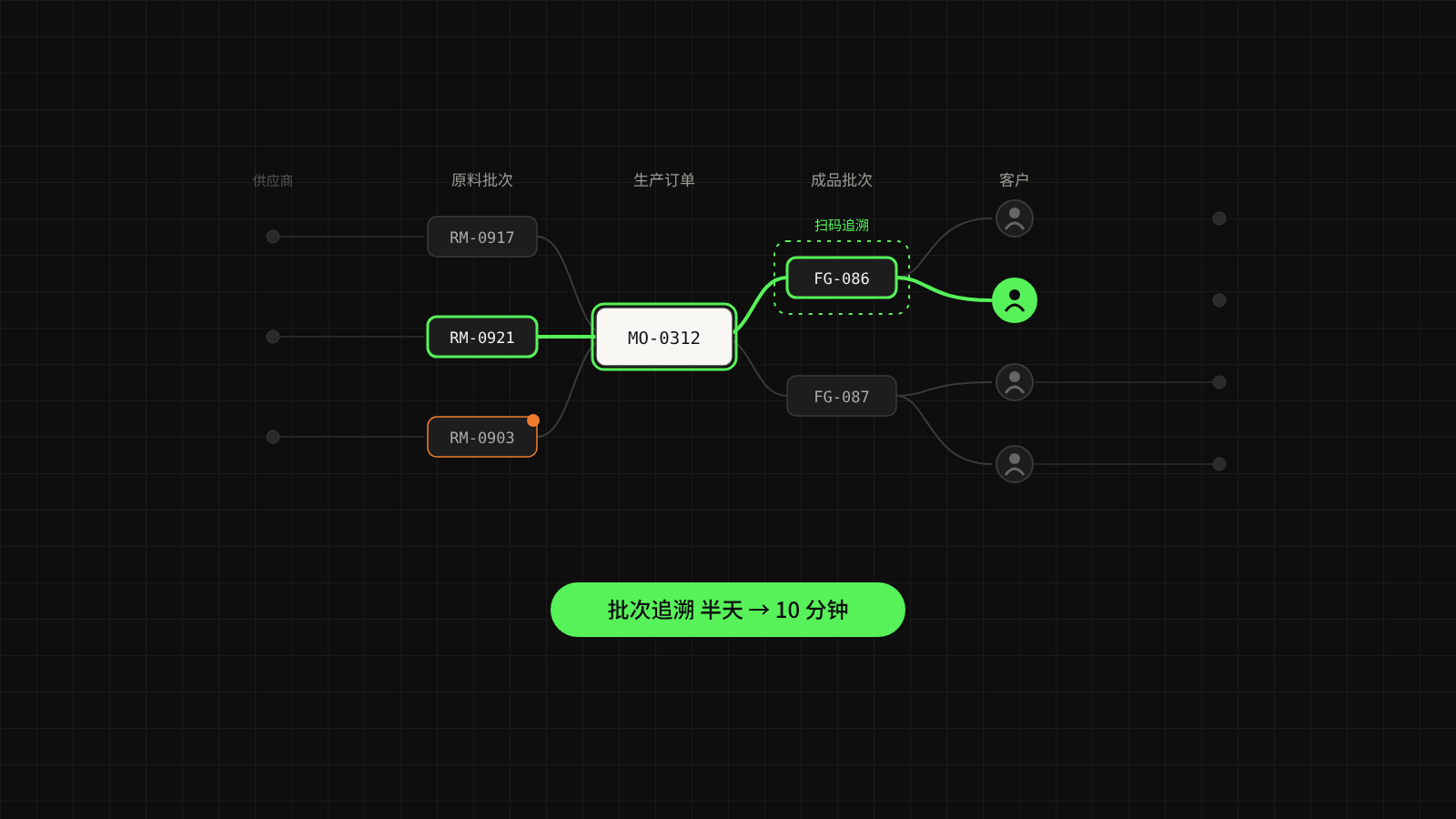
Batch Traceability Cut from Half a Day to 10 Minutes, with Every Batch Accounted For
A multi-category food manufacturer linked purchasing, production, warehousing and sales delivery into a single data chain. Any finished-goods batch can now be traced back to its raw material sources and forward to its customers, and batch traceability has dropped from about half a day to under 10 minutes.
Three-Temperature Inventory Tracked to the Bin, Average Picking Time Down About 40%
A wholesaler of ambient, chilled and frozen food tracked inventory down to bin location and batch, used PDAs for receiving, replenishment and picking, and dispatched stock on a first-expired, first-out basis. Average picking time fell by about 40%, and the value of stock nearing expiry dropped significantly.
Sales Orders Drive the Production Plan Directly, Lifting On-Time Delivery to About 92%
A high-mix, low-volume machining company let sales orders drive material requirements and capacity checks directly, with shop-floor terminals reporting progress in real time. Delivery promises are now grounded in data, on-time delivery rose from about 75% to about 92%, and stoppages due to material shortages fell markedly.
Quality issues traced to process step and supplier batch, with repeat issues down about 50%
A manufacturer of electronic assemblies and control modules linked inspection data to batches and serial numbers, tracked quality incidents through NCRs and launched CAPA for recurring and high-risk issues. Customer complaints can now be traced by serial number, and recurring quality issues have fallen by about 50%.
Specialty chemicals and advanced materials manufacturer
Controlled recipe versions and visible dosing deviations cut quality release time by about 40%
A producer of industrial cleaning agents and functional additives connected recipe versions, raw material batches, actual dosing and quality release into one controlled process. Every batch can be traced back to the recipe and raw materials used, and unreleased stock cannot be shipped.
A digital record for every machine lifts first-time fix rate to around 85%
An industrial equipment manufacturer built its after-sales operation around the serial number, linking customers, warranties, service orders, spare parts and repair costs. Technicians now see a machine's full history before they arrive on site, and after-sales has moved from reactive firefighting to ongoing management.
Styles, colours, sizes and materials calculated in one pass, with material shortages down about 60%
A contract manufacturer producing for several fashion brands standardised styles, colours and sizes into product variants. When an order changes, fabric, trim and packaging requirements are recalculated automatically: planners no longer rework Excel by hand, and purchasing and production work from the same data.
Credit checks at order entry and automatic payment matching cut DSO by about 20%
A wholesaler supplying restaurants, retailers and distributors connected customer credit, contract pricing, shipping, invoicing and bank receipts into a single order-to-cash process. Risks are now flagged as soon as an order is entered, and most incoming payments are matched to invoices by the system.