Three-Temperature Inventory Tracked to the Bin, Average Picking Time Down About 40%
A wholesaler of ambient, chilled and frozen food tracked inventory down to bin location and batch, used PDAs for receiving, replenishment and picking, and dispatched stock on a first-expired, first-out basis. Average picking time fell by about 40%, and the value of stock nearing expiry dropped significantly.
A food wholesaler handling ambient, chilled and frozen products found its warehouse becoming less efficient as product ranges and customer orders grew.
The warehouse had ERP in place, but inventory management still revolved around total quantities per item. The system could hardly show which bin the goods were in, whether they were in the picking area, or which batch should go out first.
Stock that sales can see in the system is not necessarily stock the warehouse can ship right away.
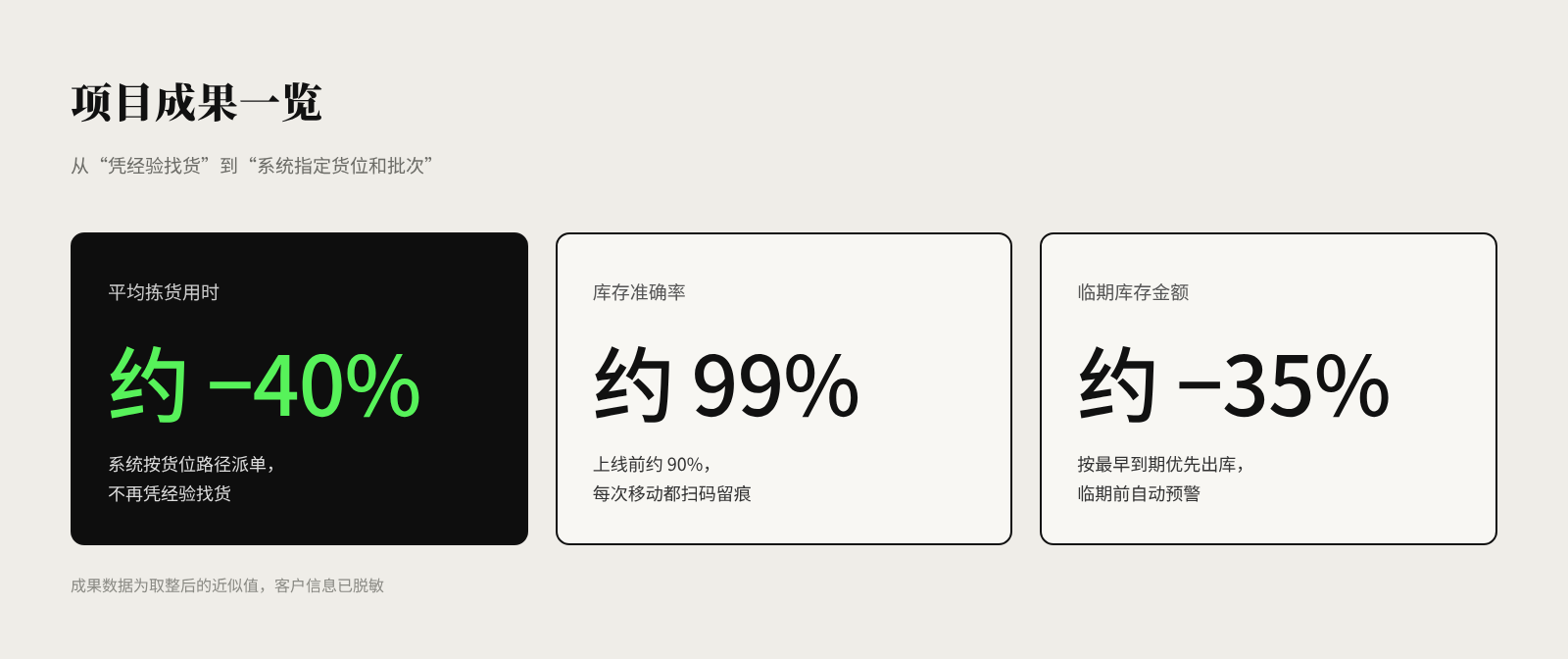
Project results: average picking time about −40%; inventory accuracy about 99%; value of stock nearing expiry about −35%
Client background
The company supplies a wide range of food to restaurant customers, retailers and regional distributors. Its warehouse operations are characterized by many SKUs, fragmented orders, distinct temperature zones and strict shelf-life requirements.
Large numbers of orders must be picked and delivered within short time windows.
For a business like this, the warehouse is not simply a place to store goods; it is a core operation that directly determines fulfilment capability, working capital and customer service levels.
The challenge
Stock in the system, but nowhere to be found on the floor
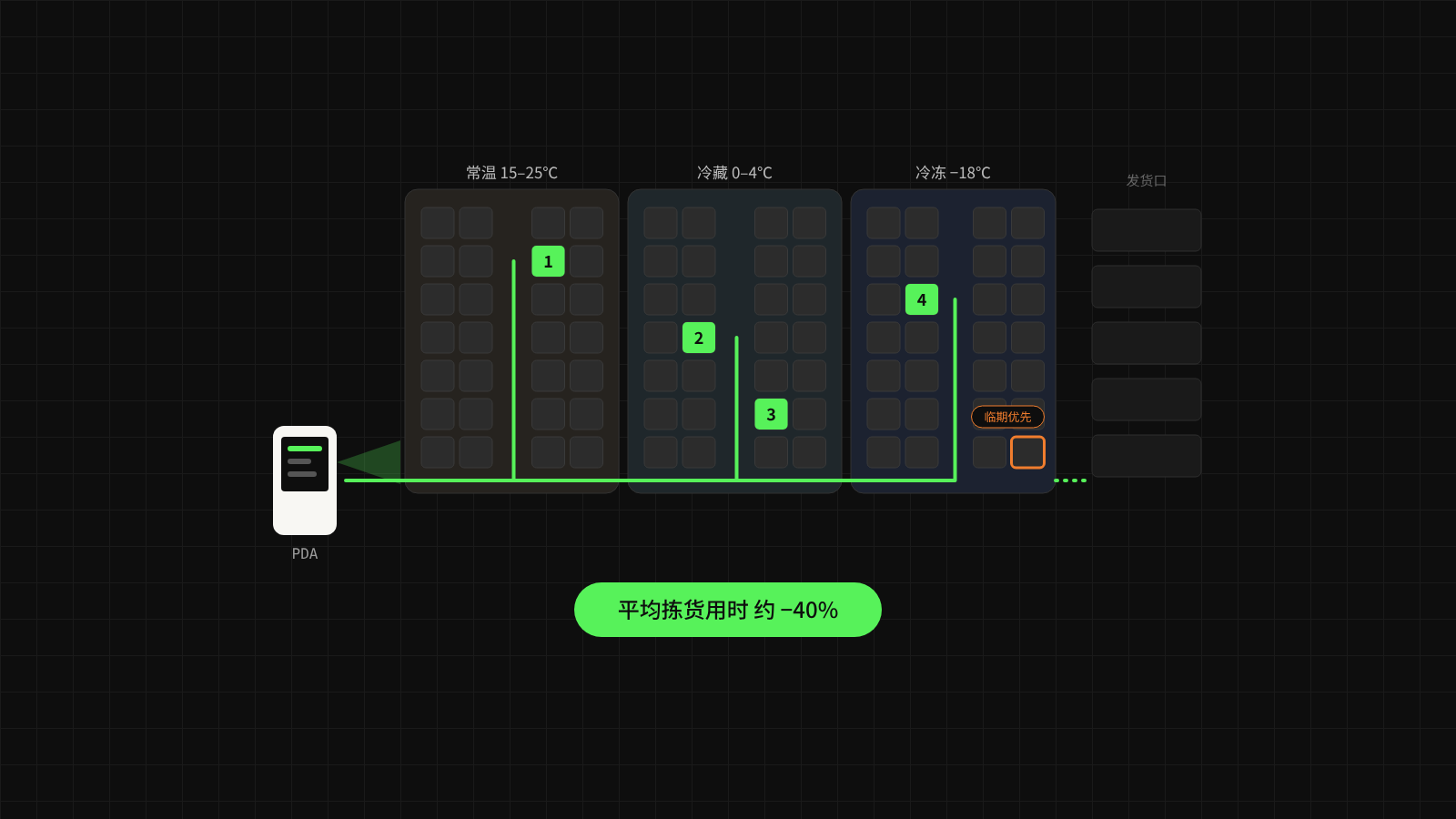
Goods moved between temperature zones and bins; some sat in high-level storage, others in picking areas.
With ERP recording only total stock, warehouse staff still had to rely on experience to find items.
Replenishment and picking got in each other's way
When stock in the picking area ran low, the warehouse had to replenish it from reserve storage.
But if the system could not trigger replenishment automatically based on order demand and bin stock, pickers often ended up waiting for replenishment while warehouse staff moved goods more than once.
Expiry management was reactive
The same product could exist in several purchase batches with different expiry dates.
When batches were chosen manually based on experience, earlier deliveries could sit in the warehouse for too long, and items close to expiry could go unnoticed.
SHEPHARD's digital solution
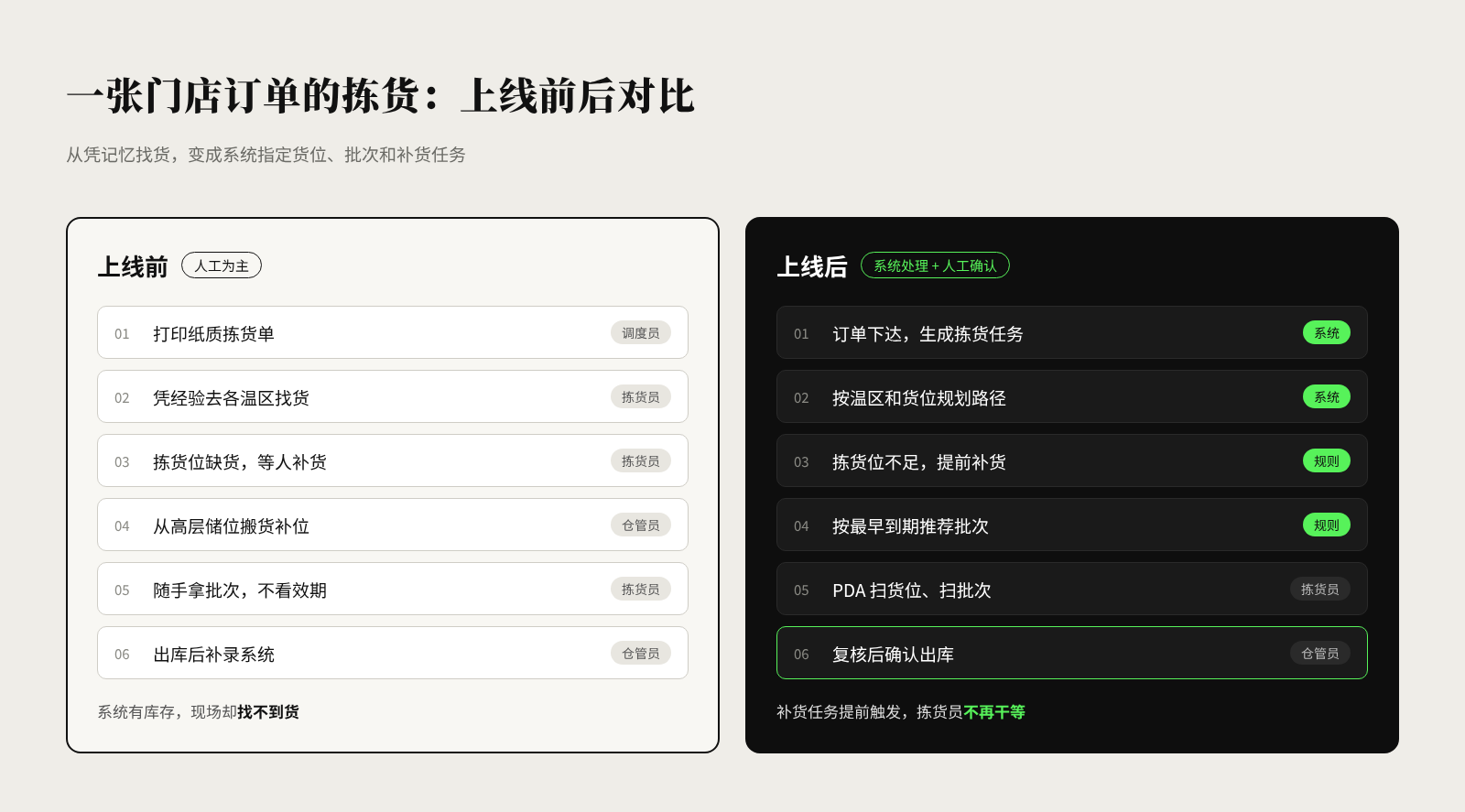
Picking a store order: before and after go-live
Step 1: Build a digital location model of the warehouse
We set up storage areas by business attribute (ambient, chilled, frozen and returns) and further divided them into racks, levels and individual bins.
Each bin has its own code that matches its physical location.
The system records not only stock quantities but also the exact location, batch and availability status of that stock.
Step 2: Equip floor operations with mobile tools
Receiving, put-away, internal transfers, replenishment, picking and stock counts are carried out on PDAs or mobile devices.
Staff complete each task by scanning the item, bin and batch, reducing paper records and after-the-fact data entry.
Key transactions are synchronized to ERP, creating a traceable record of every stock movement.
Step 3: Define replenishment rules
Based on parameters such as item demand, picking-area capacity, minimum stock and maximum stock, we configured automatic replenishment suggestions from reserve storage to the picking area.
Sales order demand is linked to actual bin stock, so replenishment tasks that are about to affect fulfilment are prioritized.
Items that cannot be replenished in time are flagged to the warehouse manager as exceptions.
Step 4: Introduce a FEFO dispatch strategy
For items with shelf-life requirements, the system suggests batches on a first-expired, first-out (FEFO) basis.
We also set up rules for near-expiry alerts, stock holds and special dispatch approvals.
This lets the warehouse pass relevant information to purchasing, sales and management before products actually expire.
Step 5: Establish warehouse performance metrics
We brought together stock quantities, stock age, batch expiry dates, picking progress, replenishment tasks and order fulfilment.
Management can identify frequently out-of-stock items, areas with excess stock, unusual count discrepancies and bottlenecks that hold up shipments.
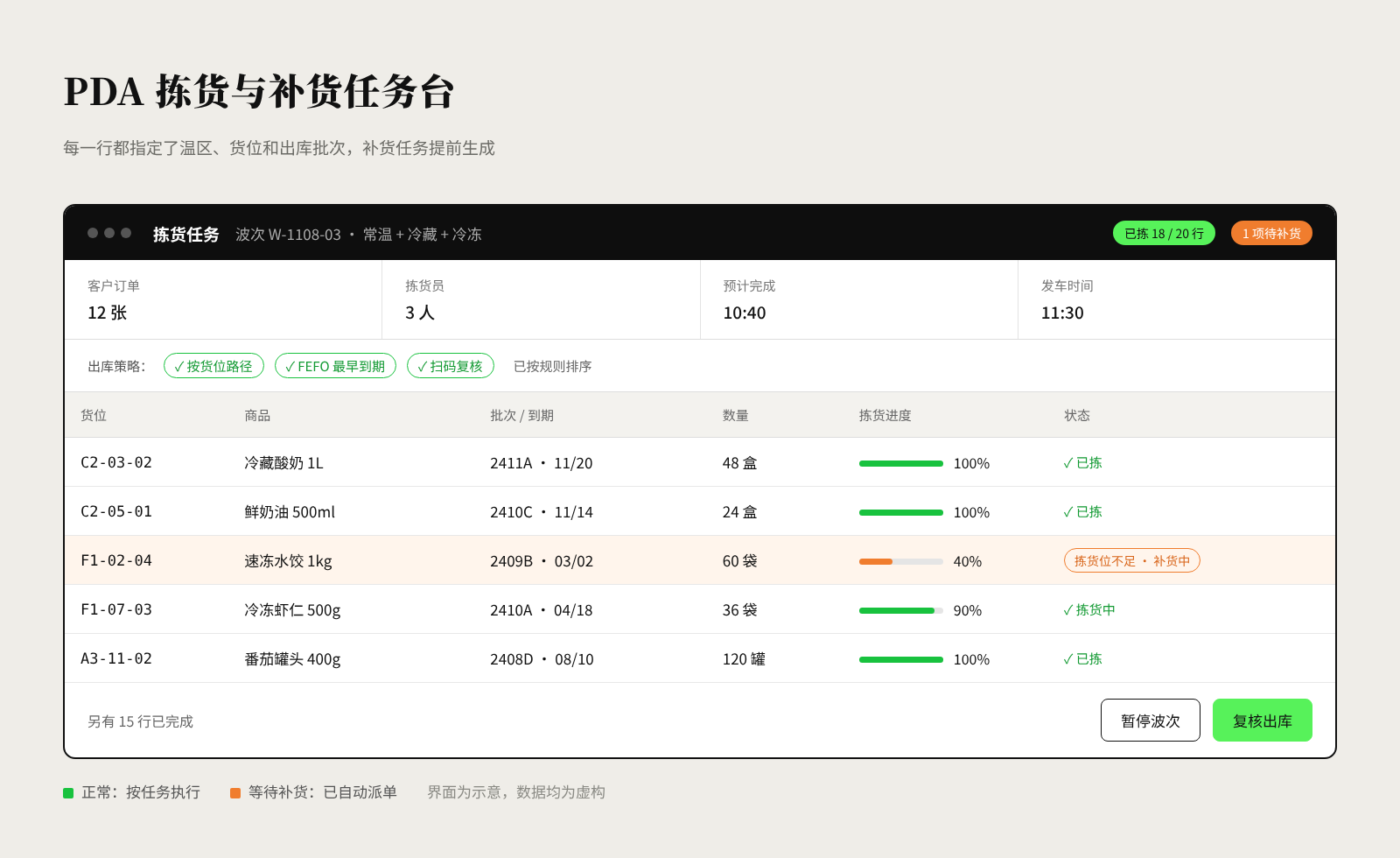
PDA picking and replenishment task board (illustrative interface, all data fictitious)
Implementation roadmap
We first completed a physical bin count and cleansed the base data, then rolled out receiving, put-away, replenishment, picking and batch management in stages.
In frozen and chilled environments, scanning reliability, network coverage and ease of use of mobile devices required particular validation.
Only once actual warehouse operations and system records were in sync did we gradually introduce automatic replenishment and near-expiry alerts.
Business value
Warehouse management has shifted from experience-based, person-centred dispatching to digital management centred on orders, locations, batches and tasks.
Sales, purchasing and the warehouse share more accurate information on available stock, reducing repeated checks and cross-departmental back-and-forth.
Project results (approximate): average picking time about −40%; inventory accuracy about 99%; value of stock nearing expiry about −35%.
Metrics tracked on an ongoing basis: inventory accuracy, average picking time, stockout rate, replenishment waiting time, value of stock nearing expiry, on-time order dispatch rate.
What this case teaches us
A WMS that truly works does not just put inventory into a computer; it lets the system understand the warehouse's physical layout and how work is actually done.
*To protect client confidentiality, company details in this case study have been anonymized, interface screenshots are illustrative, and results are rounded approximations.*
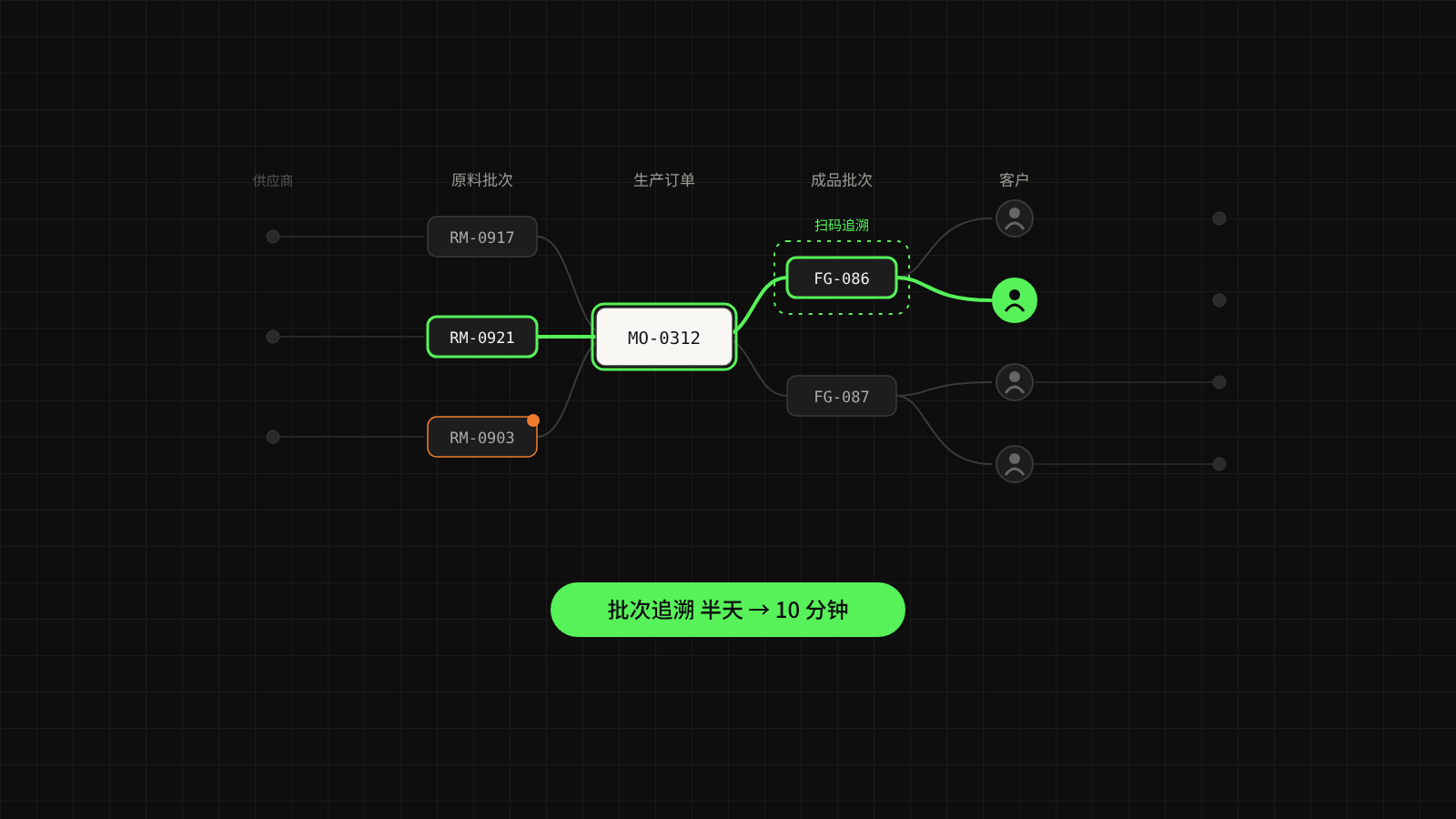
Batch Traceability Cut from Half a Day to 10 Minutes, with Every Batch Accounted For
A multi-category food manufacturer linked purchasing, production, warehousing and sales delivery into a single data chain. Any finished-goods batch can now be traced back to its raw material sources and forward to its customers, and batch traceability has dropped from about half a day to under 10 minutes.
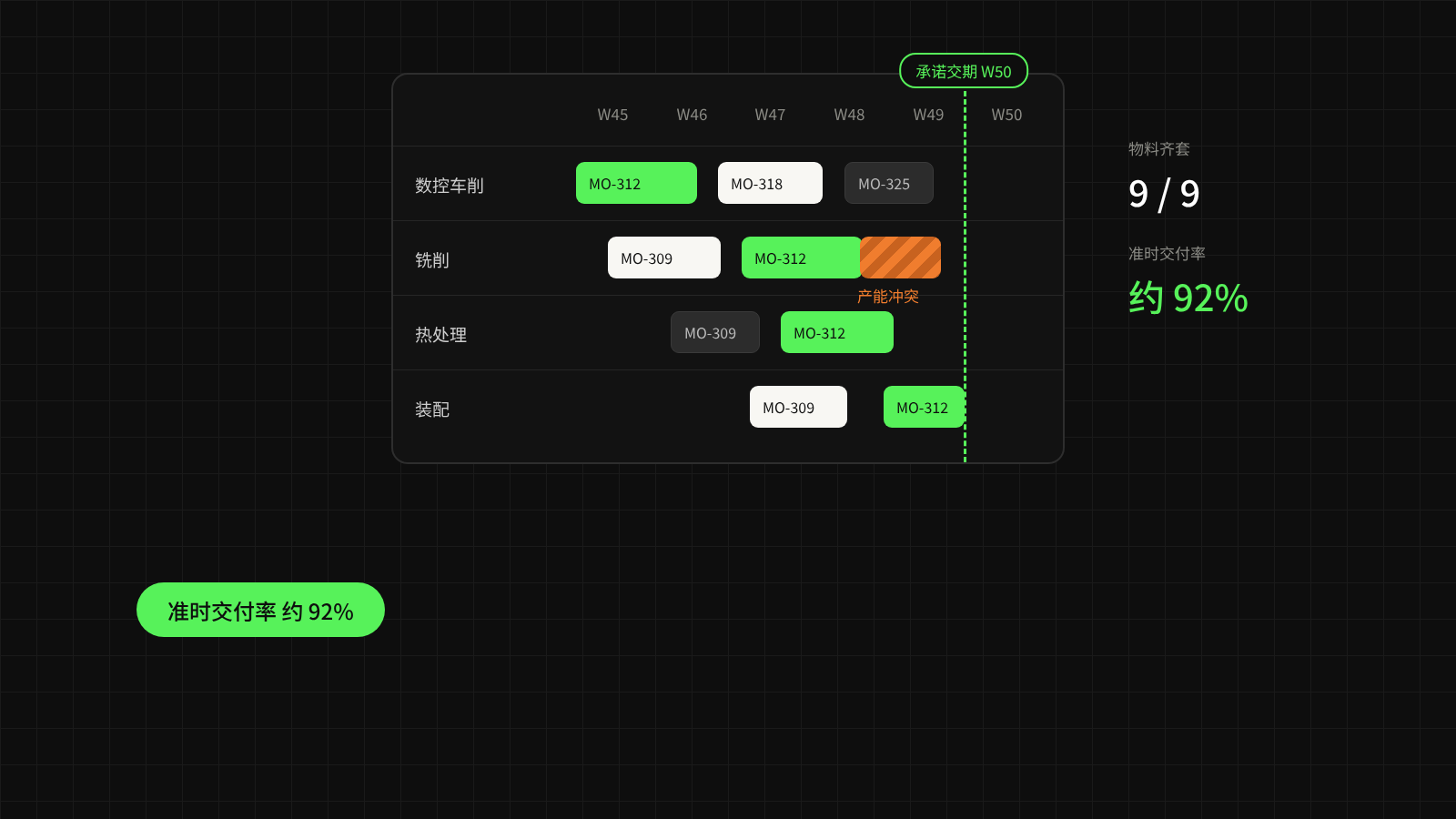
Sales Orders Drive the Production Plan Directly, Lifting On-Time Delivery to About 92%
A high-mix, low-volume machining company let sales orders drive material requirements and capacity checks directly, with shop-floor terminals reporting progress in real time. Delivery promises are now grounded in data, on-time delivery rose from about 75% to about 92%, and stoppages due to material shortages fell markedly.
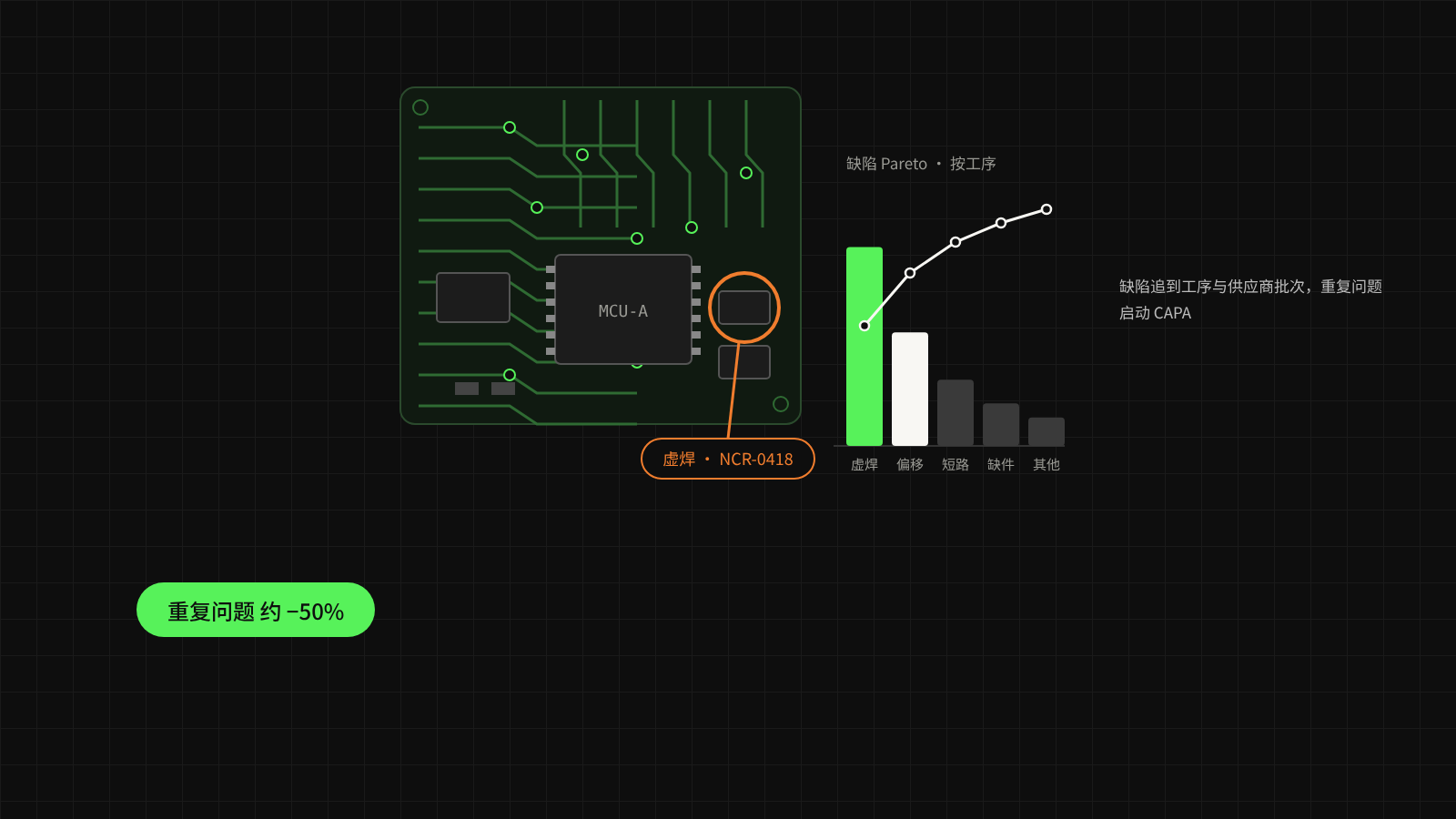
Quality issues traced to process step and supplier batch, with repeat issues down about 50%
A manufacturer of electronic assemblies and control modules linked inspection data to batches and serial numbers, tracked quality incidents through NCRs and launched CAPA for recurring and high-risk issues. Customer complaints can now be traced by serial number, and recurring quality issues have fallen by about 50%.