Inspections and repair requests unified into digital work orders, lifting on-time closure to around 95%
An operator managing multiple office buildings and commercial properties introduced a facility asset register, mobile inspections and unified work orders. Repair response times fell by about half, on-time work order closure rose to around 95%, and recurring faults can now be identified.
The company manages multiple office buildings and commercial properties, and has to coordinate routine inspections, facility repairs, cleaning, safety checks and external service providers.
On-site property staff usually carried out inspections on paper forms, while maintenance staff received jobs by phone or through group chats.
Management received a large volume of work summaries every month, but struggled to verify which checks had actually been completed, how quickly repairs had been handled and which facility problems kept recurring.
As the portfolio grew, a way of working that relied on individual experience to organise tasks made it increasingly hard to deliver consistent service.
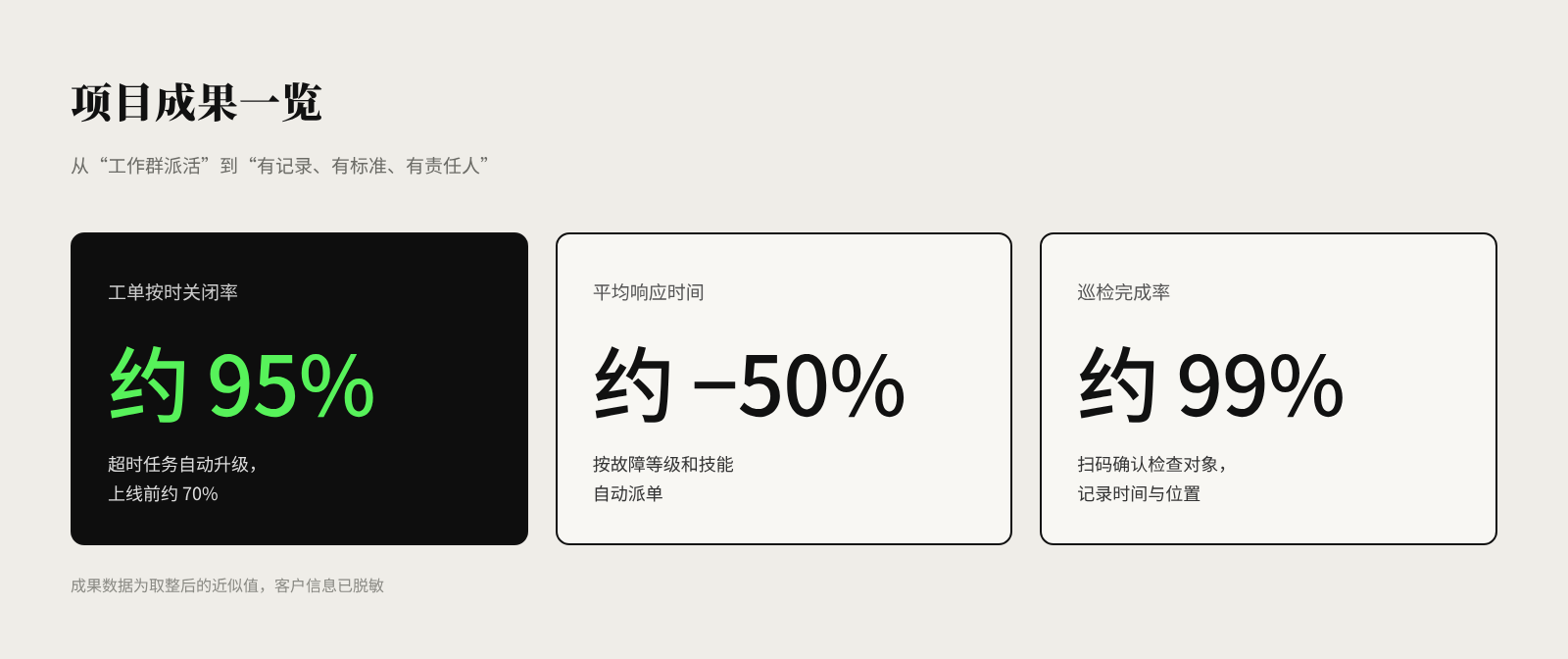
Results: on-time work order closure approx. 95%; average response time approx. −50%; inspection completion rate approx. 99%
The challenge
Facility and equipment records were incomplete
Basic information, installation dates and maintenance records for air conditioning, lifts, fire safety systems and other equipment were stored in different places.
Inspections lacked reliable records
Staff could submit completed checklists, but some inspections were not reliably linked to the equipment, location and time involved.
Repair jobs had no common prioritisation
Urgent faults, routine repairs and planned maintenance all came through the same communication channels, making it hard for managers to reallocate resources in time.
SHEPHARD's digital solution
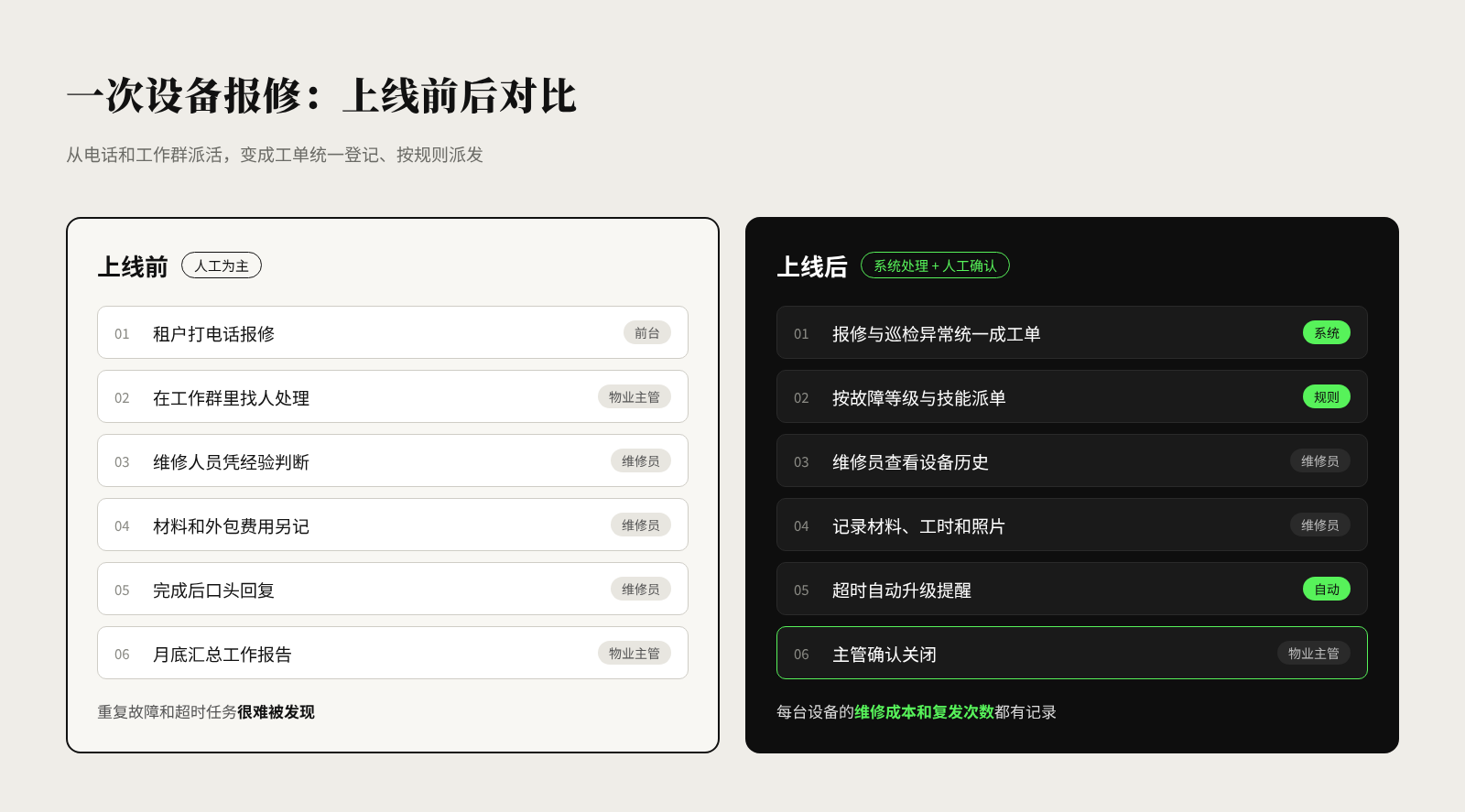
An equipment repair request: before and after go-live
Step 1: Build a facility asset register
A hierarchy was established linking properties, floors, zones and equipment.
Critical equipment is given a unique asset code and linked to maintenance intervals, technical documentation, suppliers and work order history.
Step 2: Introduce mobile inspections
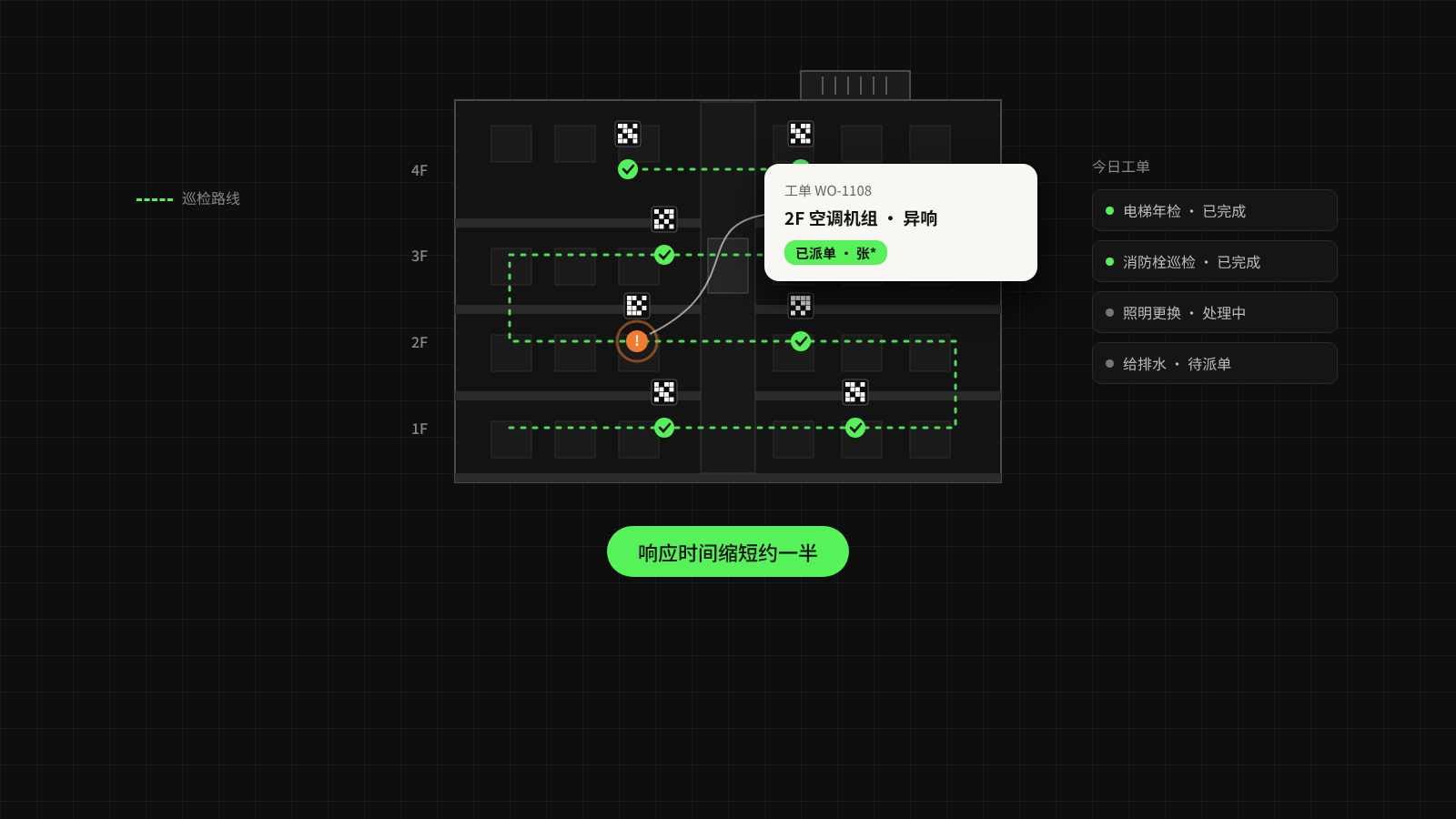
Staff use mobile devices to view the day's tasks and inspection items.
Asset QR codes help confirm the item being inspected, and staff record inspection results and any necessary photos.
Safety checks that are not suited to automated assessment keep clear professional responsibility and manual sign-off.
Step 3: Unify fault reporting and job dispatch
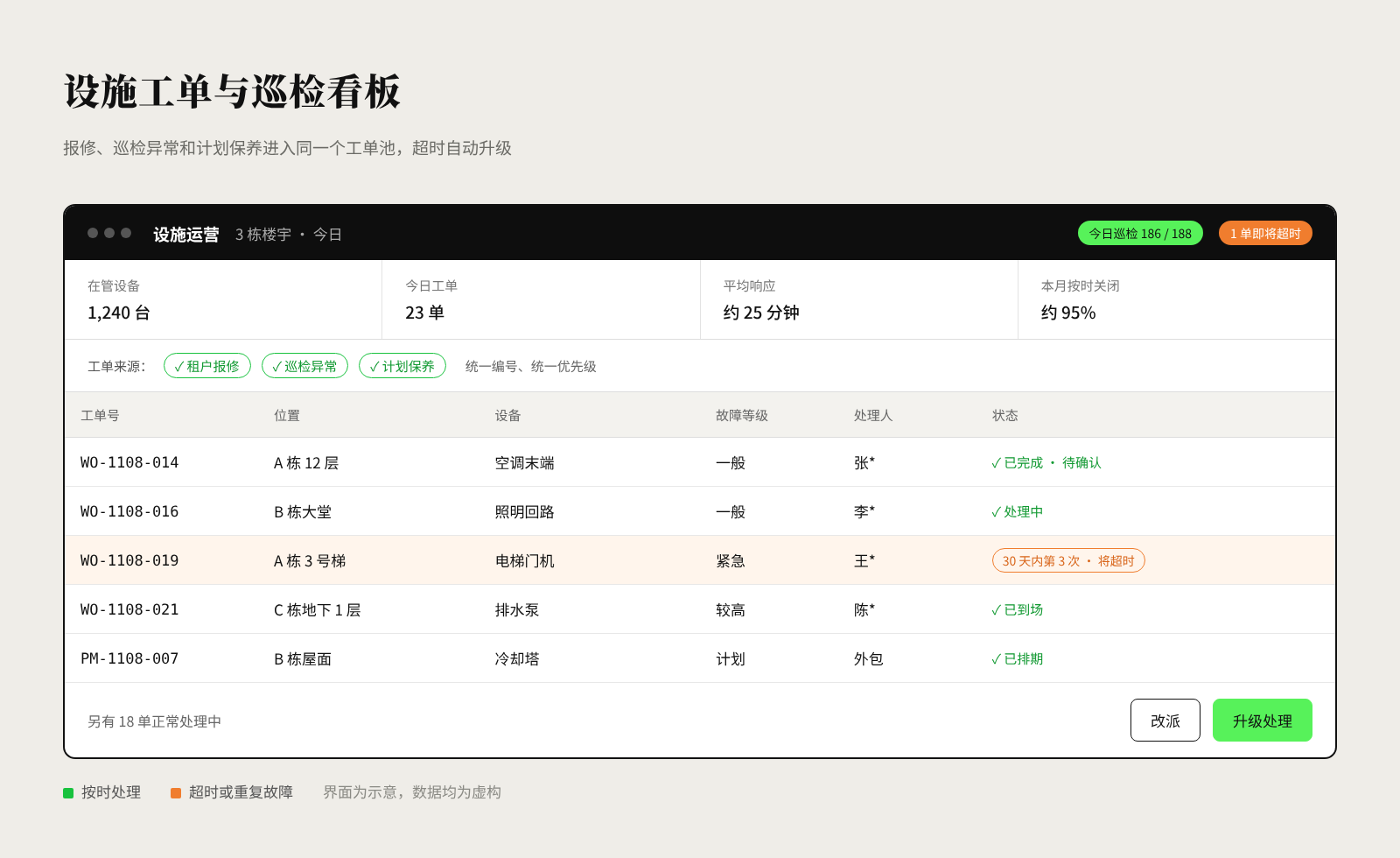
Tenant repair requests, inspection exceptions and planned maintenance are all converted into work orders.
Jobs are assigned by equipment type, fault severity, resolution deadline and staff skills.
Step 4: Connect spare parts and repair costs
Repair materials, external contractor fees and actual labour hours are recorded against the specific equipment or work order.
A history of facility maintenance costs is built up to identify equipment with persistent, frequent faults or abnormal repair costs.
Step 5: Introduce service performance management
Work order volumes, response times, completion and fault recurrence rates are analysed by property, equipment type and service team.
Jobs that exceed the agreed resolution time automatically trigger escalation alerts.
Facility work order and inspection dashboard (illustrative interface; all data fictitious)
Implementation approach
We first built the register of critical facilities and equipment, then rolled out mobile inspections and the work order system.
Once these had matured, repair costs, contracts and service quality analysis were connected to the management platform.
Business value
Property management has moved from dispatching jobs through group chats and checking work by hand to a service operation with records, standards and clear ownership.
The company can now assess facility reliability, repair costs and service quality far more accurately.
Results (approximate): On-time work order closure approx. 95%; average response time approx. −50%; inspection completion rate approx. 99%.
Metrics tracked on an ongoing basis: Inspection completion rate, average response time, on-time work order closure, repeat fault rate, maintenance cost per facility unit.
What this case teaches us
The heart of facility digitalisation is building a lasting link between equipment assets, maintenance tasks and management accountability.
*To protect client confidentiality, company details in this case study have been anonymised; screenshots are illustrative and results are rounded approximations.*
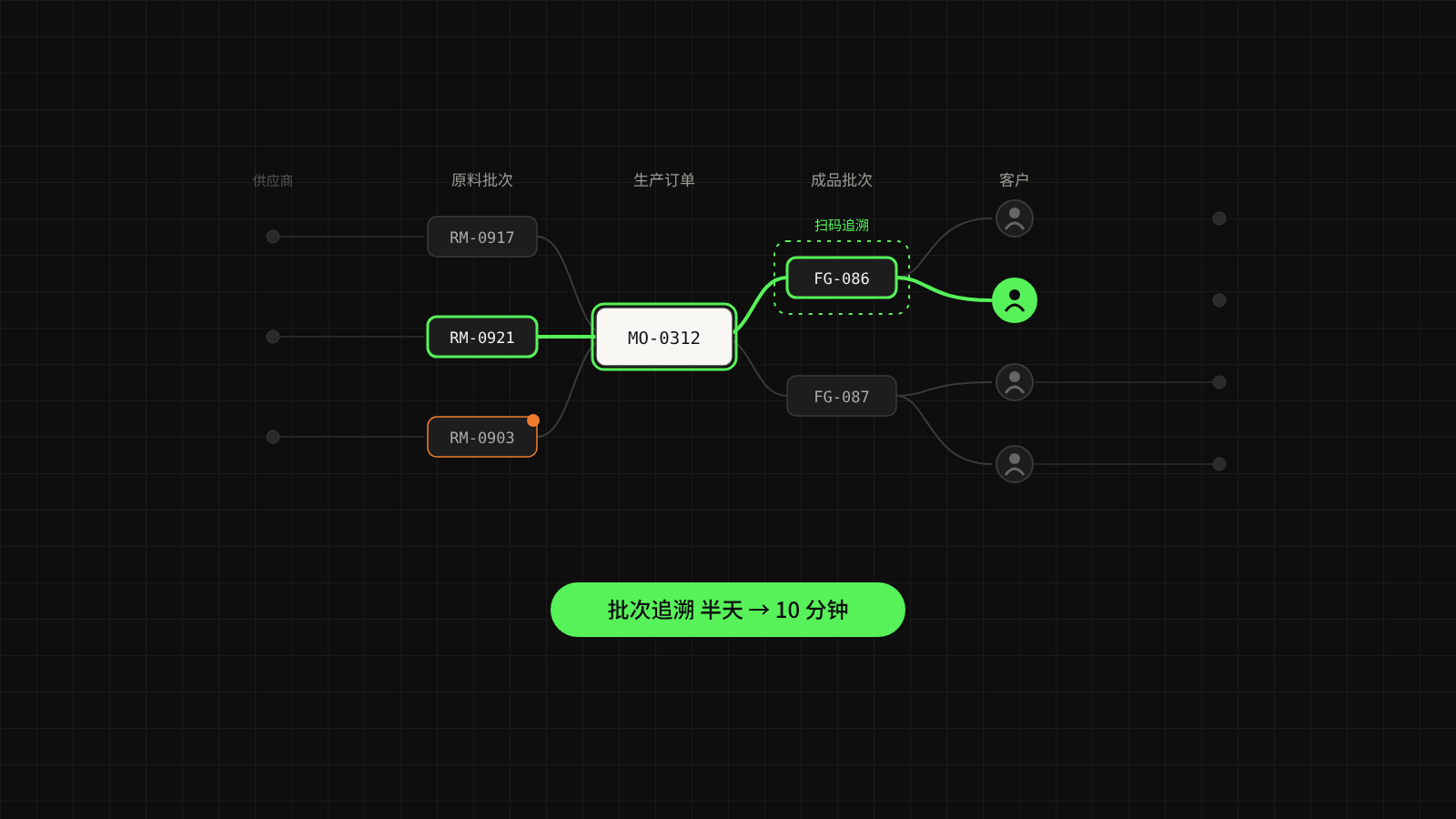
Batch Traceability Cut from Half a Day to 10 Minutes, with Every Batch Accounted For
A multi-category food manufacturer linked purchasing, production, warehousing and sales delivery into a single data chain. Any finished-goods batch can now be traced back to its raw material sources and forward to its customers, and batch traceability has dropped from about half a day to under 10 minutes.
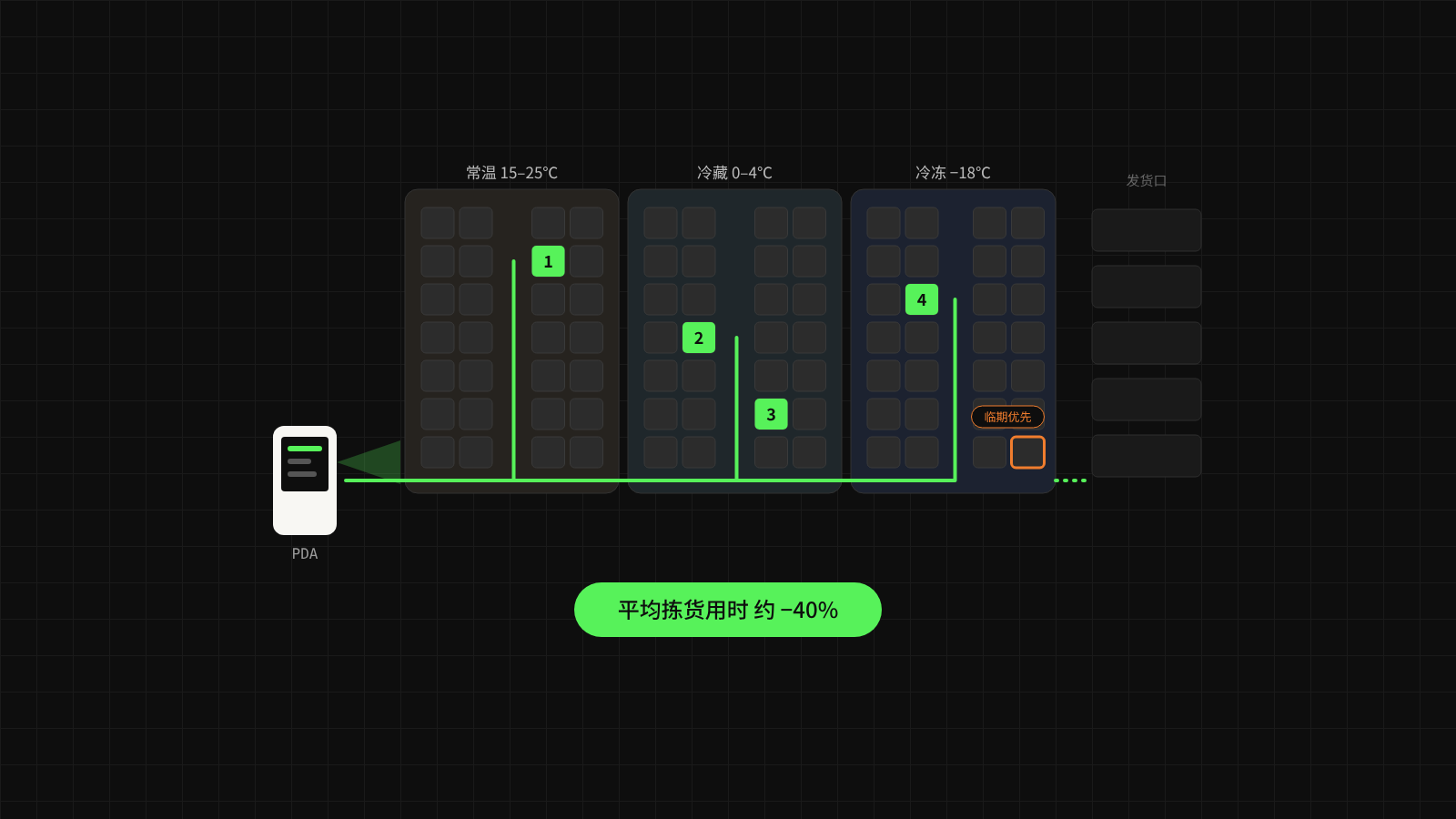
Three-Temperature Inventory Tracked to the Bin, Average Picking Time Down About 40%
A wholesaler of ambient, chilled and frozen food tracked inventory down to bin location and batch, used PDAs for receiving, replenishment and picking, and dispatched stock on a first-expired, first-out basis. Average picking time fell by about 40%, and the value of stock nearing expiry dropped significantly.
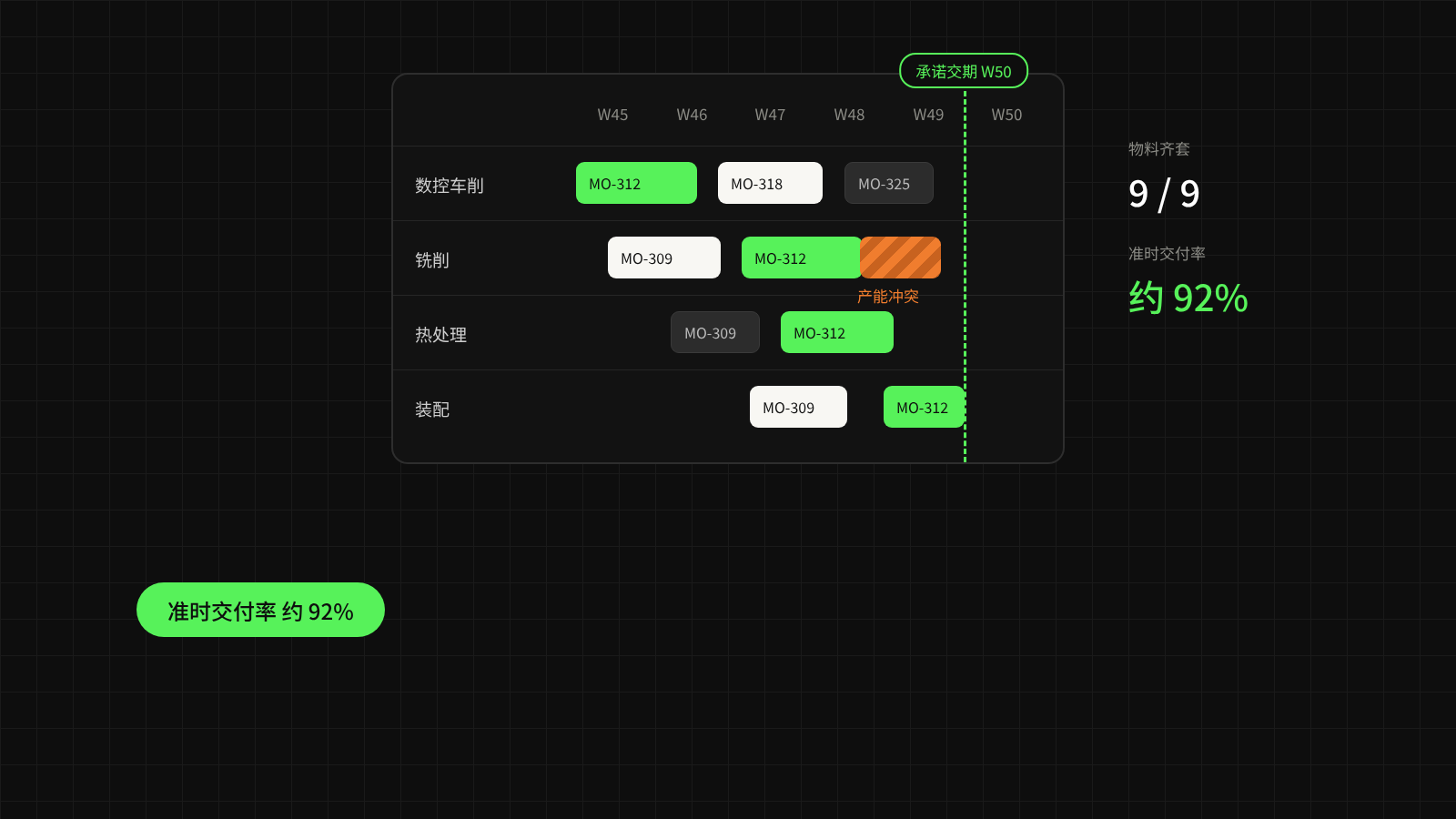
Sales Orders Drive the Production Plan Directly, Lifting On-Time Delivery to About 92%
A high-mix, low-volume machining company let sales orders drive material requirements and capacity checks directly, with shop-floor terminals reporting progress in real time. Delivery promises are now grounded in data, on-time delivery rose from about 75% to about 92%, and stoppages due to material shortages fell markedly.