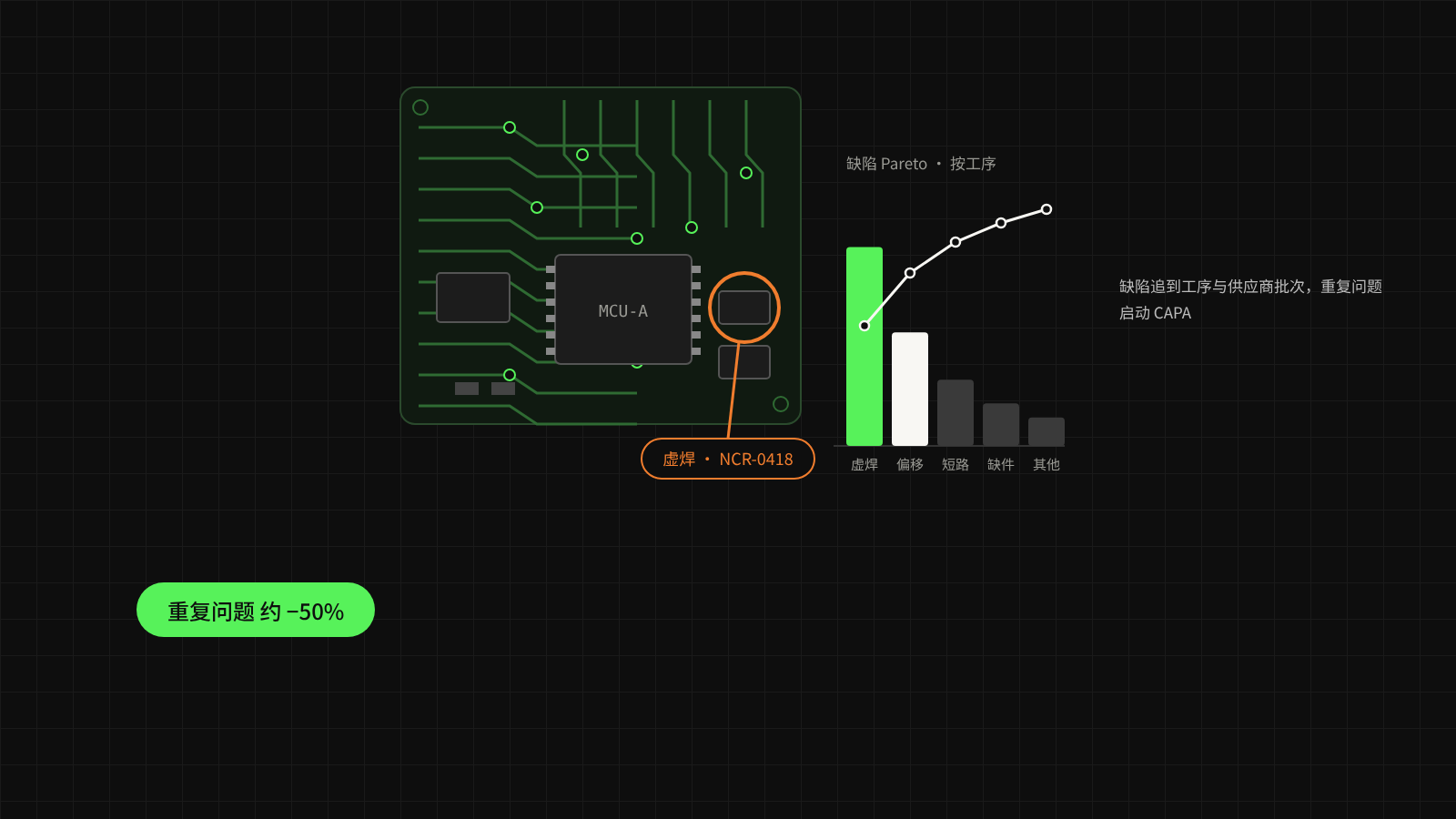
Quality issues traced to process step and supplier batch, with repeat issues down about 50%
A manufacturer of electronic assemblies and control modules linked inspection data to batches and serial numbers, tracked quality incidents through NCRs and launched CAPA for recurring and high-risk issues. Customer complaints can now be traced by serial number, and recurring quality issues have fallen by about 50%.
The company supplies electronic assemblies and control modules to industrial equipment makers. As customers raised their expectations for product consistency and traceability, its paper-based quality checks and Excel reports could no longer keep up with the needs of the business.
The shop floor carried out the required quality checks, but inspection results, rework records and defect causes had long been scattered across different departments.
The company knew how many defective units it produced each month, but struggled to answer three questions: at which process step a problem first appeared, which supplier batches were involved, and whether the corrective actions taken were actually working.
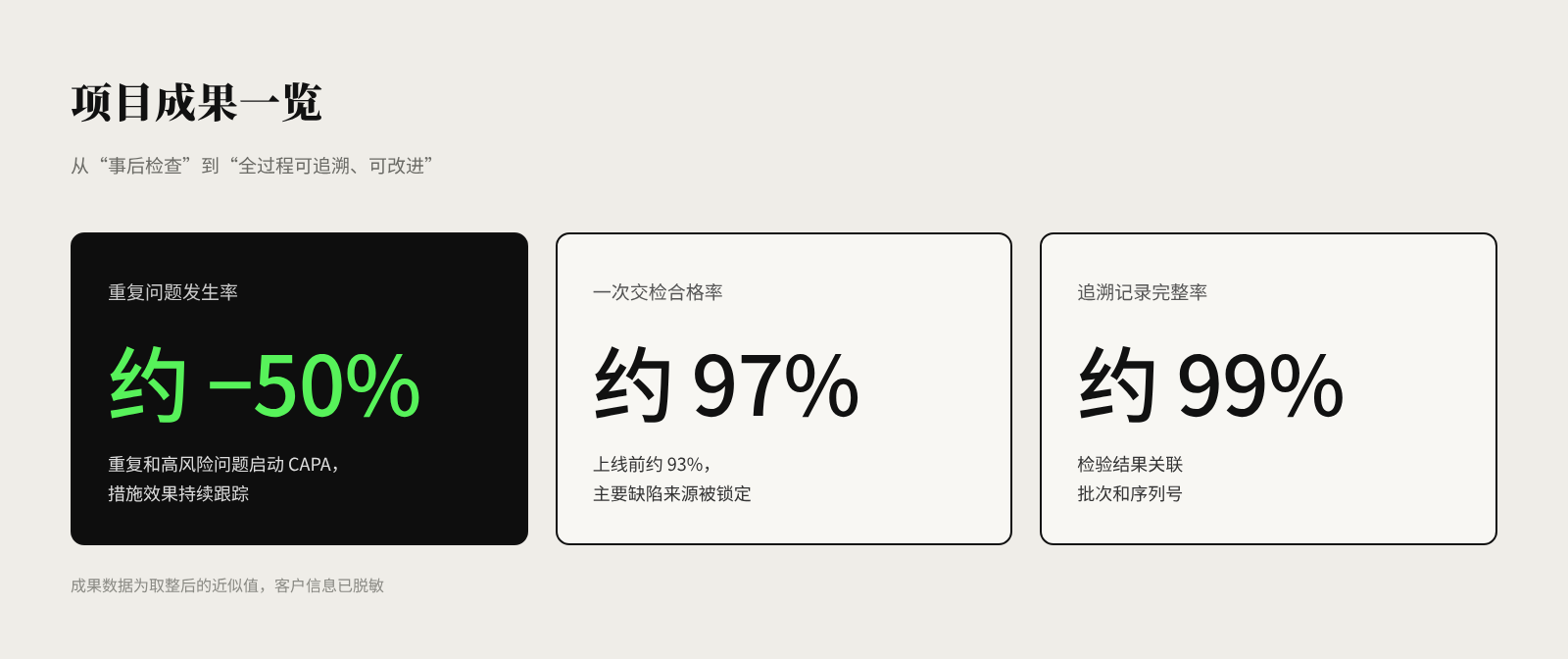
Results: recurring issue rate approx. −50%; first pass yield approx. 97%; traceability record completeness approx. 99%
The challenge
Inspection data was not linked to product batches
Incoming, in-process and outgoing inspections were each recorded separately.
Whenever a product issue was found, staff had to search through multiple files by hand to reconstruct how it had been made.
Defect causes were hard to classify
Different teams used different names for similar defects, making it difficult to produce consistent quality statistics.
Corrective actions were not followed through
Quality incidents were often closed with a one-off rework or scrap decision, with no ongoing check on whether the problem came back.
SHEPHARD's digital solution
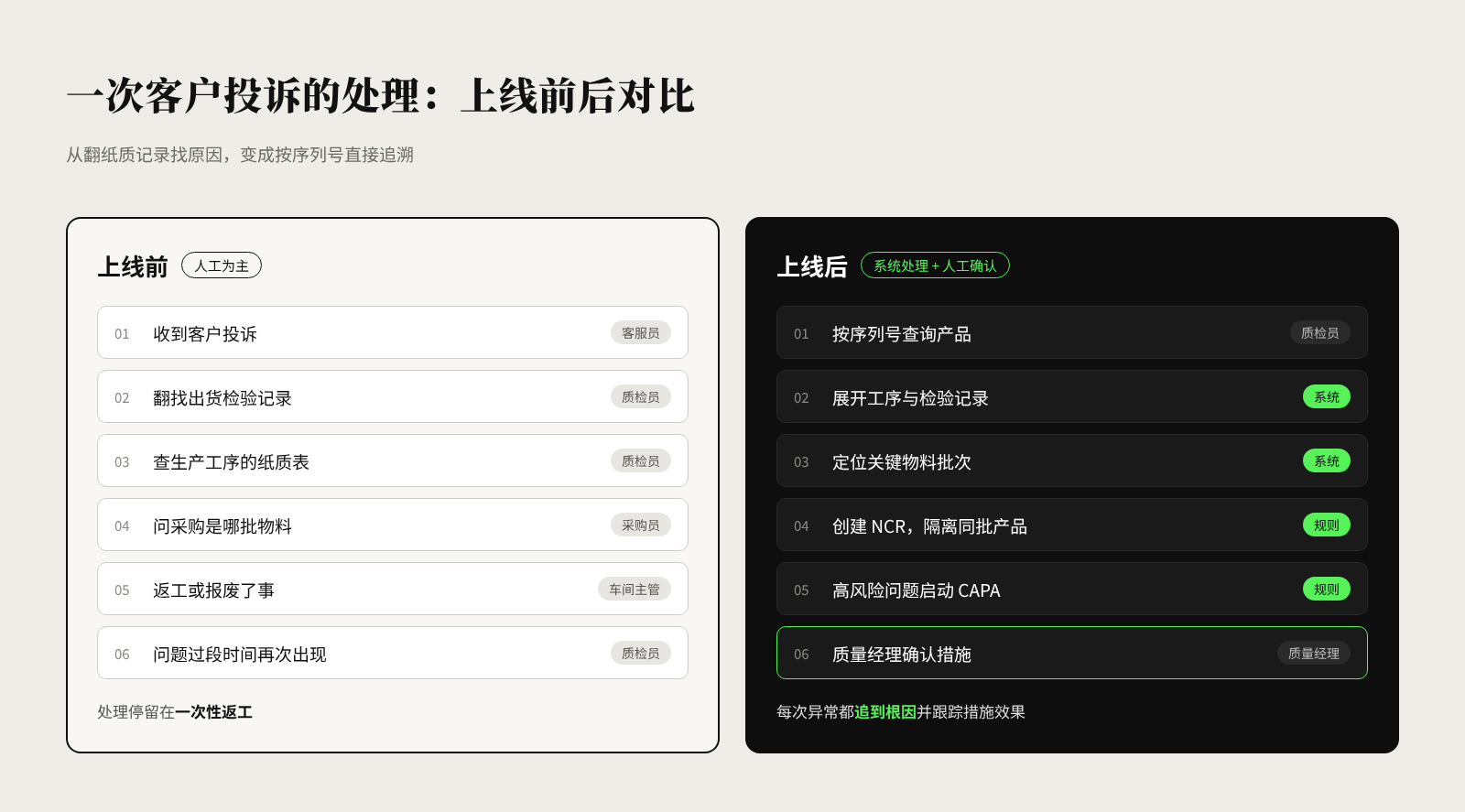
Handling a customer complaint: before and after go-live
Step 1: Establish a unified quality data model
Inspection items, inspection standards, defect codes and decision rules were standardised according to product, process step and quality control requirements.
Quality records are linked to purchase batches, production orders, product batches or serial numbers.
Step 2: Embed quality checks in business processes
Inspection points were configured at raw material receipt, on completion of critical process steps and before finished goods ship.
Inspectors use mobile devices to record measured values, decisions and any supporting attachments.
Products that fail inspection trigger quarantine, re-inspection or approval workflows, so non-conforming items cannot move downstream without authorisation.
Step 3: Put a quality incident process in place
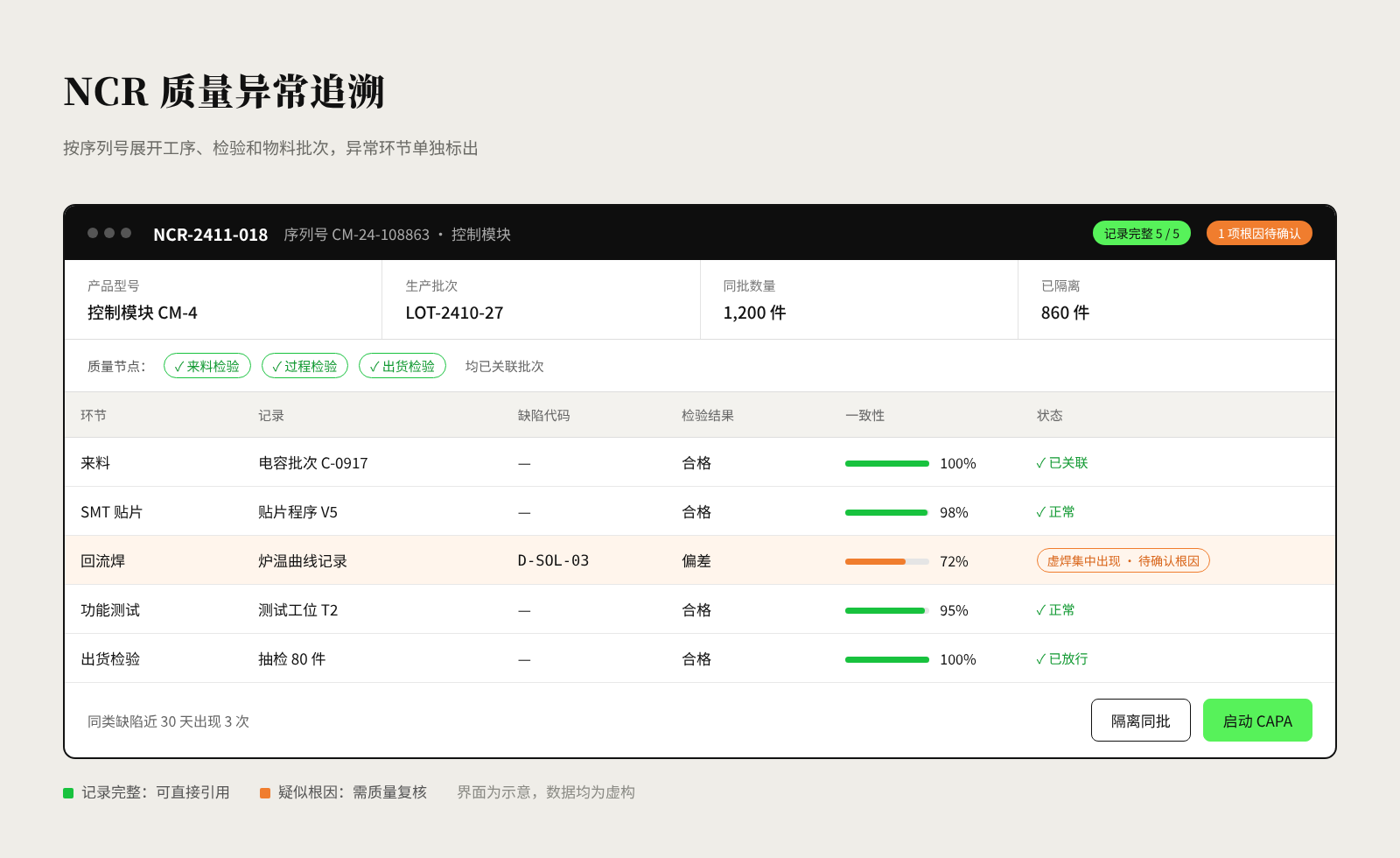
Quality issues are managed through NCRs (non-conformance reports), which record the symptoms, where the issue occurred, affected products, interim containment and the responsible department.
Recurring or higher-risk issues escalate to a CAPA (corrective and preventive action) process.
Step 4: Build product-level traceability
Critical material batches, process steps, inspection results and final product identity are all linked.
When a customer complaint comes in, the relevant production and quality records can be retrieved by serial number or production batch.
Step 5: Build a quality analytics framework
Quality issues are analysed by product model, process step, supplier, defect category and time period.
Pareto analysis identifies the main sources of defects, and trend data is used to assess the impact of process improvements.
NCR quality incident traceability (illustrative interface; all data fictitious)
Implementation approach
We first harmonised quality standards and defect classification, then piloted the full process on a single product line.
Once data capture completeness and traceability had been proven, coverage was gradually extended to more process steps, products and suppliers.
The quality department owns the business standards and the IT team owns data capture and system integration; together they keep quality data trustworthy.
Business value
Quality management has moved from scattered records to a connected system that supports analysis and continuous improvement.
The company can not only pinpoint affected products quickly, but also use historical quality data to identify systemic problems.
Results (approximate): Recurring issue rate approx. −50%; first pass yield approx. 97%; traceability record completeness approx. 99%.
Metrics tracked on an ongoing basis: First pass yield (FPY), defect rate, rework cost, quality incident closure time, recurring issue rate, traceability record completeness.
What this case teaches us
The purpose of digitalising quality is not to produce more inspection reports, but to make sure every quality incident can be traced, explained and improved upon.
*To protect client confidentiality, company details in this case study have been anonymised; screenshots are illustrative and results are rounded approximations.*
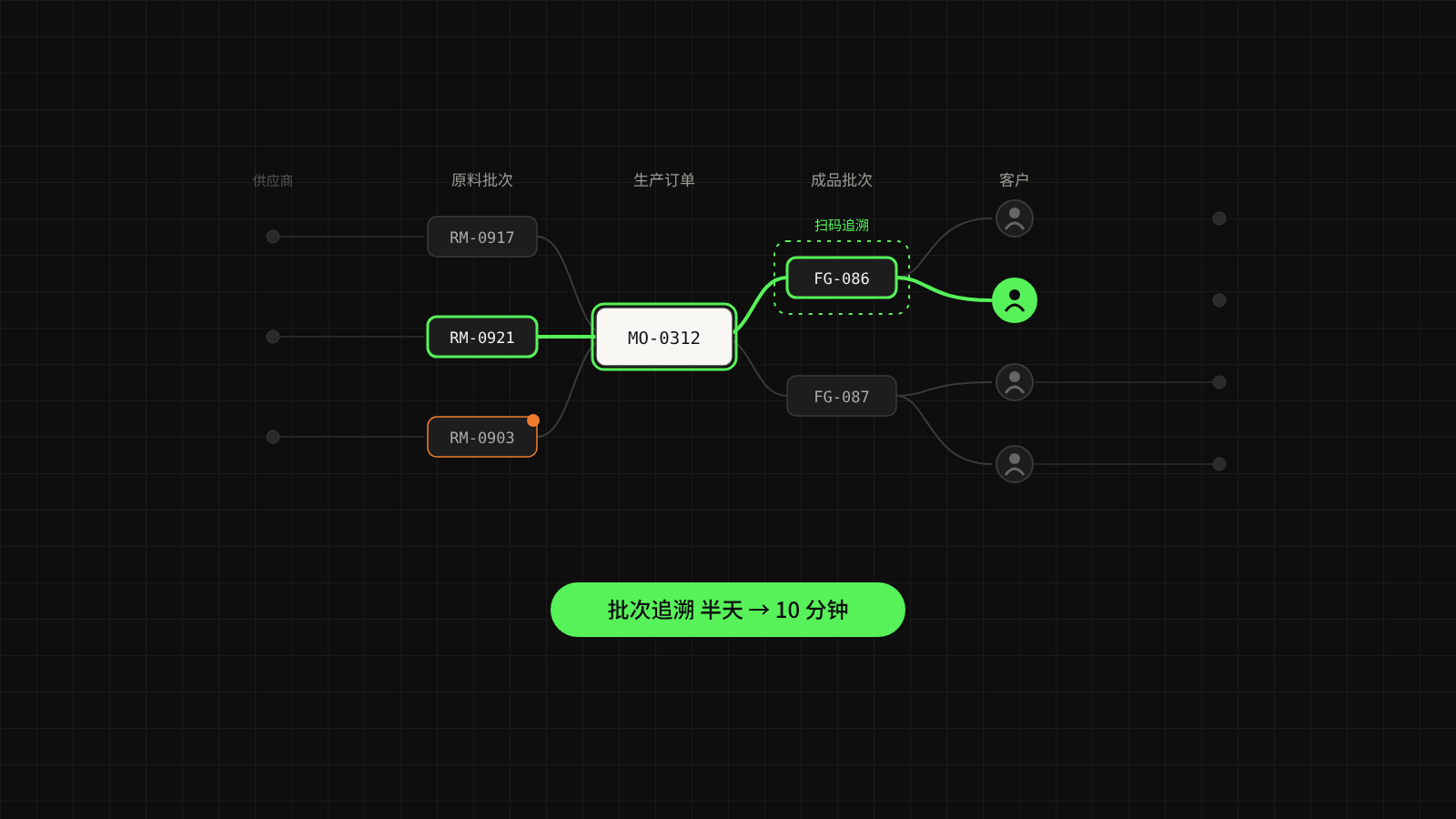
Batch Traceability Cut from Half a Day to 10 Minutes, with Every Batch Accounted For
A multi-category food manufacturer linked purchasing, production, warehousing and sales delivery into a single data chain. Any finished-goods batch can now be traced back to its raw material sources and forward to its customers, and batch traceability has dropped from about half a day to under 10 minutes.
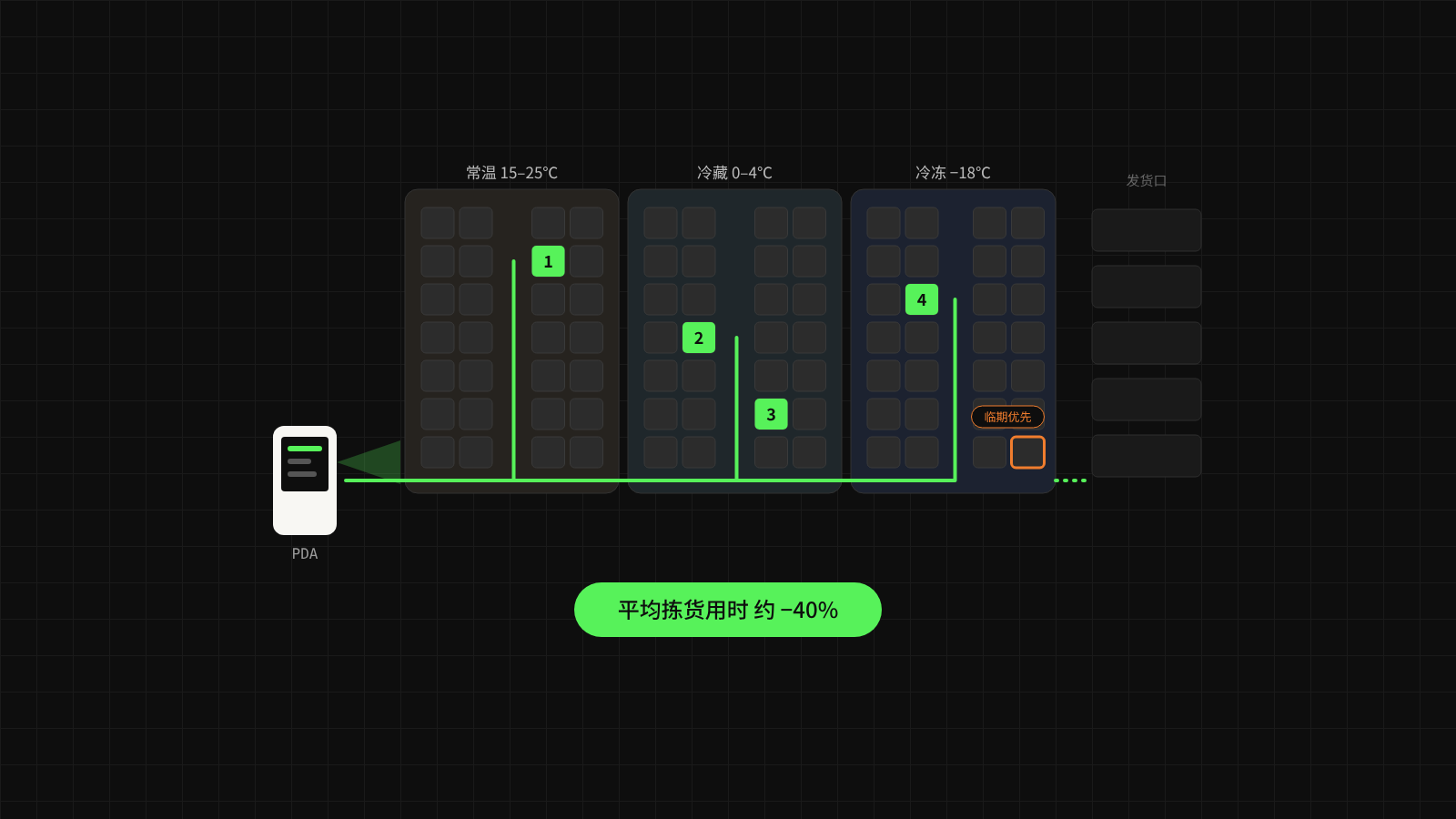
Three-Temperature Inventory Tracked to the Bin, Average Picking Time Down About 40%
A wholesaler of ambient, chilled and frozen food tracked inventory down to bin location and batch, used PDAs for receiving, replenishment and picking, and dispatched stock on a first-expired, first-out basis. Average picking time fell by about 40%, and the value of stock nearing expiry dropped significantly.
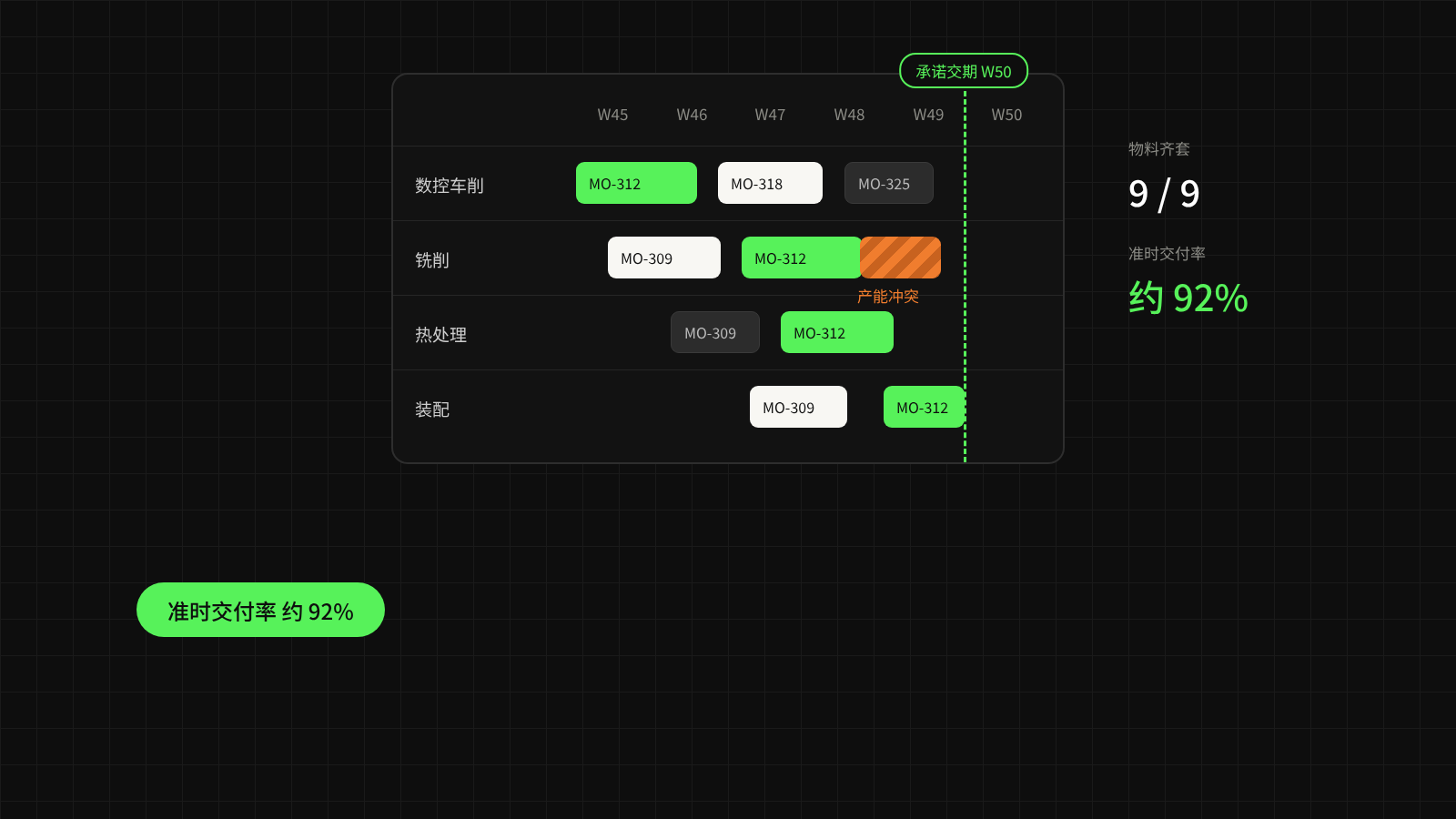
Sales Orders Drive the Production Plan Directly, Lifting On-Time Delivery to About 92%
A high-mix, low-volume machining company let sales orders drive material requirements and capacity checks directly, with shop-floor terminals reporting progress in real time. Delivery promises are now grounded in data, on-time delivery rose from about 75% to about 92%, and stoppages due to material shortages fell markedly.