Attendance Exceptions Confirmed the Same Day, Leave Approval Cut from About 3 Days to Half a Day
A mid-sized company with staff across offices, warehouses, production and delivery unified its employee master data and connected attendance, leave and departmental performance. Attendance exceptions are now confirmed the same day instead of being compiled at month-end, and leave approval has dropped from about 3 days to under half a day.
A mid-sized company with several departments had employees working in very different settings, including offices, warehouses, production and delivery.
As headcount grew, HR management became a significant cross-departmental issue.
Employee records were kept in Excel, the attendance system ran on its own, leave requests were submitted through instant messaging, and department heads reported performance to management in no fixed format.
The company could handle day-to-day payroll and HR administration, but struggled to answer promptly how attendance actually looked in a given department, whether staffing was appropriate, and whether departmental management issues had been resolved.
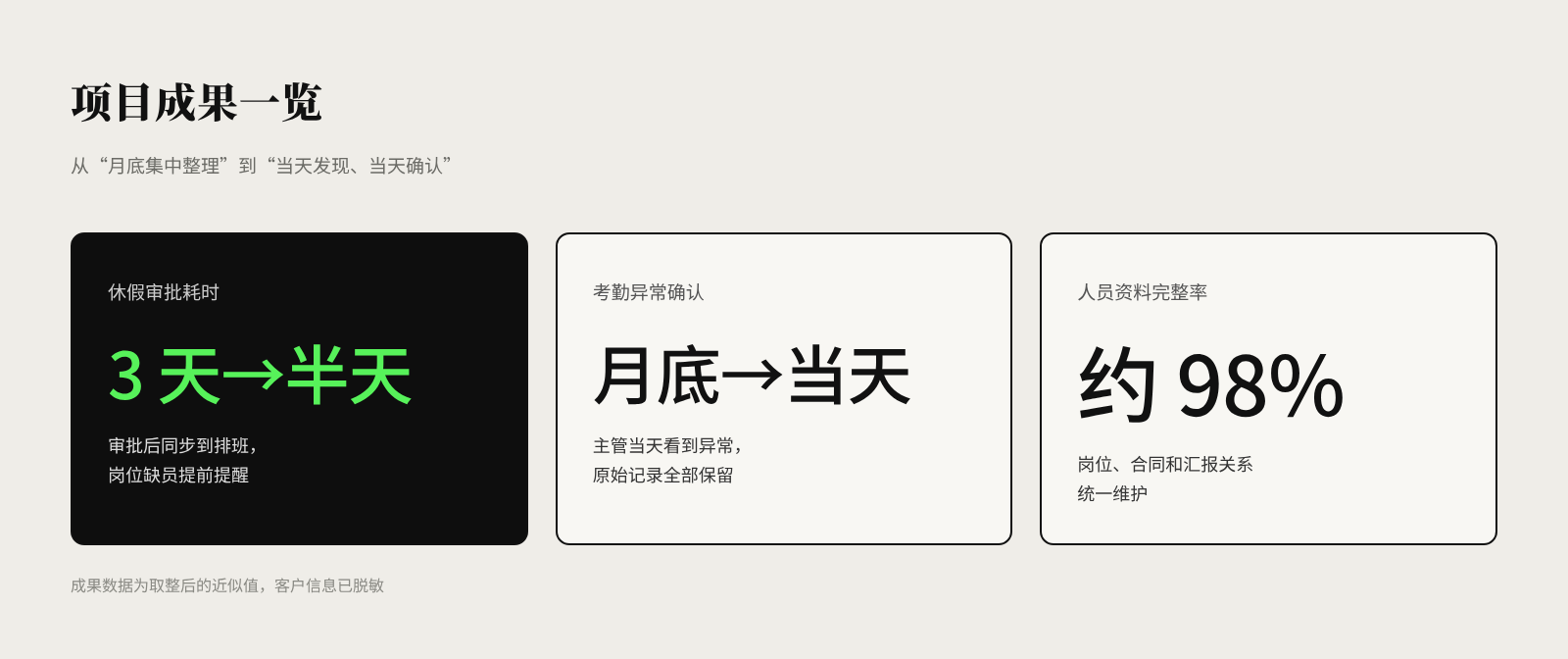
Project results: leave approval time 3 days → half a day; attendance exception confirmation month-end → same day; employee record completeness about 98%
The challenge
No unified management of employee data
Different departments each kept their own records of employees' roles, contact details, contracts and onboarding information.
After a personnel change, multiple records might not be updated consistently.
Attendance exceptions were spotted late
Late arrivals, early departures, absences and overtime were mainly compiled at the end of the month.
Supervisors could not catch and verify exceptions in time.
Leave and scheduling were not linked
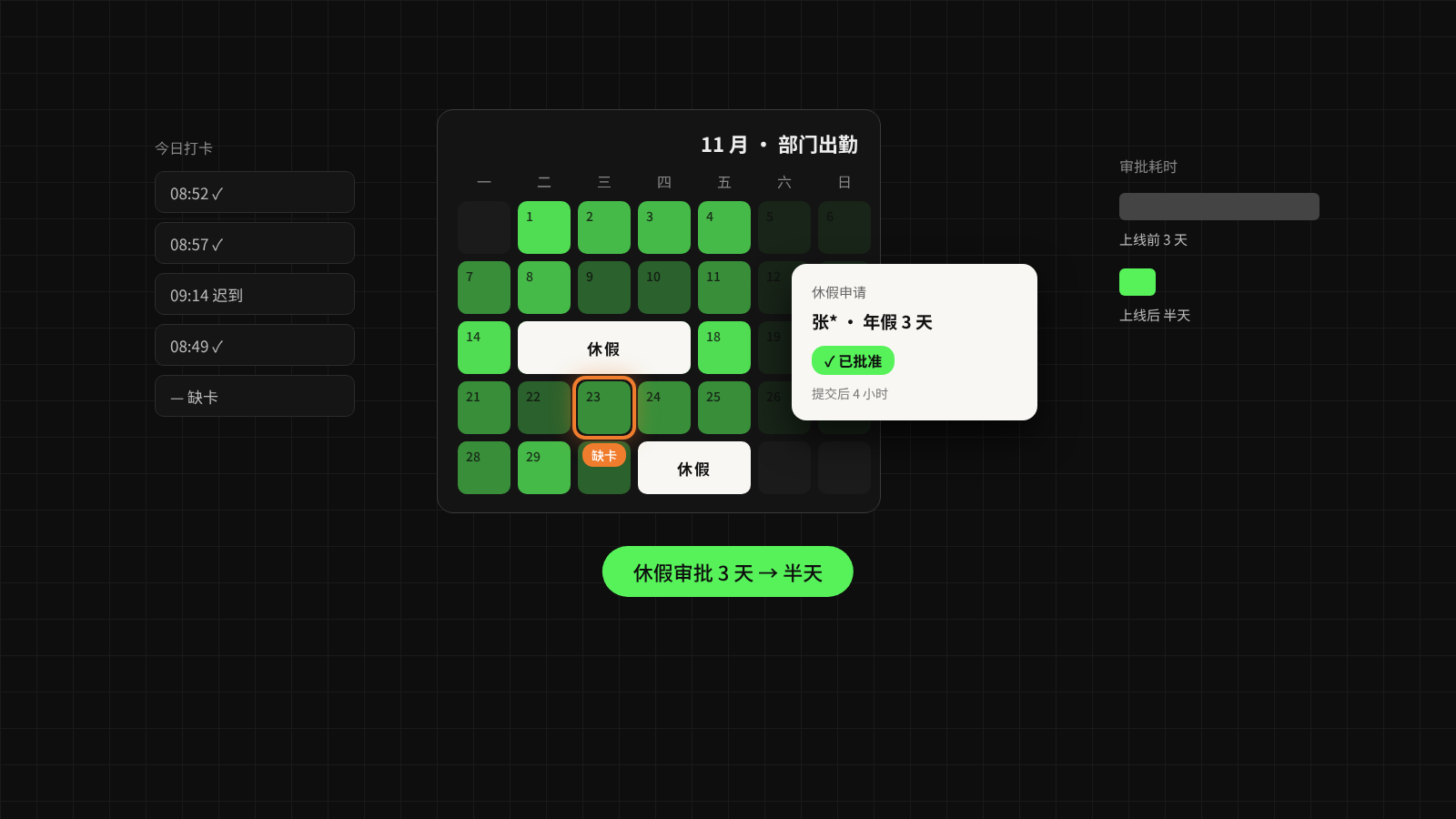
Once leave was approved, it was not reflected in departmental rosters or work assignments, which could easily leave positions understaffed.
Performance reviews lacked ongoing management
Department heads submitted performance summaries at different frequencies and to different standards.
Management found it hard to compare how departments were tracking against their goals, or to follow up on whether previously identified issues had improved.
SHEPHARD's digital solution
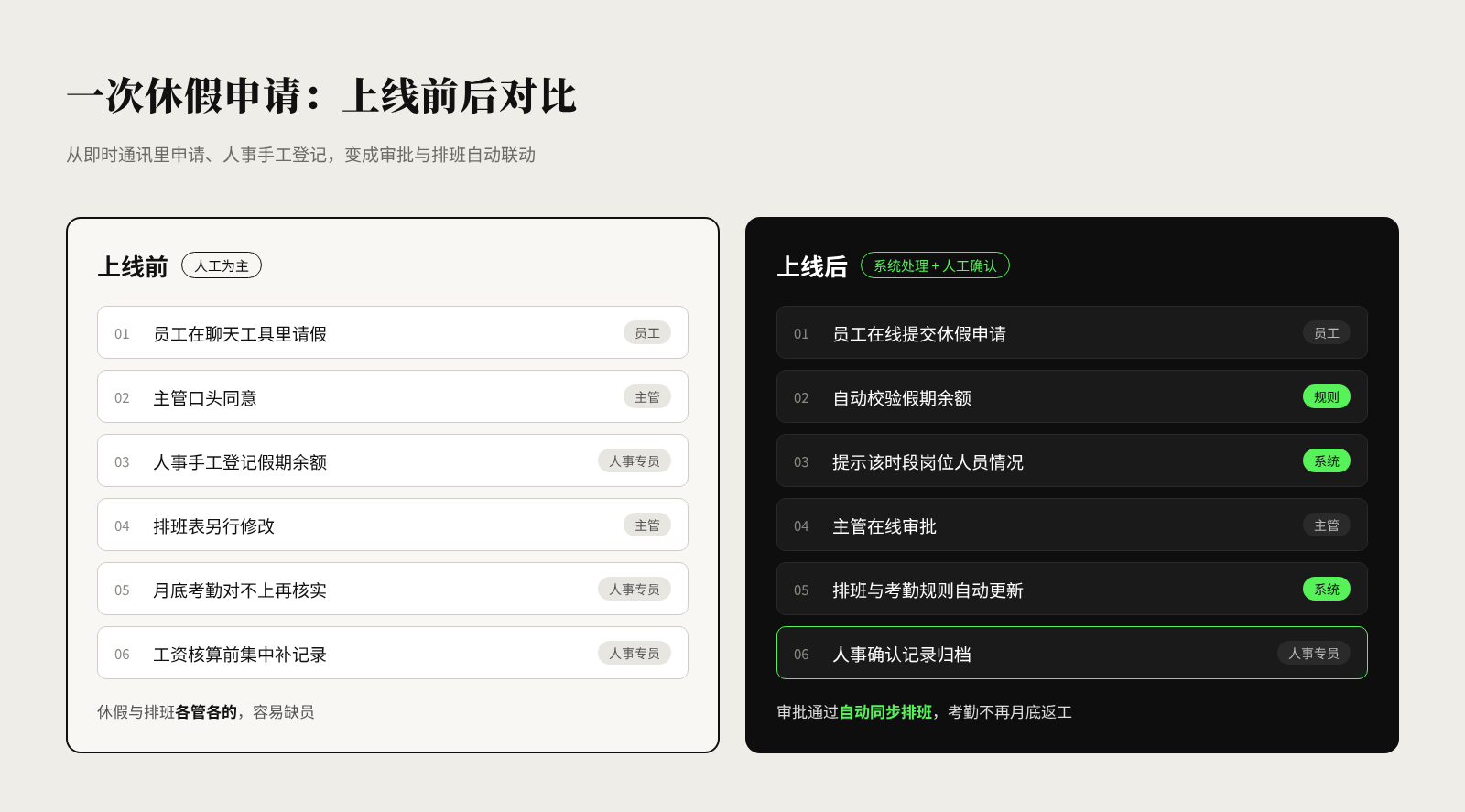
A leave request: before and after go-live
Step 1: Establish unified employee master data
Each employee has a complete record covering role, department, supervisor, contract, work schedule and employment status.
Tiered permissions restrict access to sensitive HR information.
Step 2: Connect attendance data
Where lawful and appropriate, attendance devices or the existing attendance system are connected to the HRIS.
Based on the working-time rules that apply to each employee, the system flags exceptions that need review.
Original clock-in records and manual adjustments are both retained, so attendance processing remains traceable.
Step 3: Standardize leave and approvals
We set up a process for leave requests, approvals, leave balances and record keeping.
Approved leave is linked to rosters and staffing arrangements.
Business metrics are defined according to each department's function.
For example, sales focuses on orders and collections, the warehouse on inventory accuracy and fulfilment efficiency, production on plan attainment and quality, and customer service on response times and issue resolution.
The performance framework combines quantitative metrics with qualitative assessments, and sets out review cycles, owners and a review mechanism.
Step 5: Track departmental issues
Department heads regularly report key results, staffing issues and matters that need management coordination.
The system turns these issues into management tasks with an owner, a deadline and a status.
Management can see whether issues persist over time, rather than just reading one-off reports.
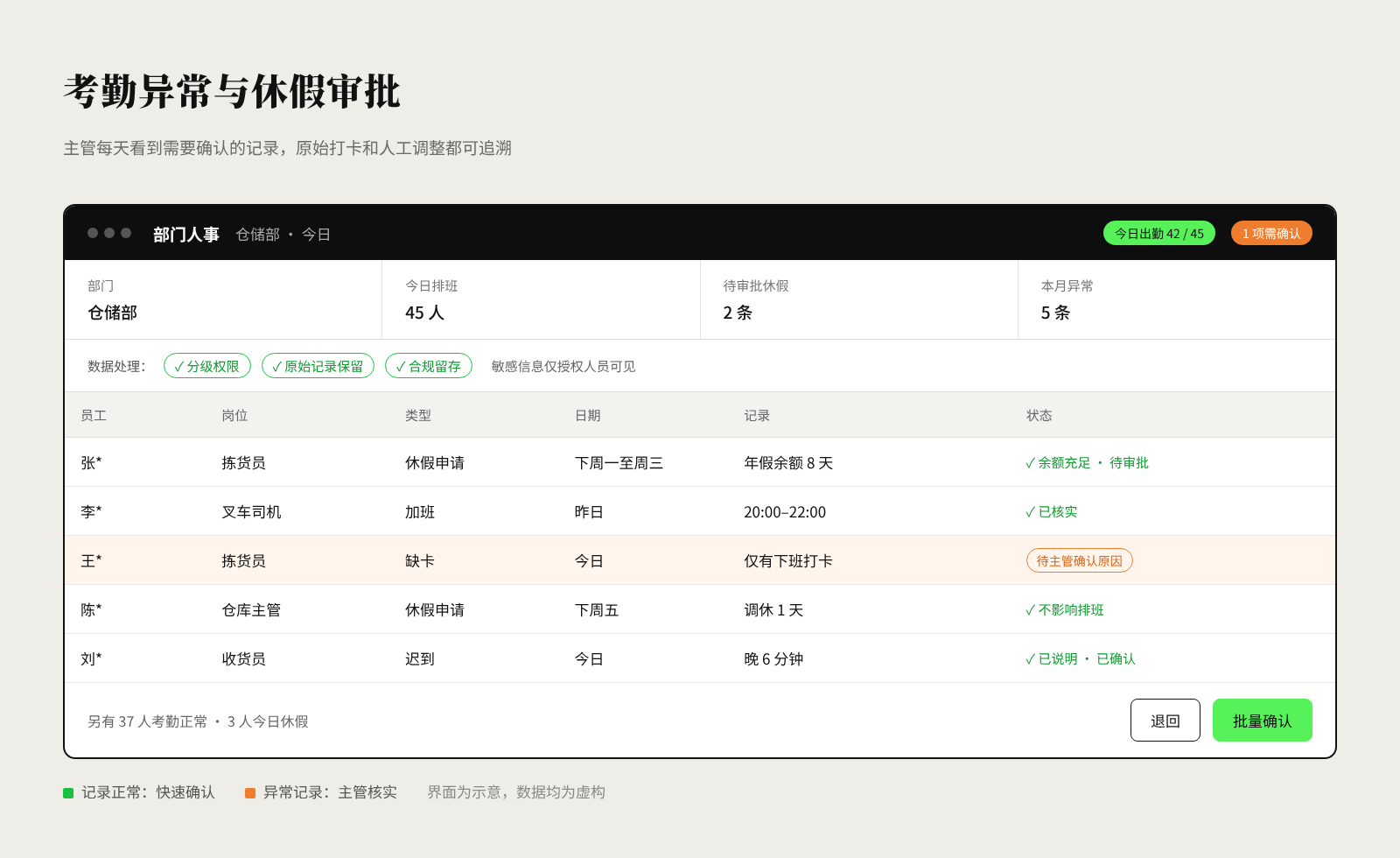
Attendance exceptions and leave approval (illustrative interface, all data fictitious)
Implementation roadmap
We first cleaned up employee data and configured the organizational structure, then introduced attendance, leave and departmental performance step by step.
In a European operating environment, the legal basis, access rights and retention rules for processing employees' personal data must be defined in line with applicable labour law, collective agreements and GDPR requirements.
Business value
HR spends less time repeatedly collecting and compiling information, and department heads get more timely people-management information.
Management can connect attendance, role assignments, departmental performance and improvement actions.
Project results (approximate): leave approval time 3 days → half a day; attendance exception confirmation month-end → same day; employee record completeness about 98%.
Metrics tracked on an ongoing basis: attendance exception confirmation cycle, leave approval time, employee record completeness, timeliness of departmental performance submissions, management issue closure rate.
What this case teaches us
HR digitalization is not just about entering employee records into ERP.
The real management value lies in helping the company understand the relationship between staffing, organizational efficiency and departmental performance, while protecting employees' rights and data privacy.
*To protect client confidentiality, company details in this case study have been anonymized, interface screenshots are illustrative, and results are rounded approximations.*
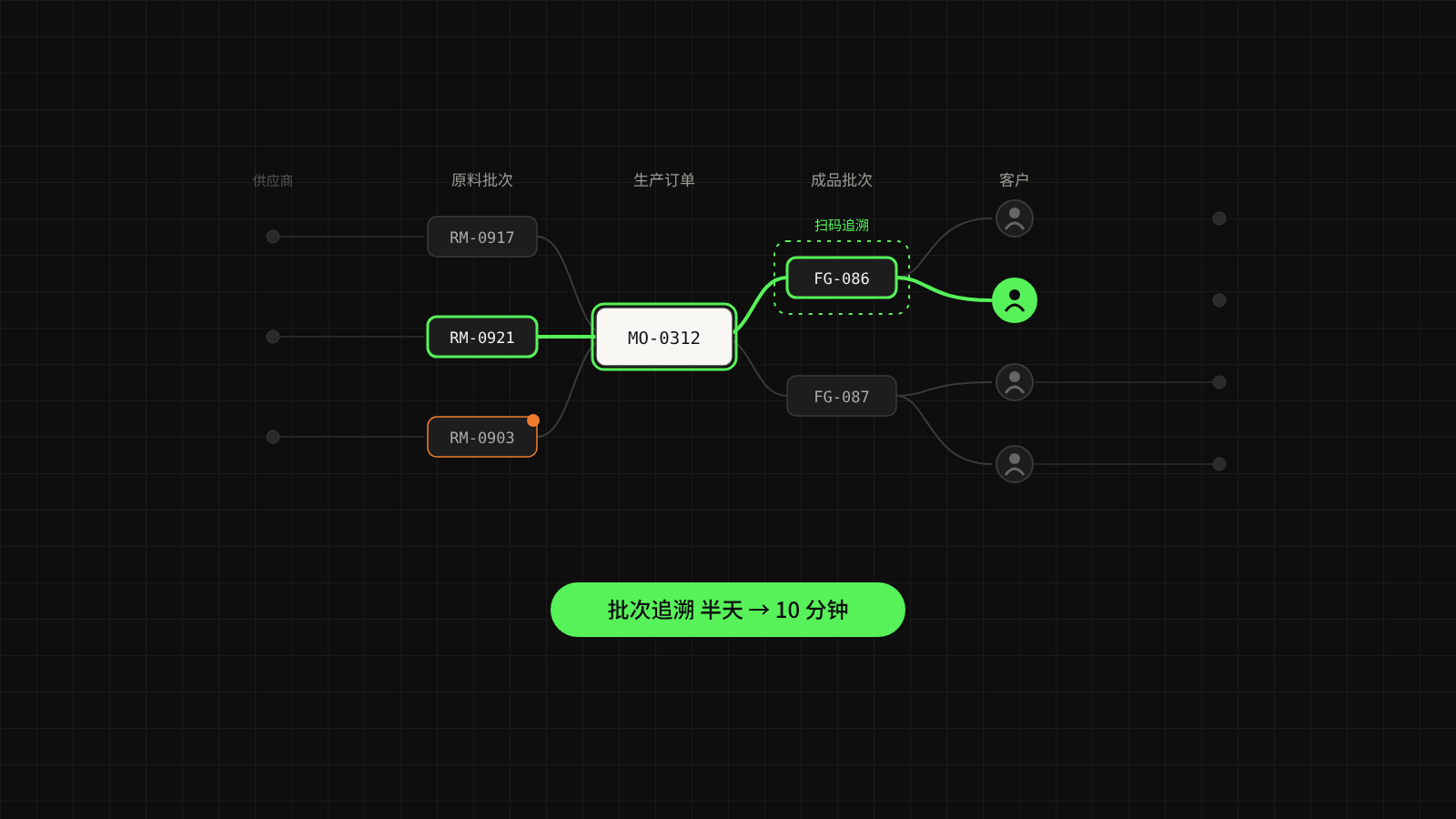
Batch Traceability Cut from Half a Day to 10 Minutes, with Every Batch Accounted For
A multi-category food manufacturer linked purchasing, production, warehousing and sales delivery into a single data chain. Any finished-goods batch can now be traced back to its raw material sources and forward to its customers, and batch traceability has dropped from about half a day to under 10 minutes.
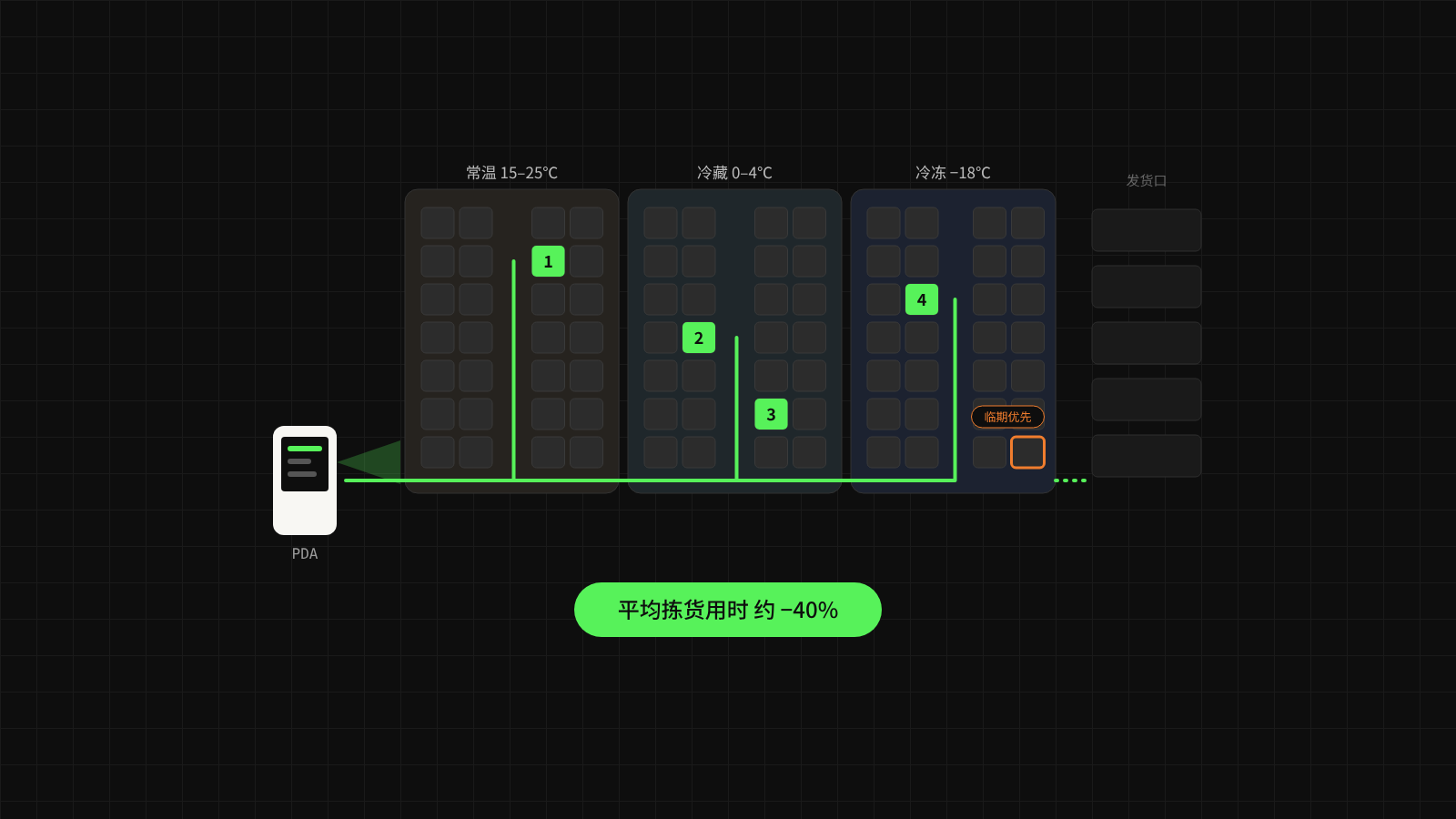
Three-Temperature Inventory Tracked to the Bin, Average Picking Time Down About 40%
A wholesaler of ambient, chilled and frozen food tracked inventory down to bin location and batch, used PDAs for receiving, replenishment and picking, and dispatched stock on a first-expired, first-out basis. Average picking time fell by about 40%, and the value of stock nearing expiry dropped significantly.
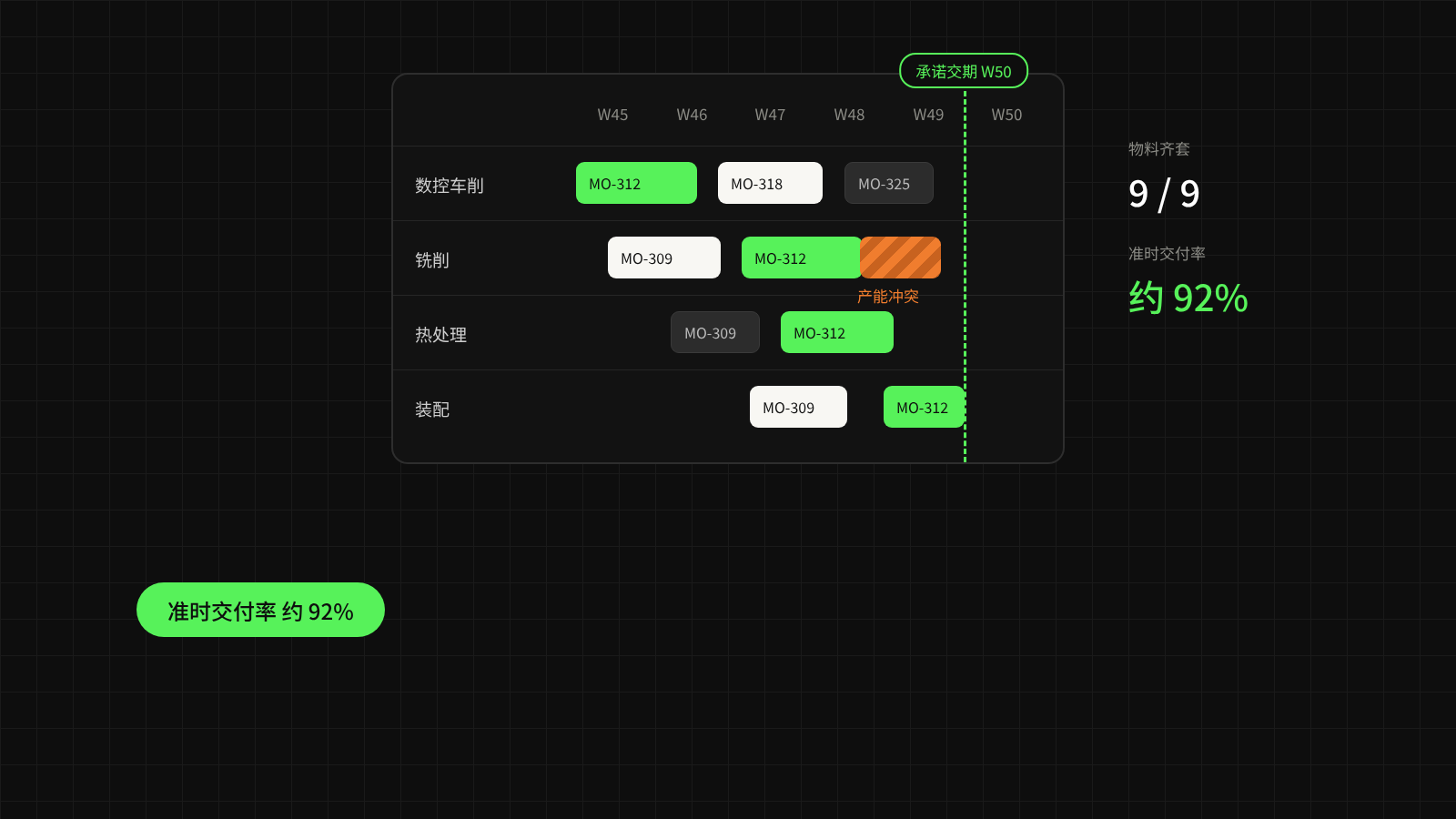
Sales Orders Drive the Production Plan Directly, Lifting On-Time Delivery to About 92%
A high-mix, low-volume machining company let sales orders drive material requirements and capacity checks directly, with shop-floor terminals reporting progress in real time. Delivery promises are now grounded in data, on-time delivery rose from about 75% to about 92%, and stoppages due to material shortages fell markedly.