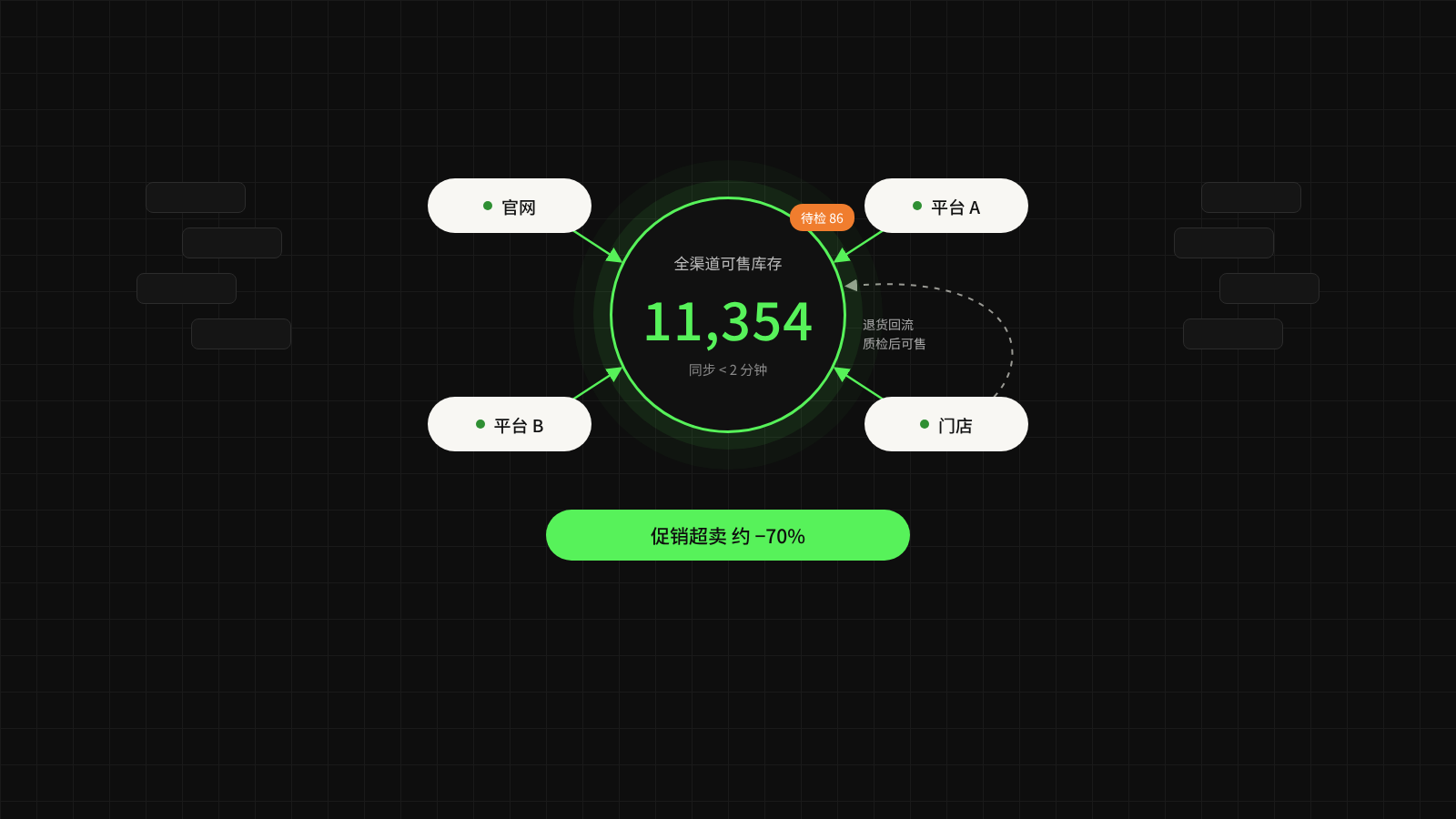
One stock ledger for webshop, marketplaces and stores cuts promotional overselling by about 70%
A retailer selling through its own brand webshop, third-party marketplaces and physical channels unified product mapping and available-to-sell calculations and connected its returns process. Overselling during promotions fell by about 70%, and returns processing time dropped from about 7 days to under 3.
The retailer sells through its own brand webshop, third-party e-commerce marketplaces and physical retail channels, and kept adding new sales channels as the business grew.
Each platform had its own order back office and its own stock settings.
Although the company used an ERP for purchasing and finance, a great deal of manual work remained between channel orders, warehouse operations and after-sales returns.
During promotions, some products were prone to overselling, while some returned items sat back in the warehouse for days before becoming available for sale again.
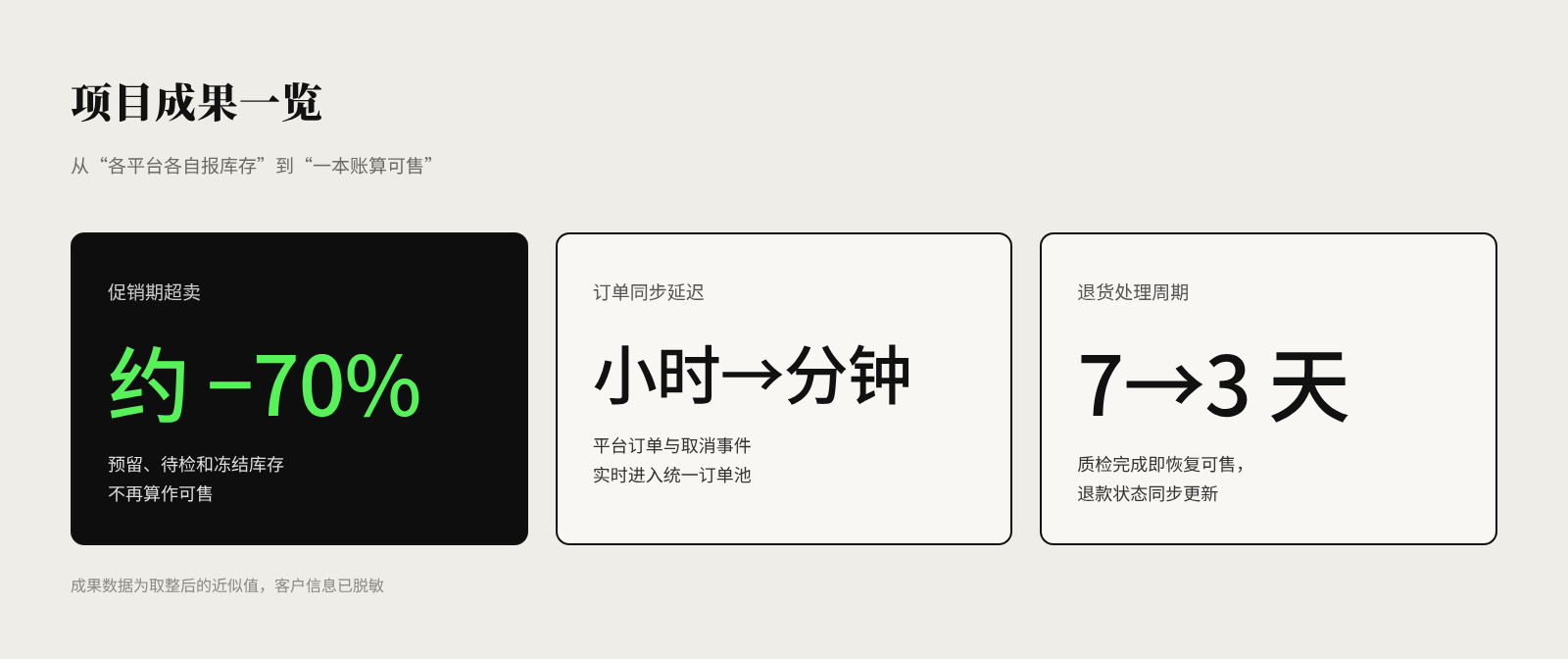
Results: overselling during promotions approx. −70%; order sync latency from hours to minutes; returns processing time 7→3 days
The challenge
Stock figures differed across channels
Each platform synchronised stock at a different frequency.
When inventory included reserved, awaiting-inspection and unsellable items, the available quantity shown on platforms was easily distorted.
Order processing was fragmented
Order statuses, shipping information and cancellation rules differed from platform to platform.
Operations staff had to switch between multiple back offices.
Returns did not reach the inventory and finance systems in time
Once a customer initiated a return, the refund, the physical return of goods, quality inspection and restocking were often handled by different people.
SHEPHARD's digital solution
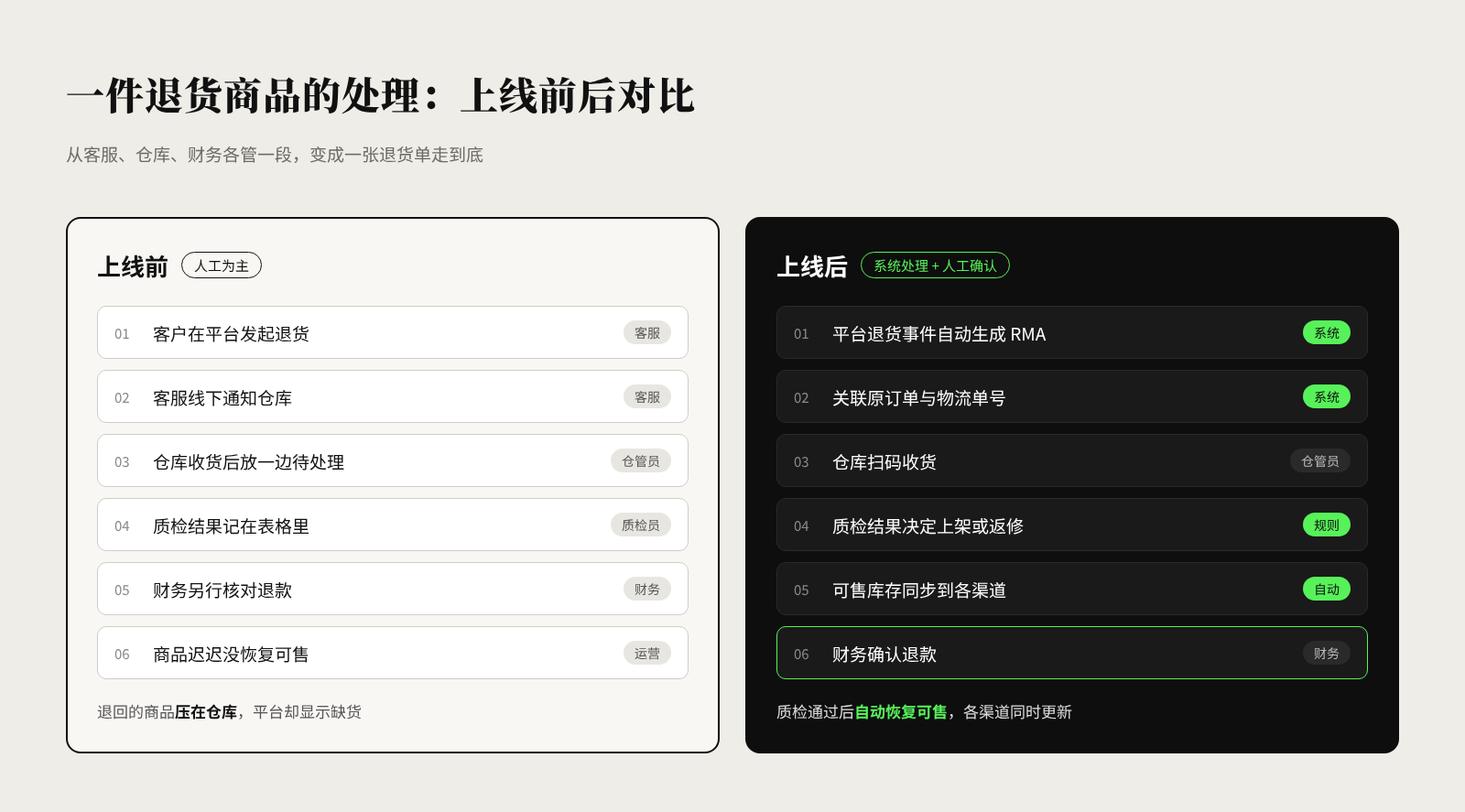
Handling a returned item: before and after go-live
Step 1: Establish unified product and channel mapping
Using the company's ERP product master data as the foundation, we maintain the mapping between internal SKUs, platform SKUs, product variants and sales channels.
We defined which system owns product information, pricing, stock and order status.
Step 2: Build unified order management
Orders, cancellations and refund events are received through platform APIs or other supported integration methods.
Orders from every channel follow a single business model while retaining each platform's original order number.
Step 3: Define rules for available-to-sell stock
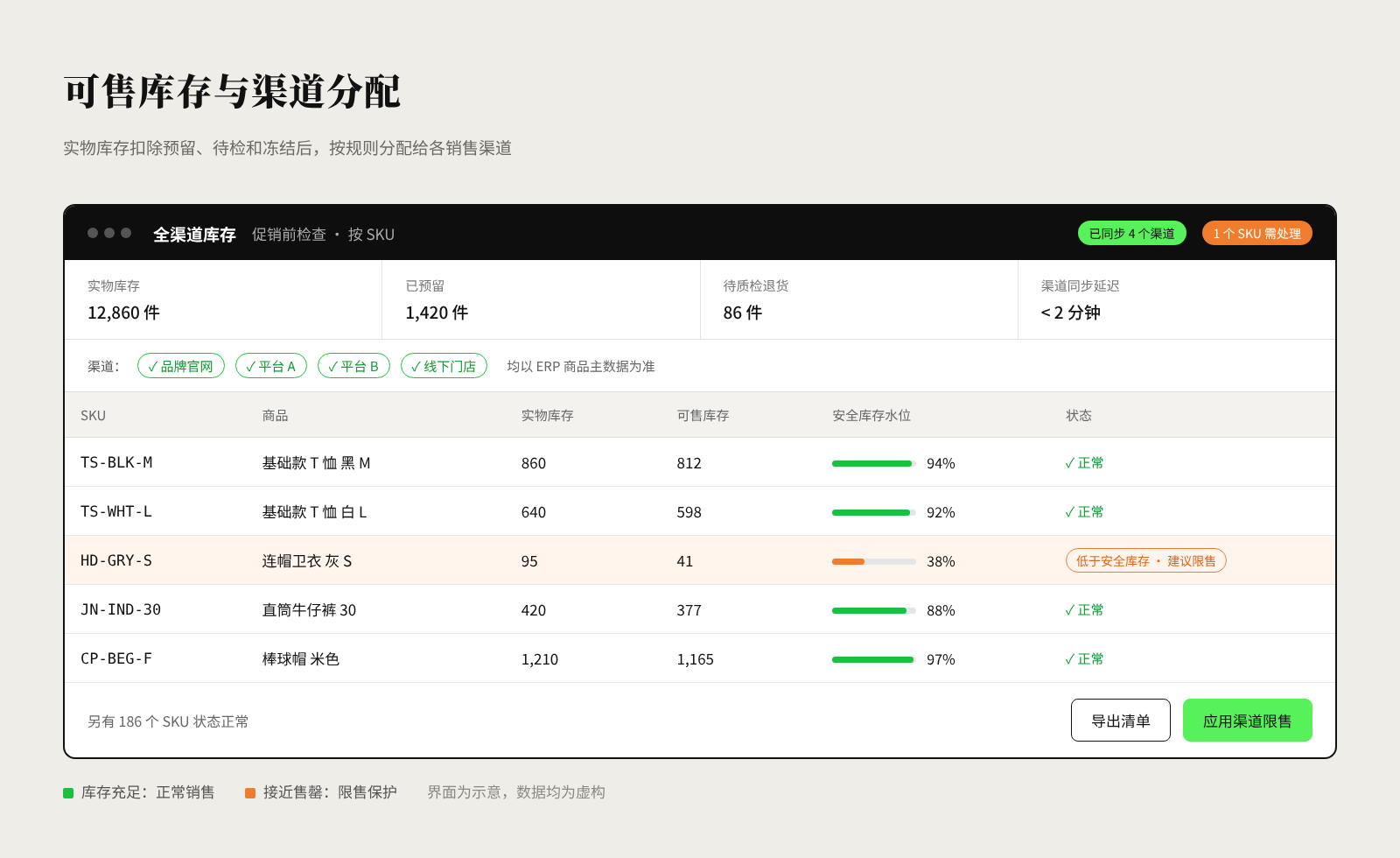
Physical stock, reserved quantities, quality-blocked stock and channel allocation rules all feed into a single available-to-sell calculation.
Fast-moving products use appropriate event-based synchronisation and stock buffer strategies to reduce the risk of overselling caused by data latency.
Step 4: Build a reverse logistics process
Customer returns are managed through RMA (return merchandise authorisation).
Return requests, return shipping, warehouse receipt, quality inspection, stock disposition and refund status are all linked.
Depending on the item's condition, it is restocked, refurbished, scrapped or handled in another way.
Step 5: Build product and channel performance analytics
Revenue, fulfilment costs, refund rates and true gross margin are analysed by channel, product, campaign and order.
This lets the company assess the profitability of each channel, rather than simply comparing sales volumes.
Available-to-sell stock and channel allocation (illustrative interface; all data fictitious)
Implementation approach
We first unified SKU and stock data, then connected the main sales channels.
Order fulfilment, reverse logistics and channel financial analysis were introduced step by step.
Before major promotions, order peaks, API rate limits, stock sync latency and duplicate events must be stress-tested.
Business value
The company now has a single view of orders and stock, and can coordinate resources across sales channels more effectively.
Returns no longer stop at the customer service system; they now flow through to warehouse stock, finance refunds and performance analysis.
Results (approximate): Overselling during promotions approx. −70%; order sync latency from hours to minutes; returns processing time 7→3 days.
Metrics tracked on an ongoing basis: Overselling rate, order sync latency, order fulfilment cycle time, returns processing time, channel contribution margin, days inventory outstanding.
What this case teaches us
Omnichannel retail is not the same as opening several sales platforms at once.
True omnichannel digitalisation means every channel shares trustworthy product, order, inventory and customer service capabilities.
*To protect client confidentiality, company details in this case study have been anonymised; screenshots are illustrative and results are rounded approximations.*
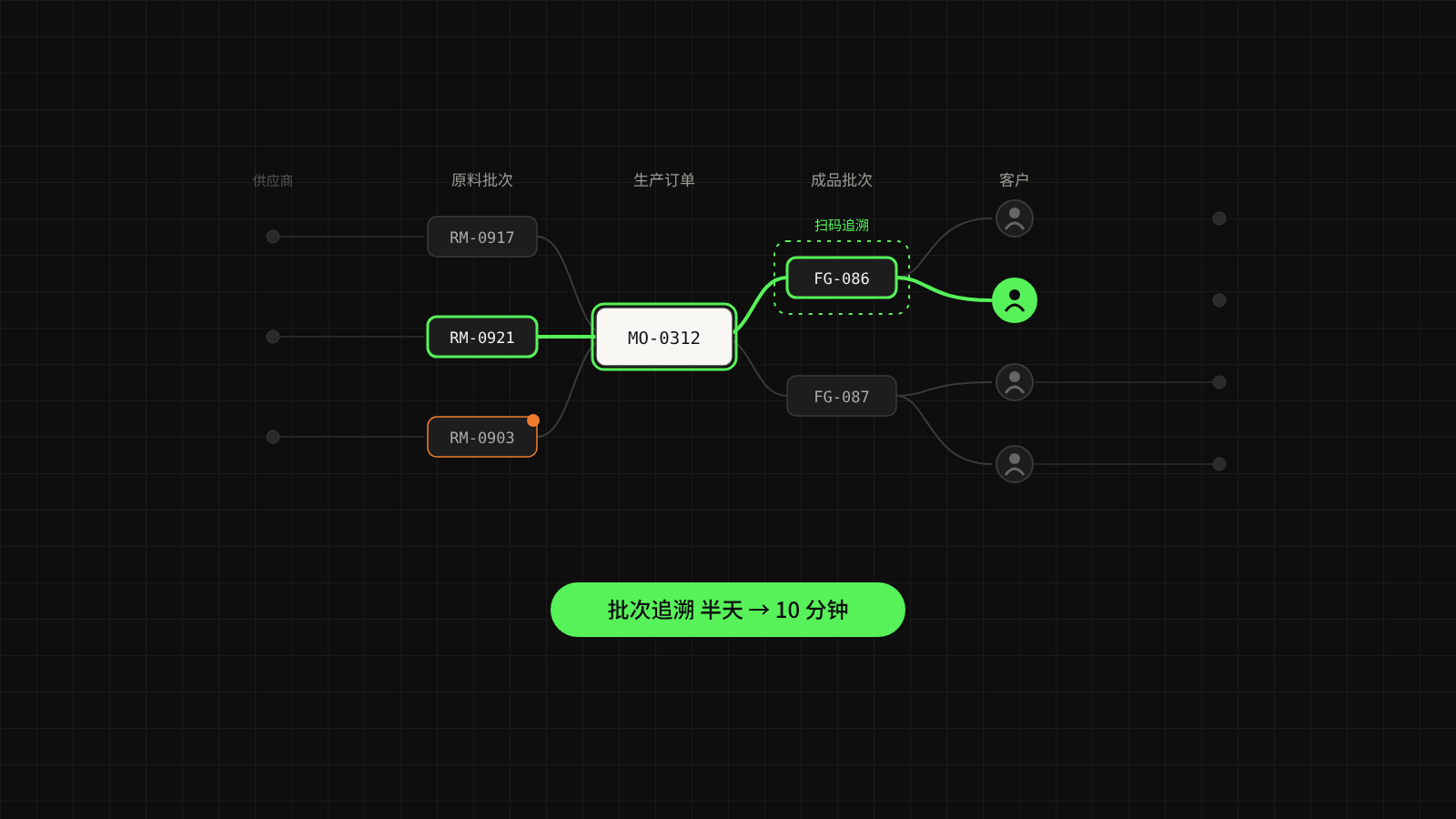
Batch Traceability Cut from Half a Day to 10 Minutes, with Every Batch Accounted For
A multi-category food manufacturer linked purchasing, production, warehousing and sales delivery into a single data chain. Any finished-goods batch can now be traced back to its raw material sources and forward to its customers, and batch traceability has dropped from about half a day to under 10 minutes.
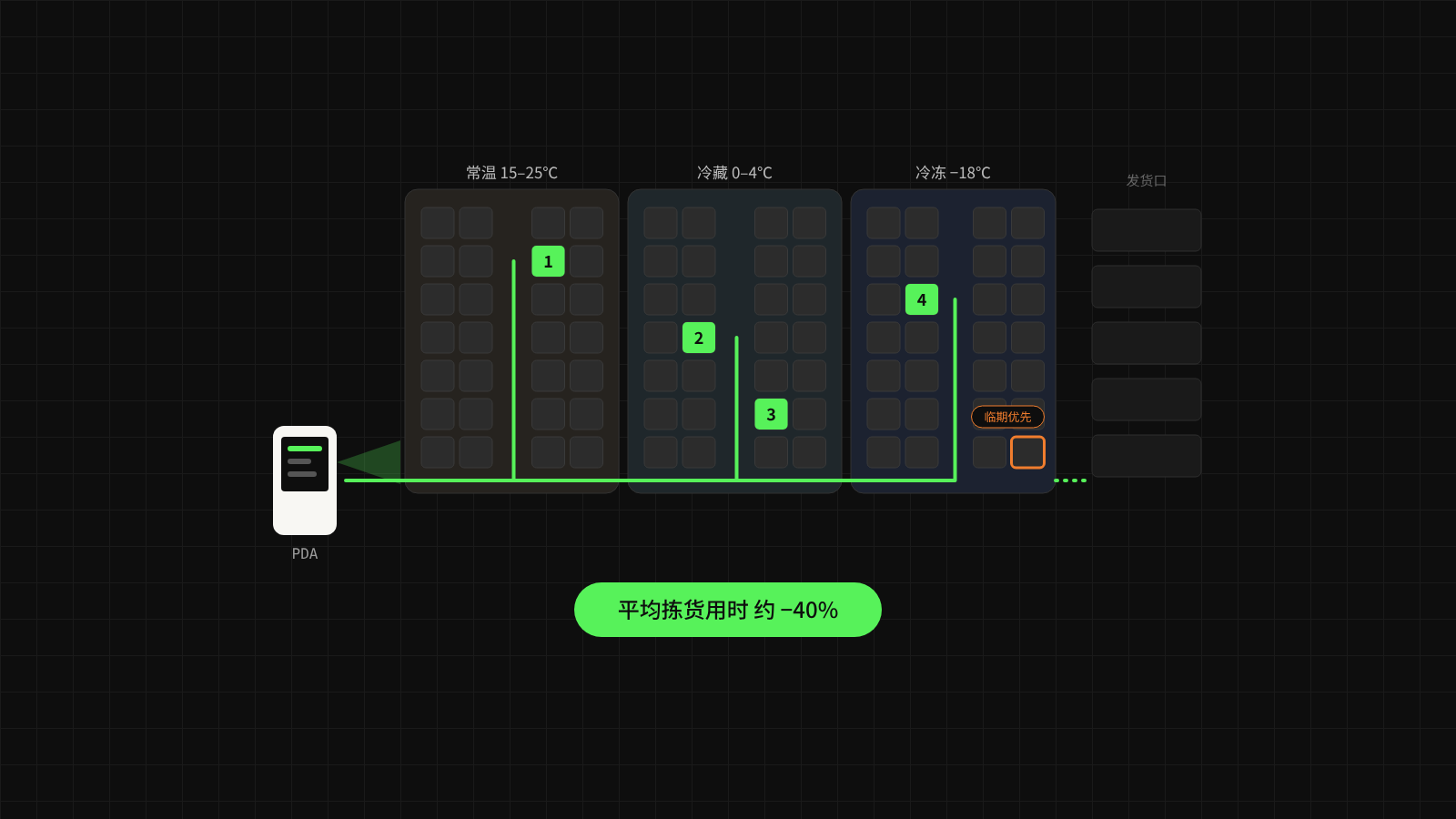
Three-Temperature Inventory Tracked to the Bin, Average Picking Time Down About 40%
A wholesaler of ambient, chilled and frozen food tracked inventory down to bin location and batch, used PDAs for receiving, replenishment and picking, and dispatched stock on a first-expired, first-out basis. Average picking time fell by about 40%, and the value of stock nearing expiry dropped significantly.
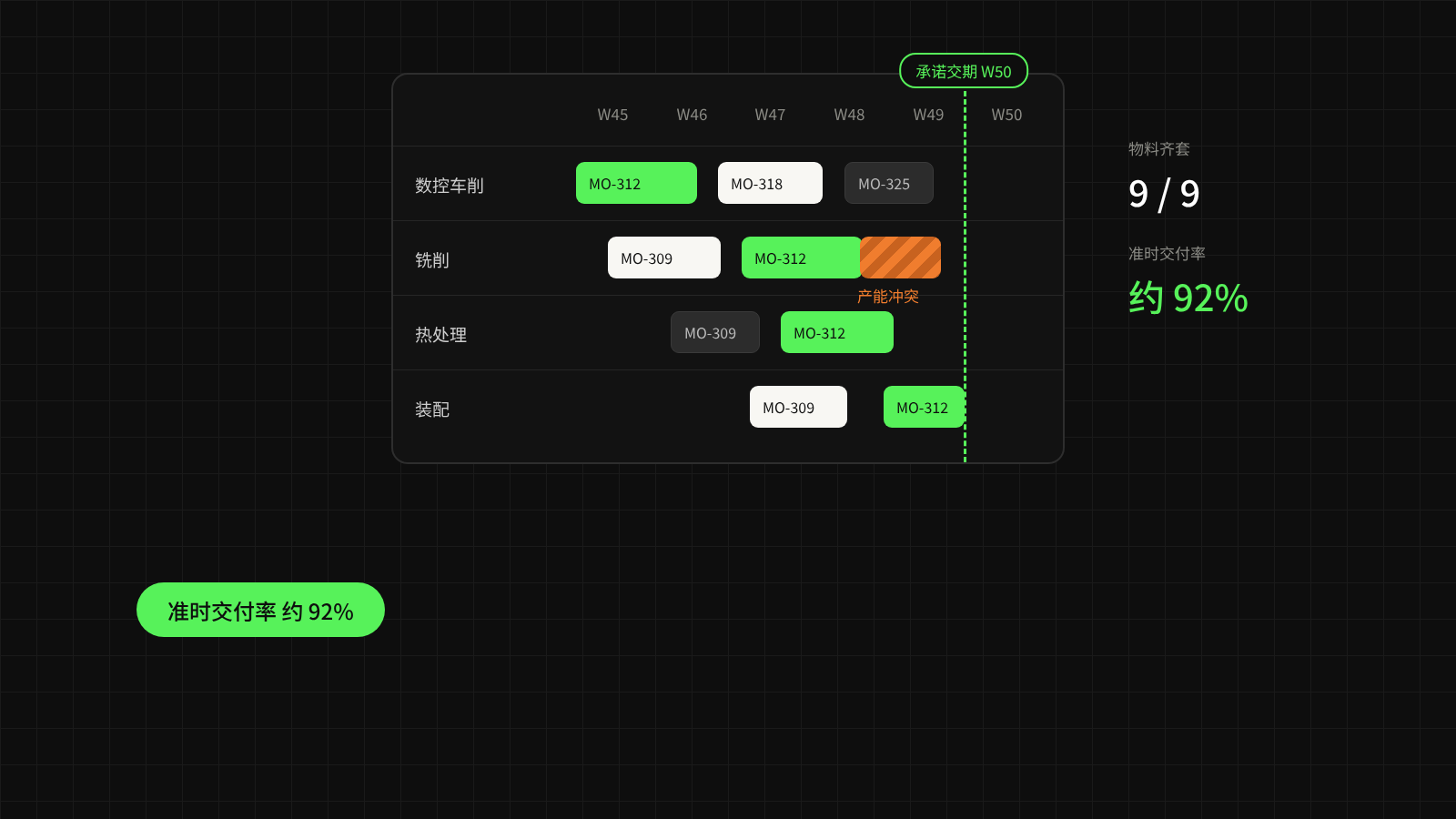
Sales Orders Drive the Production Plan Directly, Lifting On-Time Delivery to About 92%
A high-mix, low-volume machining company let sales orders drive material requirements and capacity checks directly, with shop-floor terminals reporting progress in real time. Delivery promises are now grounded in data, on-time delivery rose from about 75% to about 92%, and stoppages due to material shortages fell markedly.