Credit checks at order entry and automatic payment matching cut DSO by about 20%
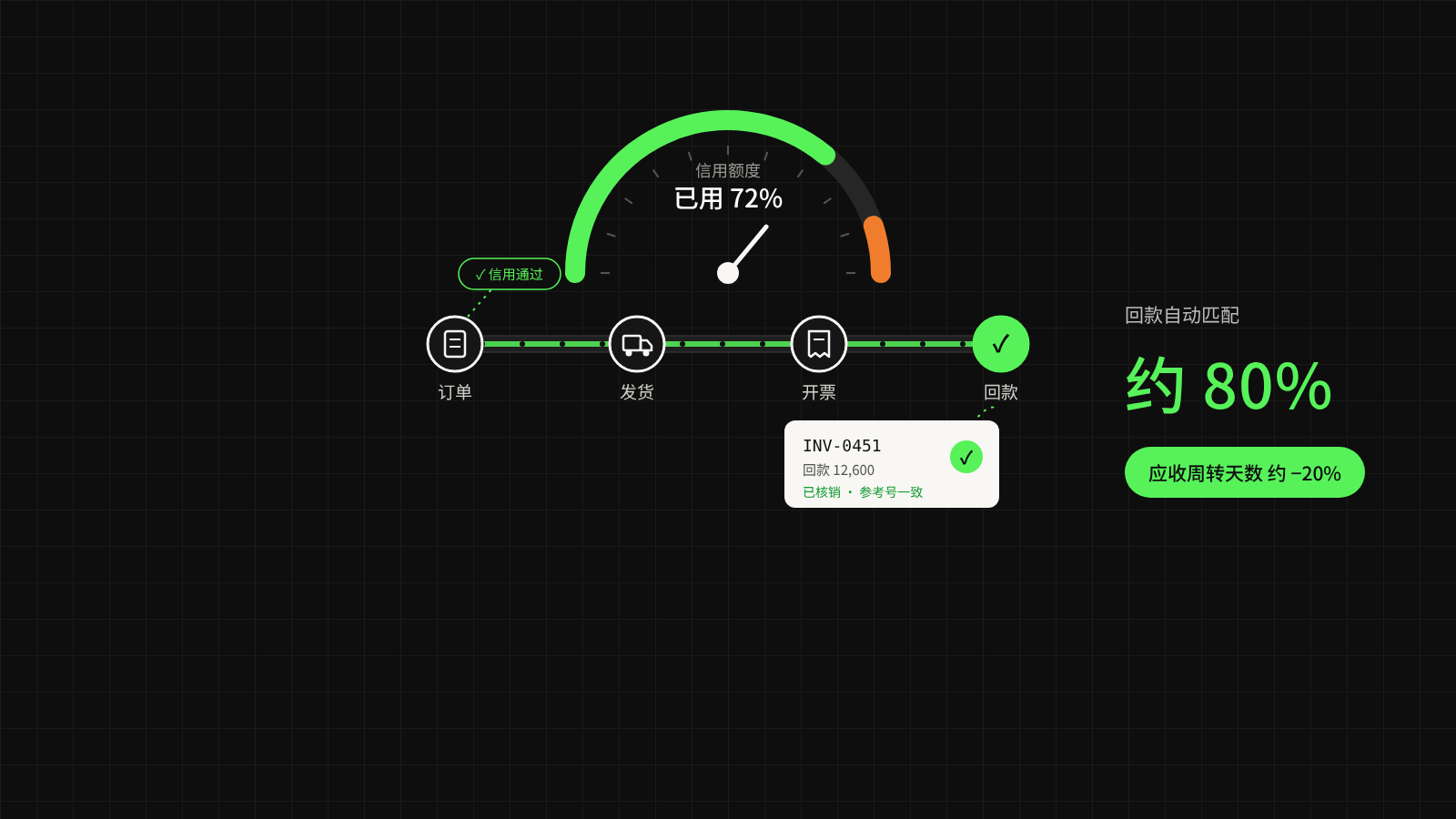
A wholesaler supplying restaurants, retailers and distributors connected customer credit, contract pricing, shipping, invoicing and bank receipts into a single order-to-cash process. Risks are now flagged as soon as an order is entered, and most incoming payments are matched to invoices by the system.
The company is a wholesale trader supplying restaurant businesses, retailers and regional distributors, with a large base of long-standing customers.
Some customers are allowed to pay on credit terms, and prices and credit conditions vary by customer size, order frequency and trading agreement.
As sales grew, it became difficult for salespeople to see a customer's credit limit, outstanding balance and available stock in real time when taking an order.
Finance could produce regular accounts receivable reports, but with some overdue customers the risk only came to light after a new order had already shipped.
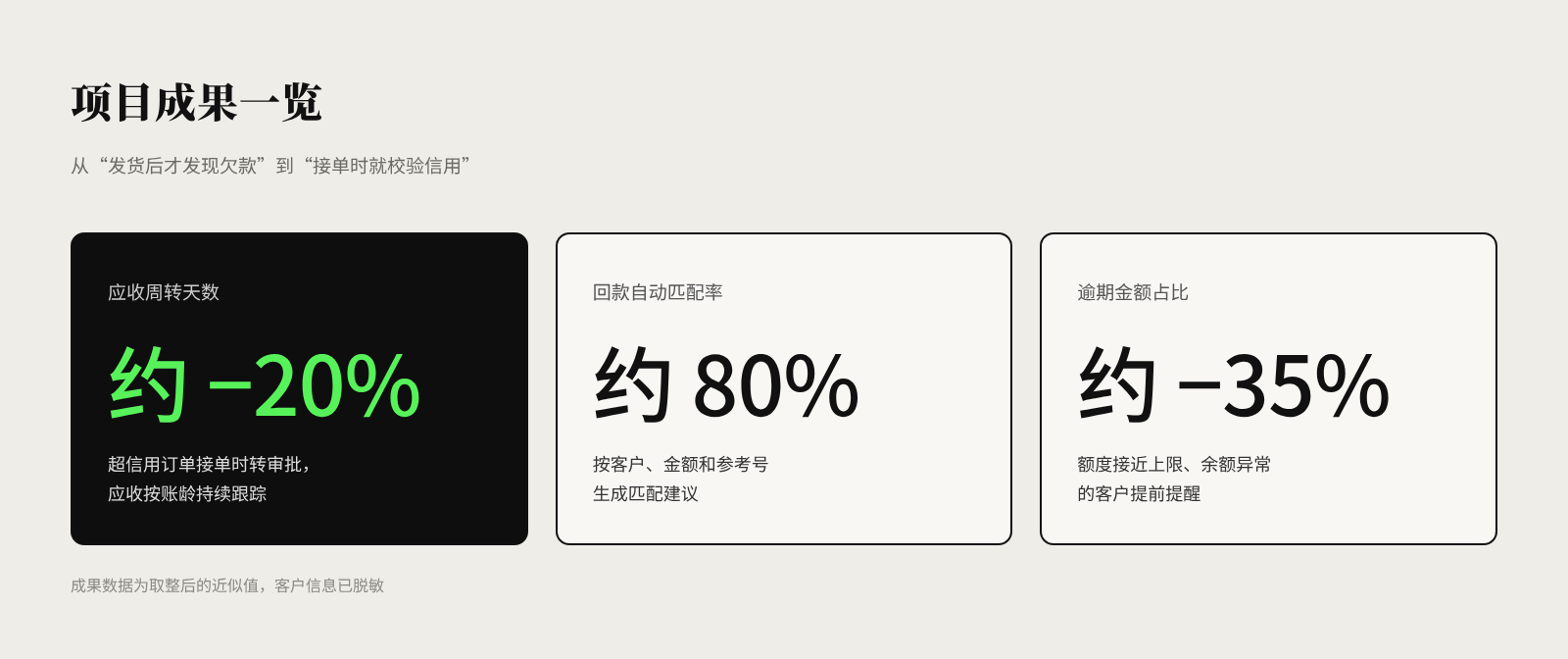
Results: days sales outstanding approx. −20%; automatic payment matching approx. 80%; share of overdue amounts approx. −35%
The challenge
Orders and credit management were not connected
Salespeople focused on customer needs and deal value, while finance handled the accounts.
Without a common credit check, new orders could keep increasing a customer's outstanding exposure.
Customer pricing was complex
Different customers had different contract prices, discount policies and promotional terms.
Salespeople confirmed prices from old orders or personal experience, which easily led to inconsistent pricing.
Cash application was inefficient
A customer might pay several invoices at once, or pay a single invoice in instalments.
Bank receipts were not reliably linked to invoices, so finance staff had to reconcile them by hand.
SHEPHARD's digital solution
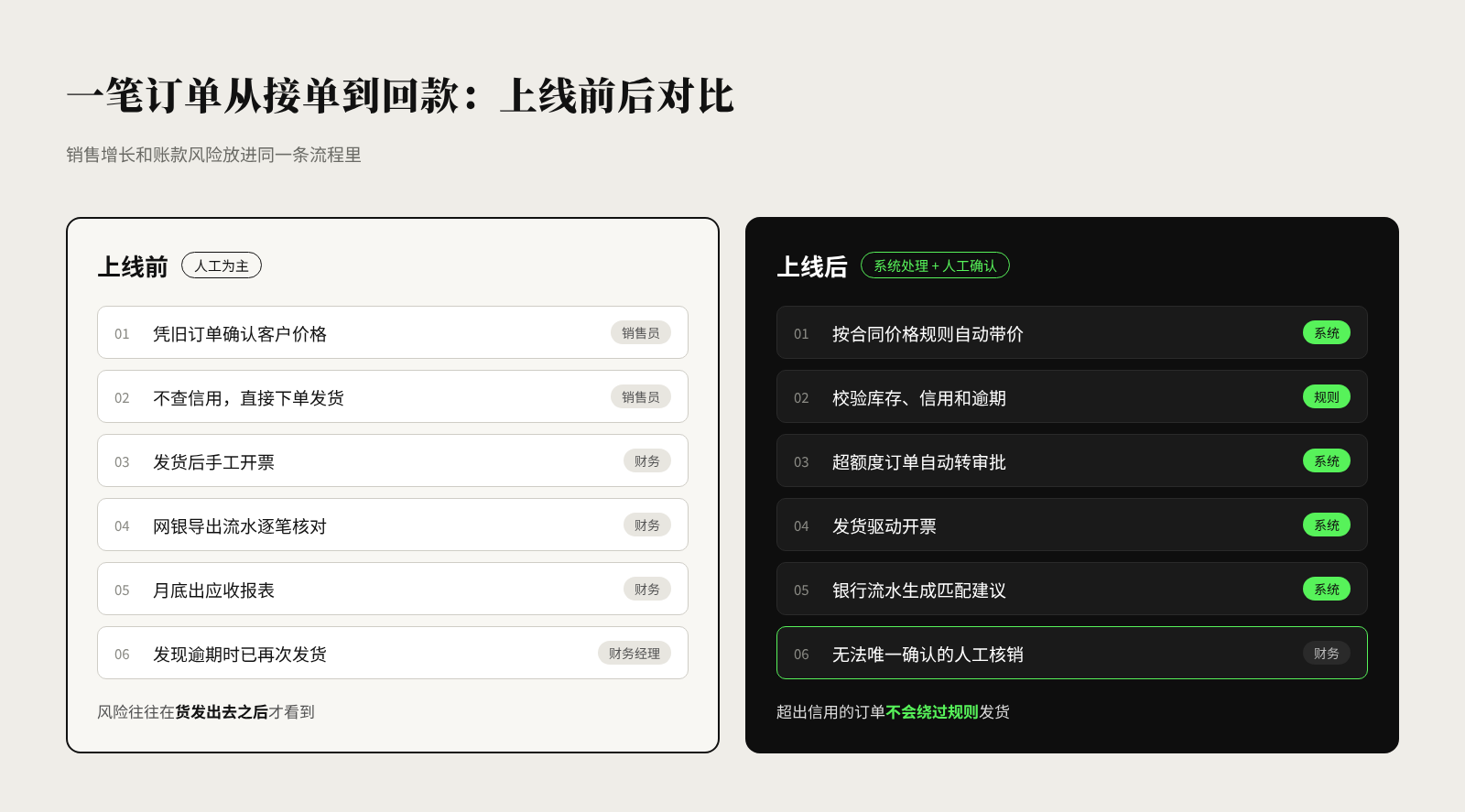
An order from entry to payment: before and after go-live
Step 1: Unify customer data and commercial terms
Customer records, payment terms, credit limits, currencies, contract prices and tax information are now managed in one place.
Each customer has the appropriate pricing rules and approval authorities.
Step 2: Validate orders at creation
At order confirmation, the system checks available stock, pricing rules, credit limit and overdue receivables.
Orders exceeding credit limits automatically trigger an approval, rather than letting salespeople bypass the rules and ship anyway.
Step 3: Connect orders, delivery and invoicing
We established an Order-to-Cash (O2C) process.
Sales orders drive stock reservation and shipping, and actual deliveries map clearly to the invoices generated.
Standard handling was defined for partial deliveries, partial invoicing and returns.
Step 4: Introduce bank receipt matching
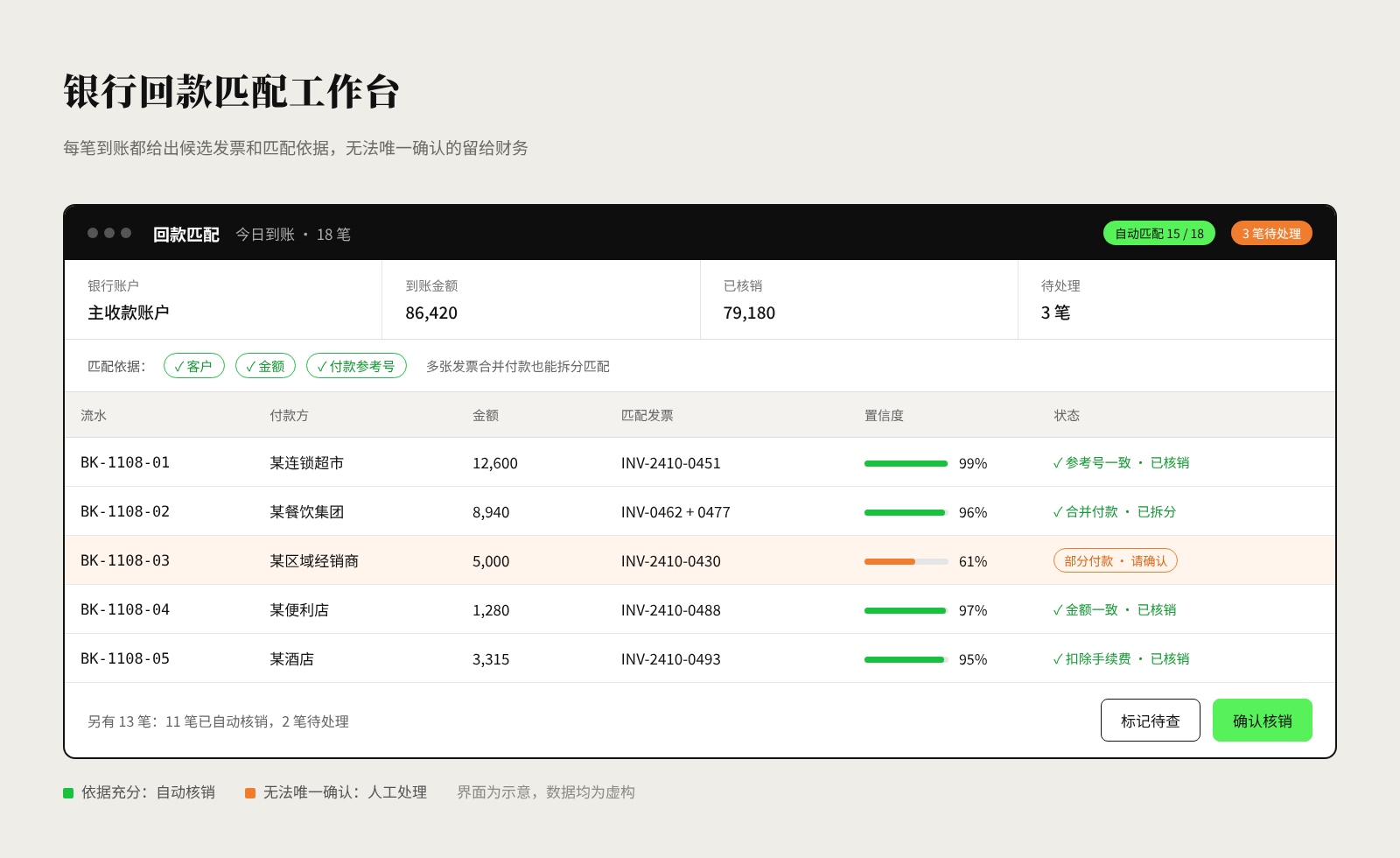
The system suggests matches based on customer, amount, payment reference and open invoice balance.
Bank transactions that cannot be matched unambiguously are passed to finance for manual review, preventing incorrect allocation.
Step 5: Build a receivables risk dashboard
Receivables are analysed by customer, salesperson, ageing bucket and outstanding amount.
Alerts are raised for customers who are persistently overdue, whose balances are growing abnormally or who are approaching their credit limit.
Bank receipt matching workbench (illustrative interface; all data fictitious)
Implementation approach
We started by cleaning up customer master data and historical receivable balances, then standardised pricing and credit approvals.
Orders, shipping, invoicing and bank receipts were connected next.
Partial shipments, returns, credit notes, prepayments and single payments covering multiple invoices were all validated against real business scenarios.
Business value
The company can now identify credit risk when an order is taken, track receivables after delivery and apply cash accurately when payment arrives.
Sales growth and financial risk management are no longer two separate concerns.
Results (approximate): Days sales outstanding approx. −20%; automatic payment matching approx. 80%; share of overdue amounts approx. −35%.
Metrics tracked on an ongoing basis: Days sales outstanding (DSO), share of overdue amounts, automatic payment matching rate, number of orders with credit exceptions, order-to-invoice cycle time.
What this case teaches us
Revenue is not the same as cash flow.
A truly mature digital sales operation treats closing the deal, fulfilment, invoicing and cash collection as one continuous business process.
*To protect client confidentiality, company details in this case study have been anonymised; screenshots are illustrative and results are rounded approximations.*
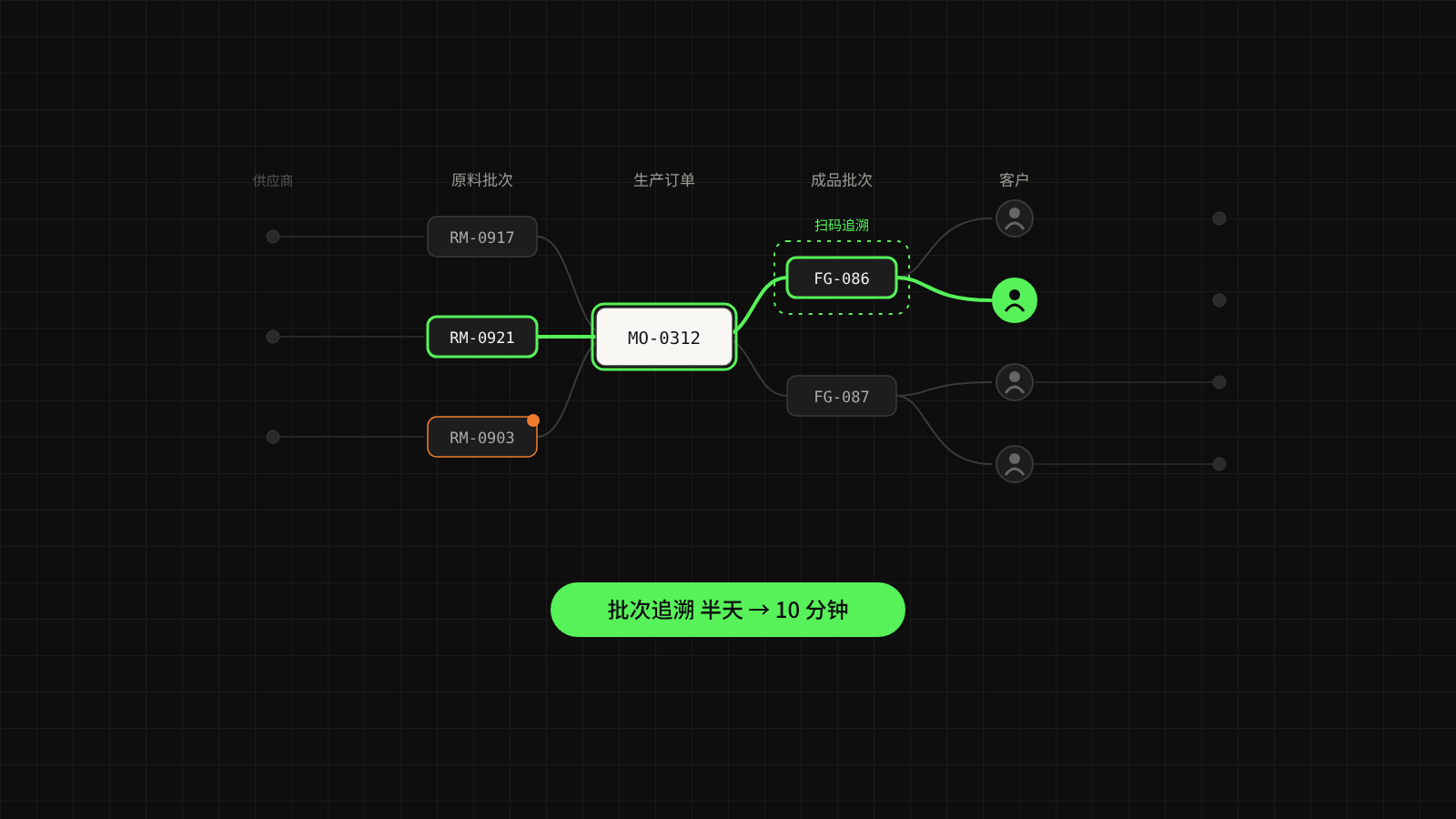
Batch Traceability Cut from Half a Day to 10 Minutes, with Every Batch Accounted For
A multi-category food manufacturer linked purchasing, production, warehousing and sales delivery into a single data chain. Any finished-goods batch can now be traced back to its raw material sources and forward to its customers, and batch traceability has dropped from about half a day to under 10 minutes.
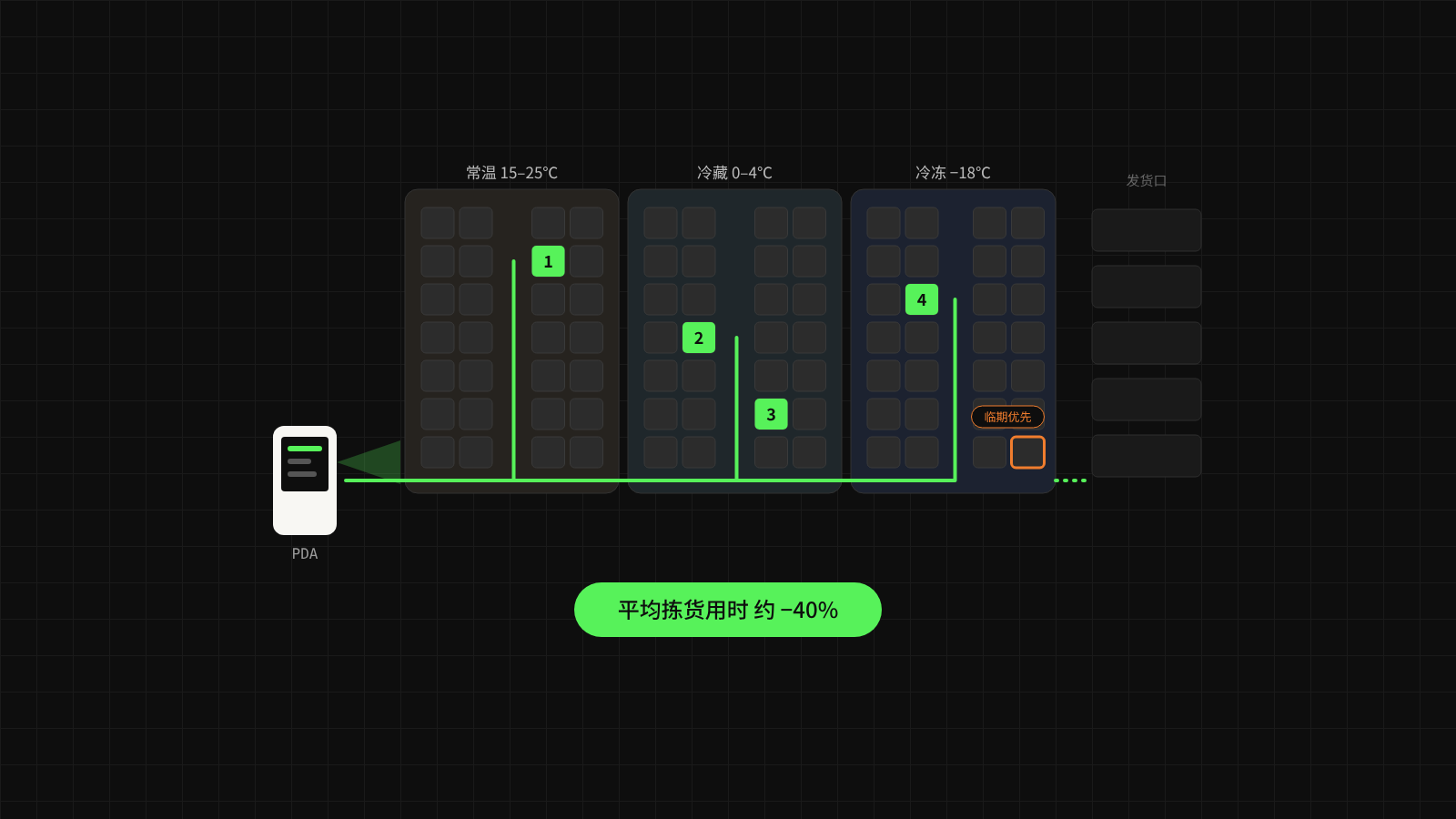
Three-Temperature Inventory Tracked to the Bin, Average Picking Time Down About 40%
A wholesaler of ambient, chilled and frozen food tracked inventory down to bin location and batch, used PDAs for receiving, replenishment and picking, and dispatched stock on a first-expired, first-out basis. Average picking time fell by about 40%, and the value of stock nearing expiry dropped significantly.
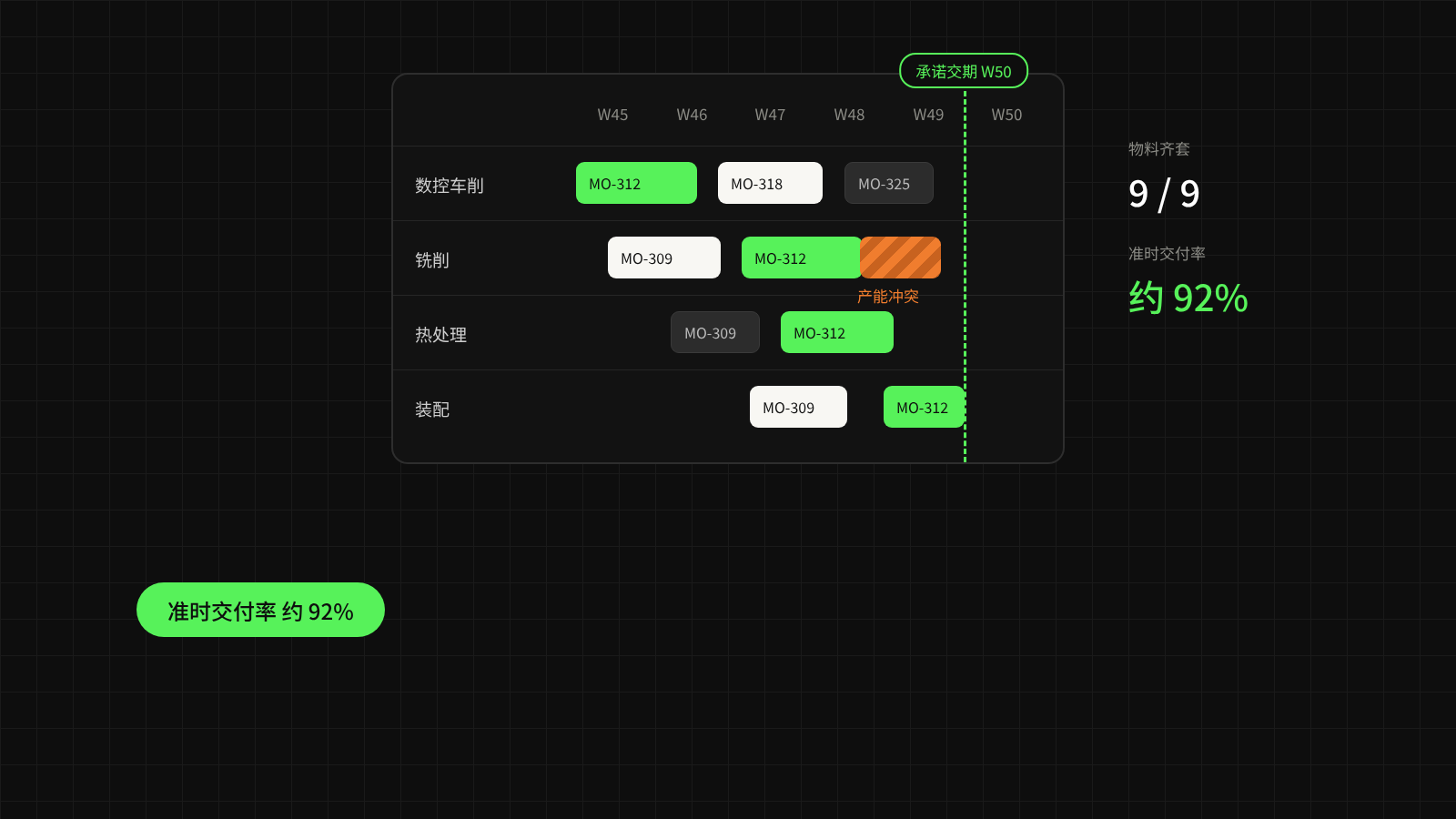
Sales Orders Drive the Production Plan Directly, Lifting On-Time Delivery to About 92%
A high-mix, low-volume machining company let sales orders drive material requirements and capacity checks directly, with shop-floor terminals reporting progress in real time. Delivery promises are now grounded in data, on-time delivery rose from about 75% to about 92%, and stoppages due to material shortages fell markedly.