Case Studies · Specialty chemicals and advanced materials manufacturer
Controlled recipe versions and visible dosing deviations cut quality release time by about 40%
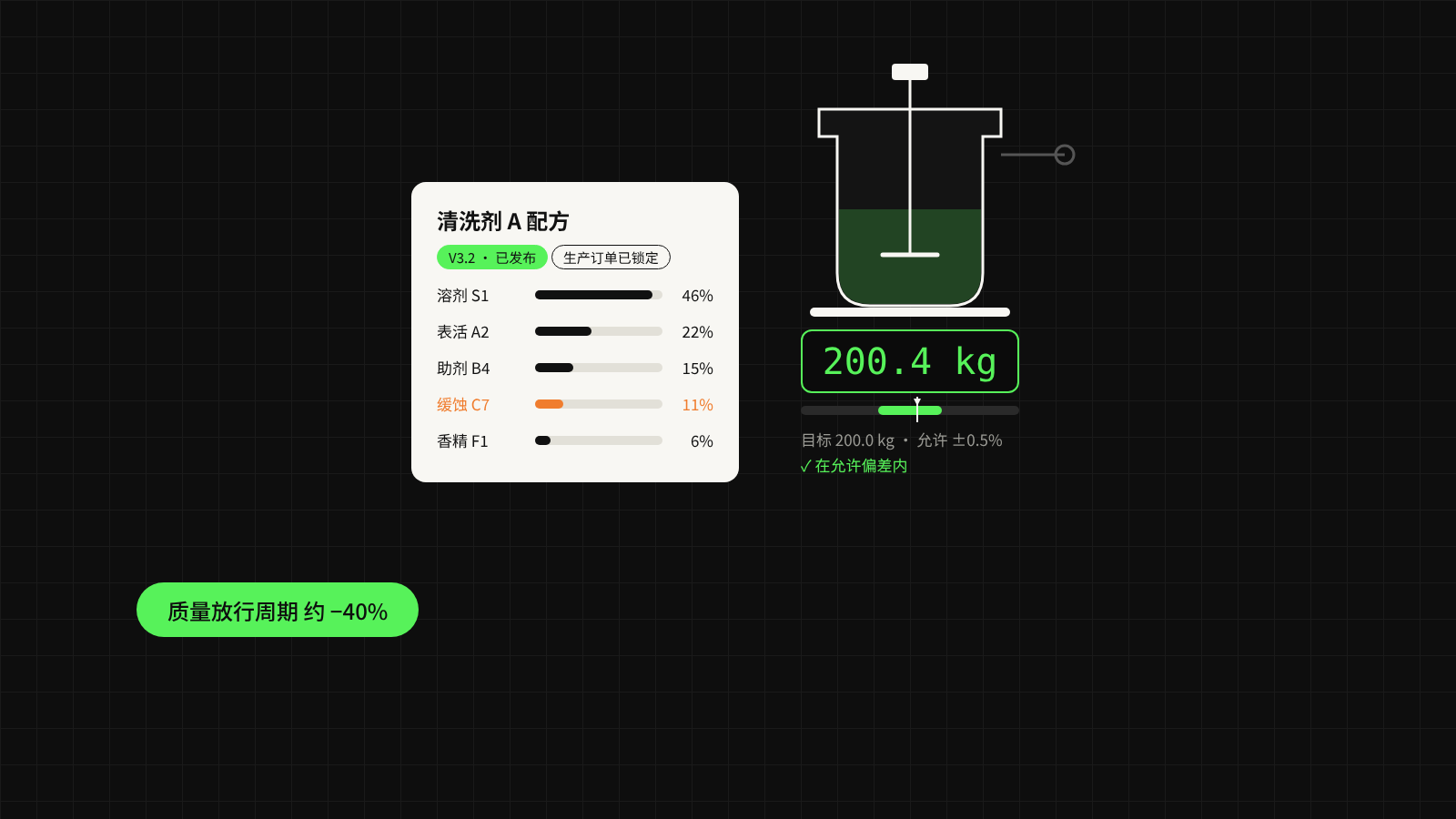
A producer of industrial cleaning agents and functional additives connected recipe versions, raw material batches, actual dosing and quality release into one controlled process. Every batch can be traced back to the recipe and raw materials used, and unreleased stock cannot be shipped.
The company manufactures industrial cleaning agents, functional additives and specialty chemical materials, and adjusts product specifications and production recipes to meet the needs of different customers.
For years, recipes were managed solely by the technical department, production staff worked from paper process sheets, and raw material issues and actual weighing records were kept in separate spreadsheets.
As the company broadened its product range and added production shifts, the lack of a single link between recipe versions, raw material batches and actual dosing records became increasingly apparent.
Results: quality release cycle approx. −40%; recipe version errors approx. −80%; production record completeness approx. 99%
The challenge
No central control of recipe versions
After the technical department updated a recipe, outdated versions could still be in use on the shop floor.
Without clear approval and effective-date rules, different batches could end up being made to different recipes with no complete record.
Theoretical and actual quantities were hard to reconcile
Weighing, top-ups and losses during production were recorded by hand, and often not in real time.
Quality release was disconnected from stock status
Finished products still have to pass the required quality checks after production.
If quality release status is not connected to the inventory system, it is hard to stop unapproved finished goods from leaving the warehouse.
SHEPHARD's digital solution
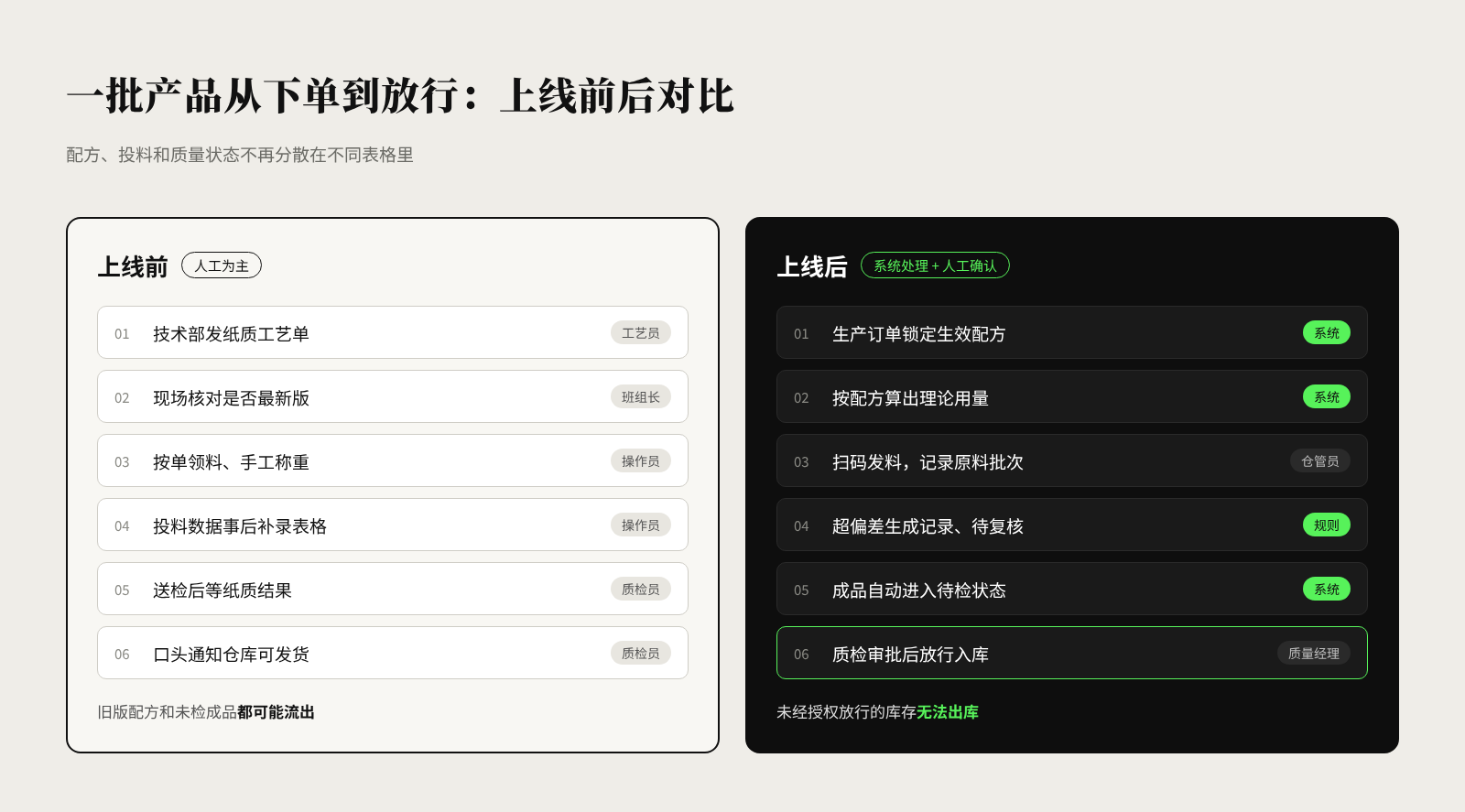
A batch from order to release: before and after go-live
Step 1: Establish controlled recipe management
Each recipe now carries its version, effective date, approver, applicable products and relevant process parameters.
Role-based permissions control who can view, edit and release recipes.
When a production order is created, the recipe version it uses is locked, so the basis for execution can always be reconstructed later.
Step 2: Connect production orders with raw material batches
Production orders calculate theoretical raw material requirements from the recipe.
The warehouse records the specific raw material batches and quantities issued, while the shop floor records actual inputs and the necessary process parameters.
Where electronic scales are used and offer a reliable data interface, readings can be captured automatically to reduce transcription errors.
Step 3: Introduce production deviation management
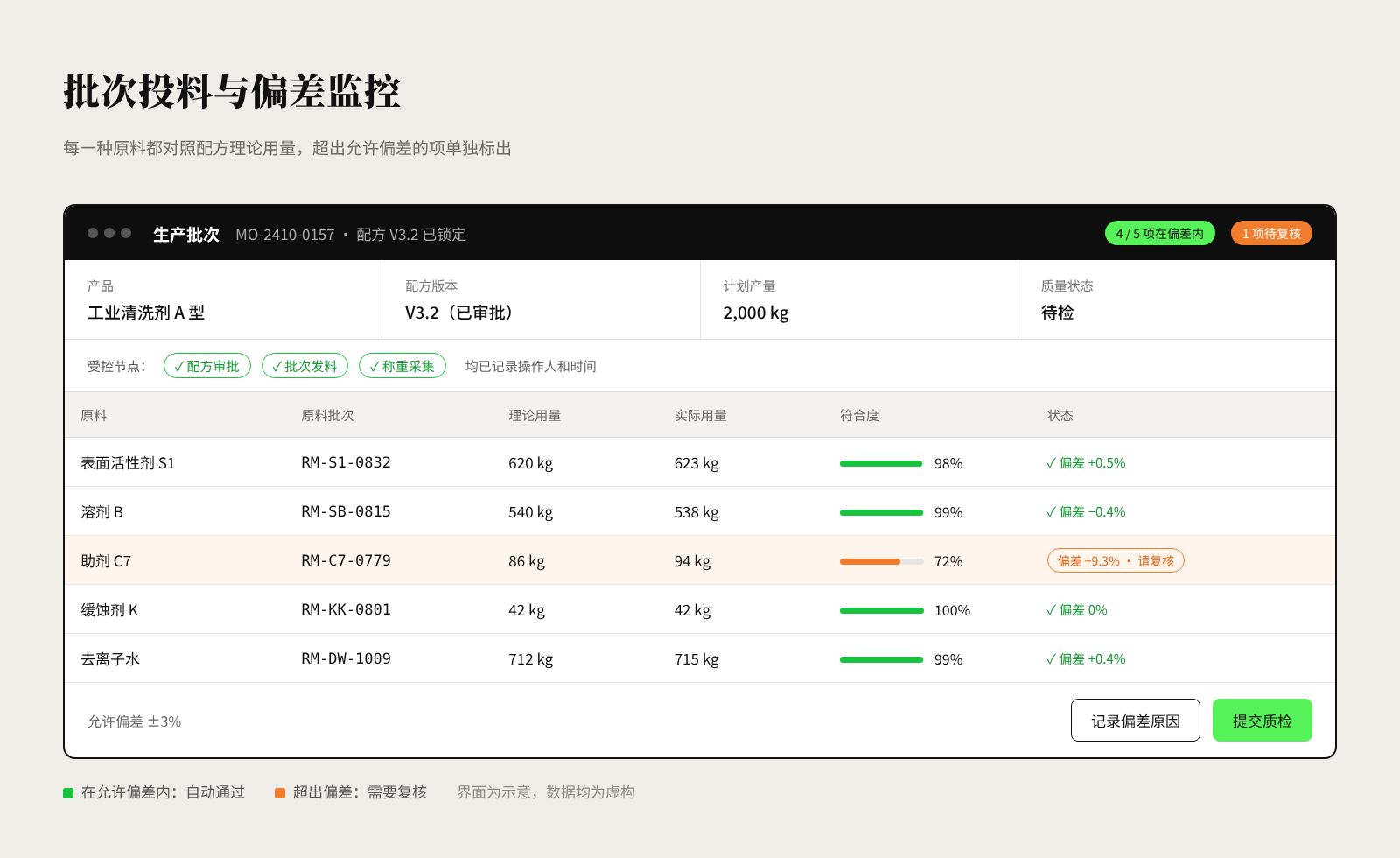
Actual dosing is compared against the permitted tolerance range.
When quantities, batches or critical process parameters fall outside limits, the system creates a deviation record and requires review by the responsible staff.
Step 4: Link quality inspection with stock release
Finished products enter an awaiting-inspection status.
Only once inspection has passed and authorised approval is complete does the system allow the stock to become available for sale or shipment.
Step 5: Unify batch costs and quality records
Production orders, actual material consumption, losses and inspection results are linked together.
This provides a single basis for quality analysis, costing and incident investigations.
Batch dosing and deviation monitoring (illustrative interface; all data fictitious)
Implementation approach
The project began by cleaning up recipe and product master data and establishing a controlled version management process.
Production execution records, batch management and quality status were then linked together.
For data capture and exception control on critical equipment, reliability has to be proven through on-site testing, and manual fallback procedures that meet production requirements are retained.
Business value
The company now knows far more precisely which recipe version each product was made to, which raw materials were actually used, what deviations occurred and what its quality release status is.
Technical, production and quality teams no longer maintain separate, disconnected data.
Results (approximate): Quality release cycle approx. −40%; recipe version errors approx. −80%; production record completeness approx. 99%.
Metrics tracked on an ongoing basis: Recipe version error incidents, actual dosing deviation rate, production record completeness, quality release cycle, batch cost variance.
What this case teaches us
For recipe-based manufacturers, one of the most important digital assets is production know-how that can be executed, verified and traced.
Connecting recipe management with shop-floor execution is worth far more than simply storing recipe files.
*To protect client confidentiality, company details in this case study have been anonymised; screenshots are illustrative and results are rounded approximations.*
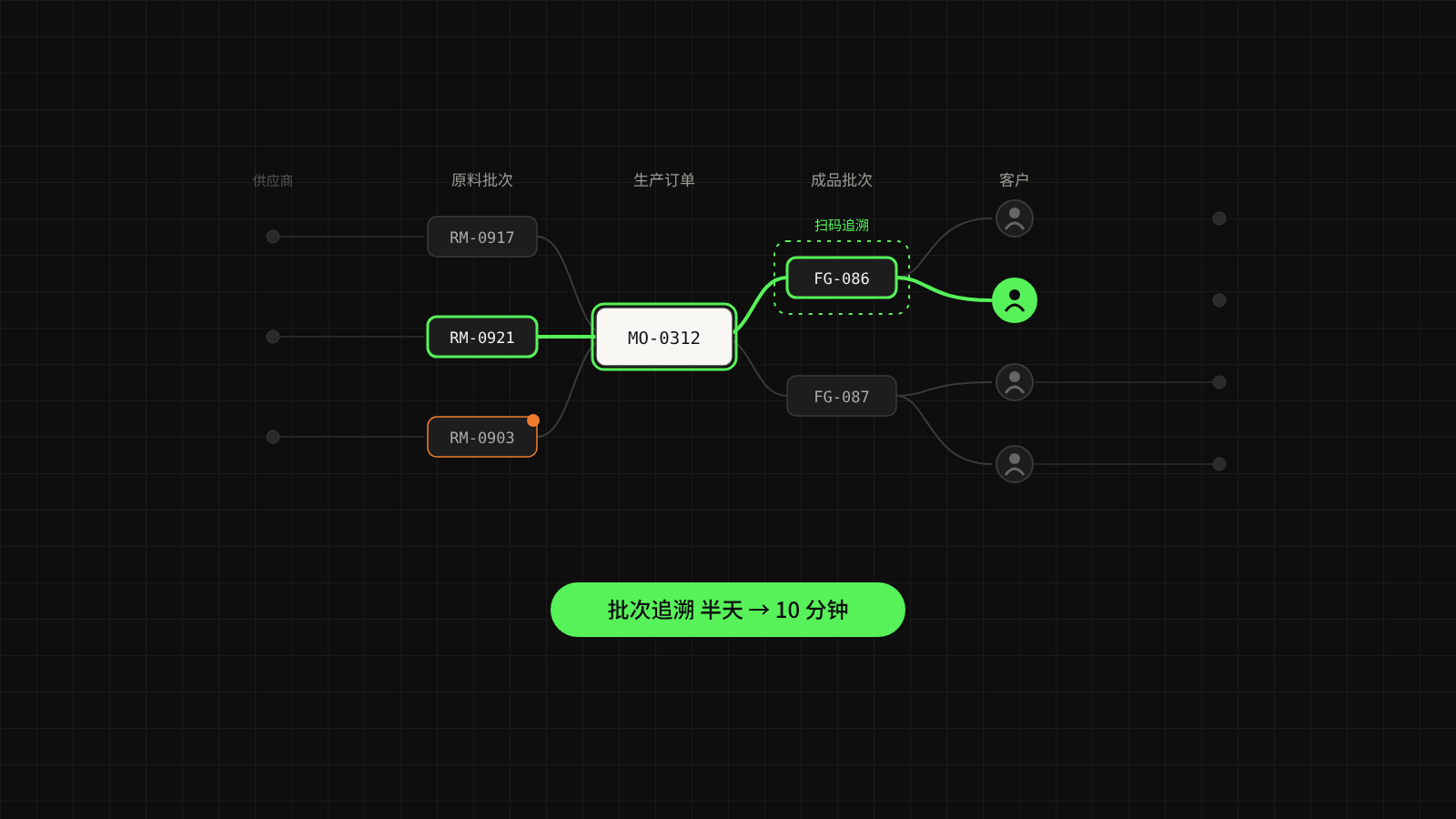
Batch Traceability Cut from Half a Day to 10 Minutes, with Every Batch Accounted For
A multi-category food manufacturer linked purchasing, production, warehousing and sales delivery into a single data chain. Any finished-goods batch can now be traced back to its raw material sources and forward to its customers, and batch traceability has dropped from about half a day to under 10 minutes.
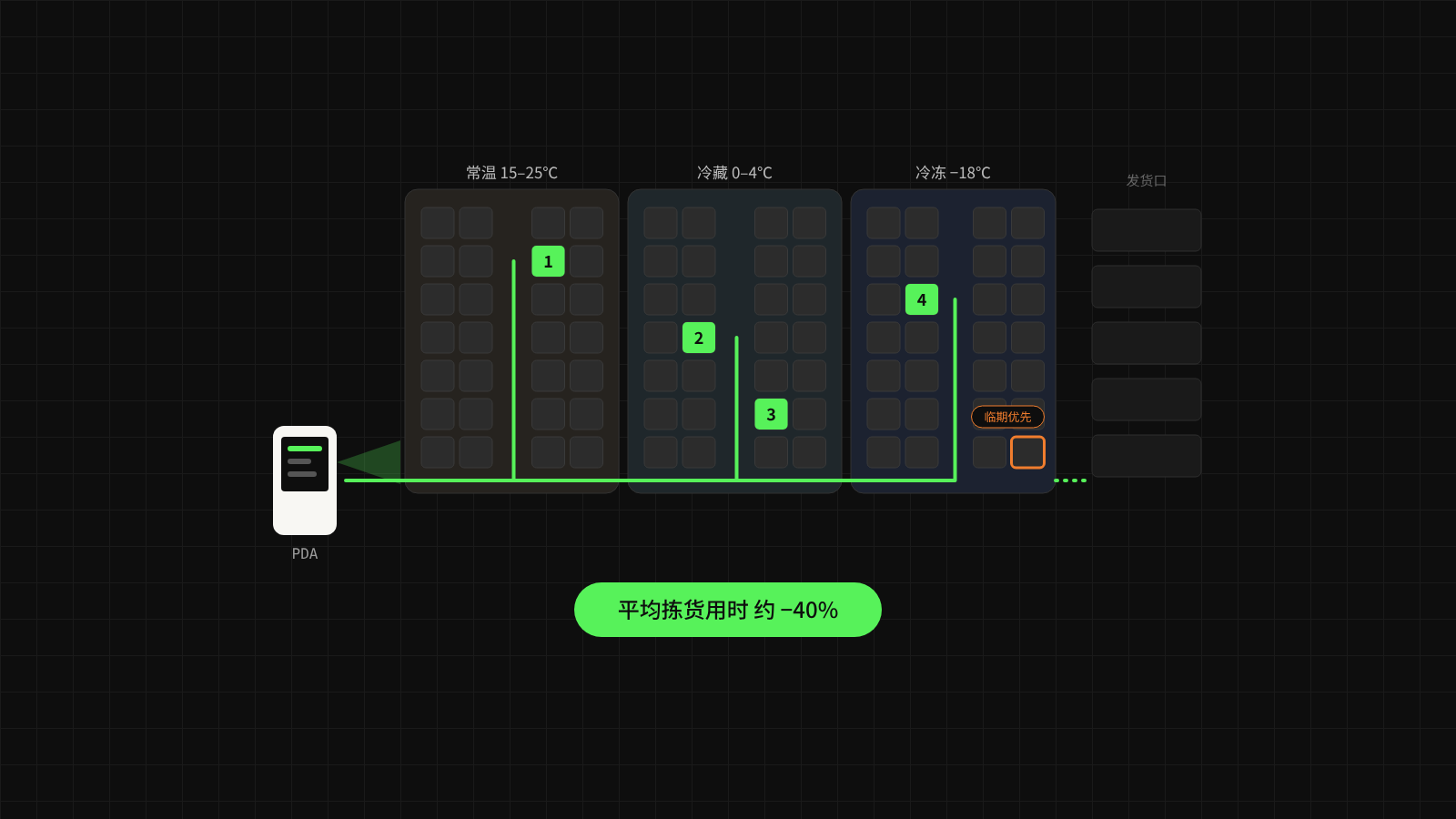
Three-Temperature Inventory Tracked to the Bin, Average Picking Time Down About 40%
A wholesaler of ambient, chilled and frozen food tracked inventory down to bin location and batch, used PDAs for receiving, replenishment and picking, and dispatched stock on a first-expired, first-out basis. Average picking time fell by about 40%, and the value of stock nearing expiry dropped significantly.
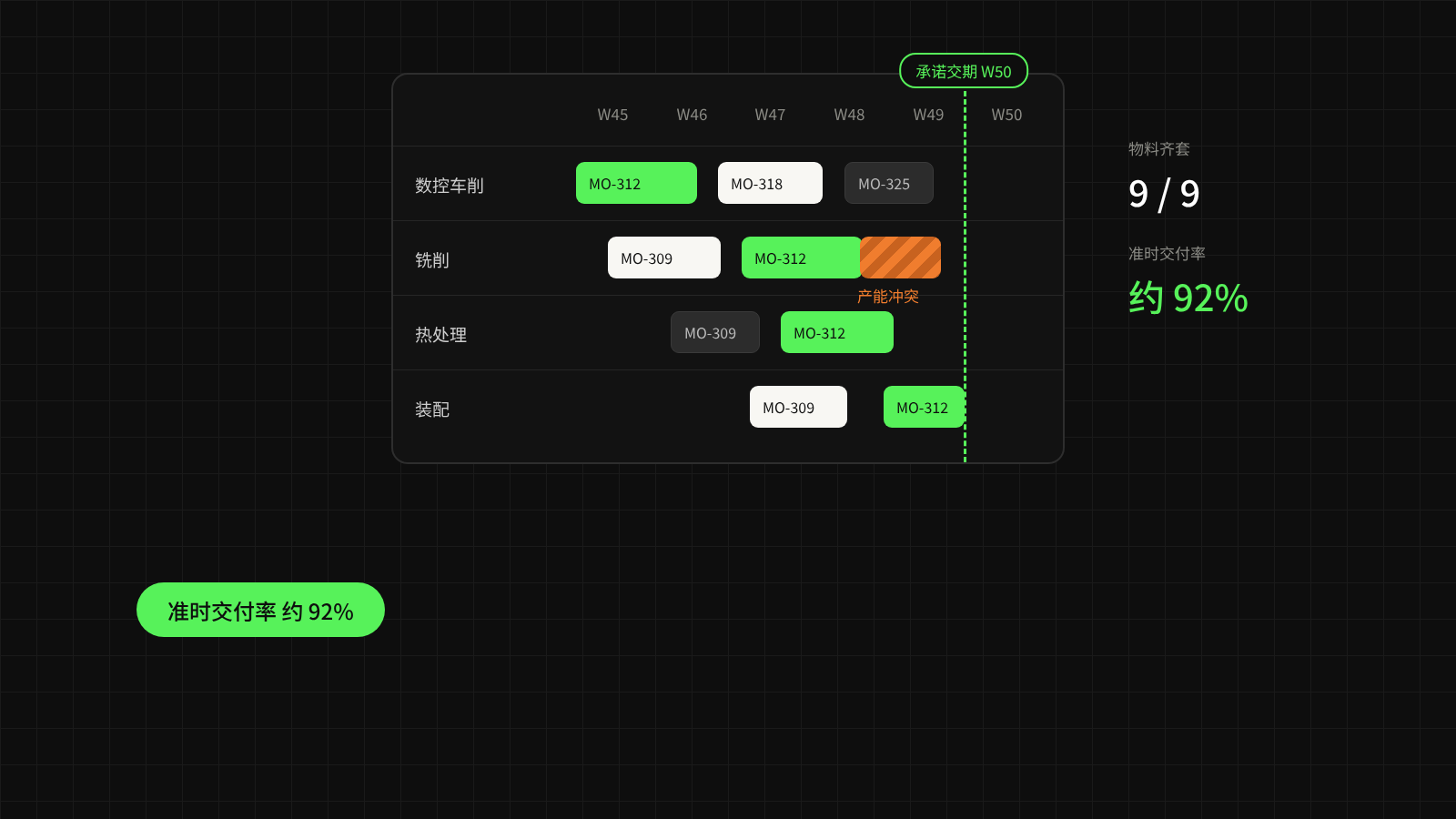
Sales Orders Drive the Production Plan Directly, Lifting On-Time Delivery to About 92%
A high-mix, low-volume machining company let sales orders drive material requirements and capacity checks directly, with shop-floor terminals reporting progress in real time. Delivery promises are now grounded in data, on-time delivery rose from about 75% to about 92%, and stoppages due to material shortages fell markedly.