Fully auditable procure-to-pay, with around 75% of invoices three-way matched automatically
A multi-department company brought purchase requests, approvals, purchase orders, goods receipts and supplier invoices into a single procure-to-pay process. Approval before purchase is now the norm, invoices that meet the rules are matched automatically, and finance deals only with genuine discrepancies.
The company has multiple departments and business units, and every year it purchases office supplies, production materials, equipment and external services.
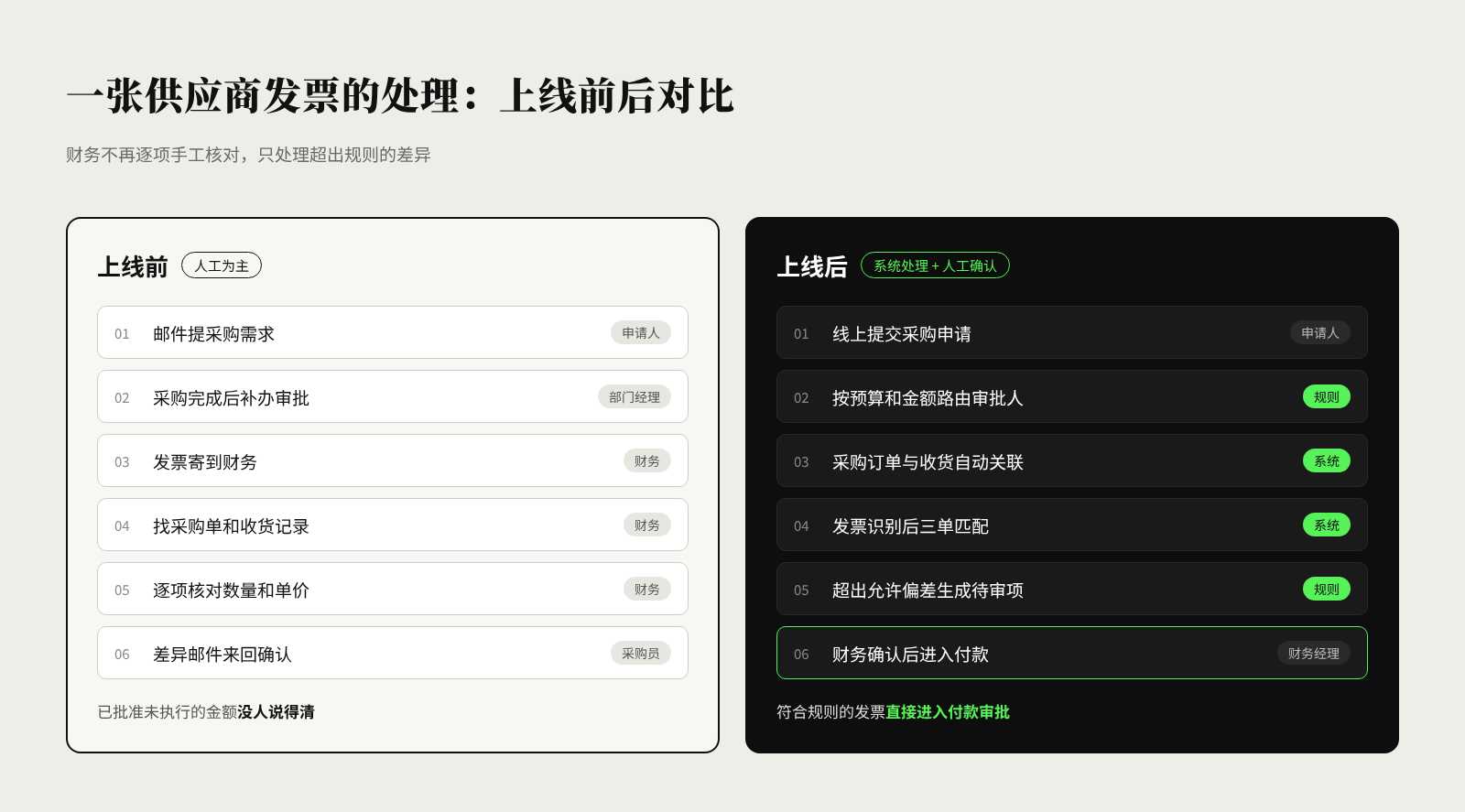
In the past, departments raised purchase requests by email or instant messaging, the purchasing team handled quotations, and finance scheduled payments based on invoices.
Although a purchase approval policy existed, it was applied inconsistently in practice, and some requests were only approved retrospectively after the purchase had been made.
Management found it hard to see in good time how much approved spend had not yet been committed, and how much payment would fall due over the coming months.
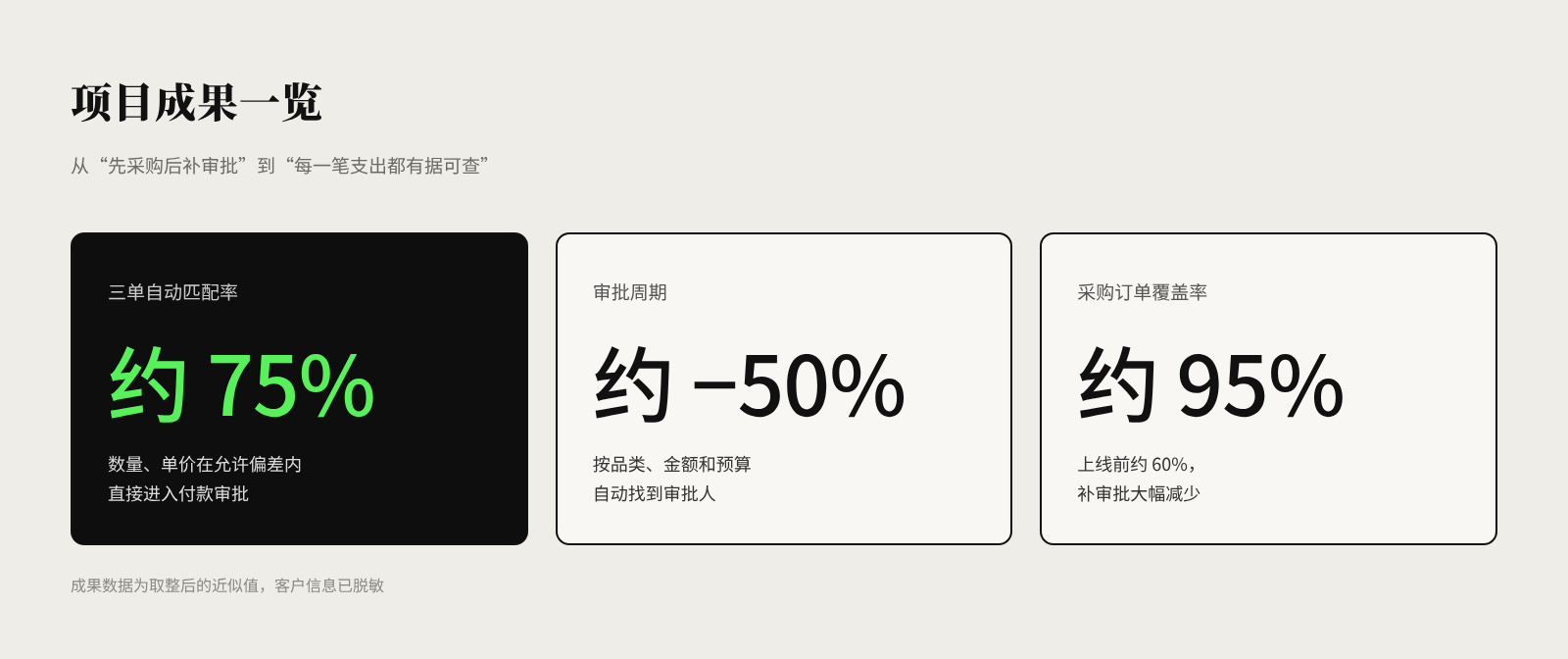
Results: automatic three-way match rate approx. 75%; approval cycle approx. −50%; purchase order coverage approx. 95%
The challenge
Purchase requests and orders were not managed centrally
Departments submitted requests in different formats, and budget ownership, required dates and specifications were easily left out.
Supplier quotes did not become reusable data
The same items were bought by different people, and historical prices and purchasing terms were scattered across emails and attachments.
Invoice review relied on manual checks
Purchase orders, goods receipts and supplier invoices were each maintained by different roles.
Finance had to confirm quantities, prices and payment terms line by line, which slowed processing.
SHEPHARD's digital solution
Processing a supplier invoice: before and after go-live
Step 1: Establish a purchasing catalogue and approval framework
Purchase request rules were defined by category, amount, department and budget owner.
Responsibilities are clearly separated between requester, budget owner, buyer and approver.
Step 2: Unify supplier data
Supplier master data now holds consistent tax details, payment terms, purchasing currency, lead times and key supplier qualification records.
Supplier quote history and purchasing performance data are retained.
Step 3: Establish the procure-to-pay process
Purchase requests, quotations, purchase orders, goods receipts and supplier invoices are all brought into a Purchase-to-Pay (P2P) process.
Document status controls prevent unauthorised purchases from being executed.
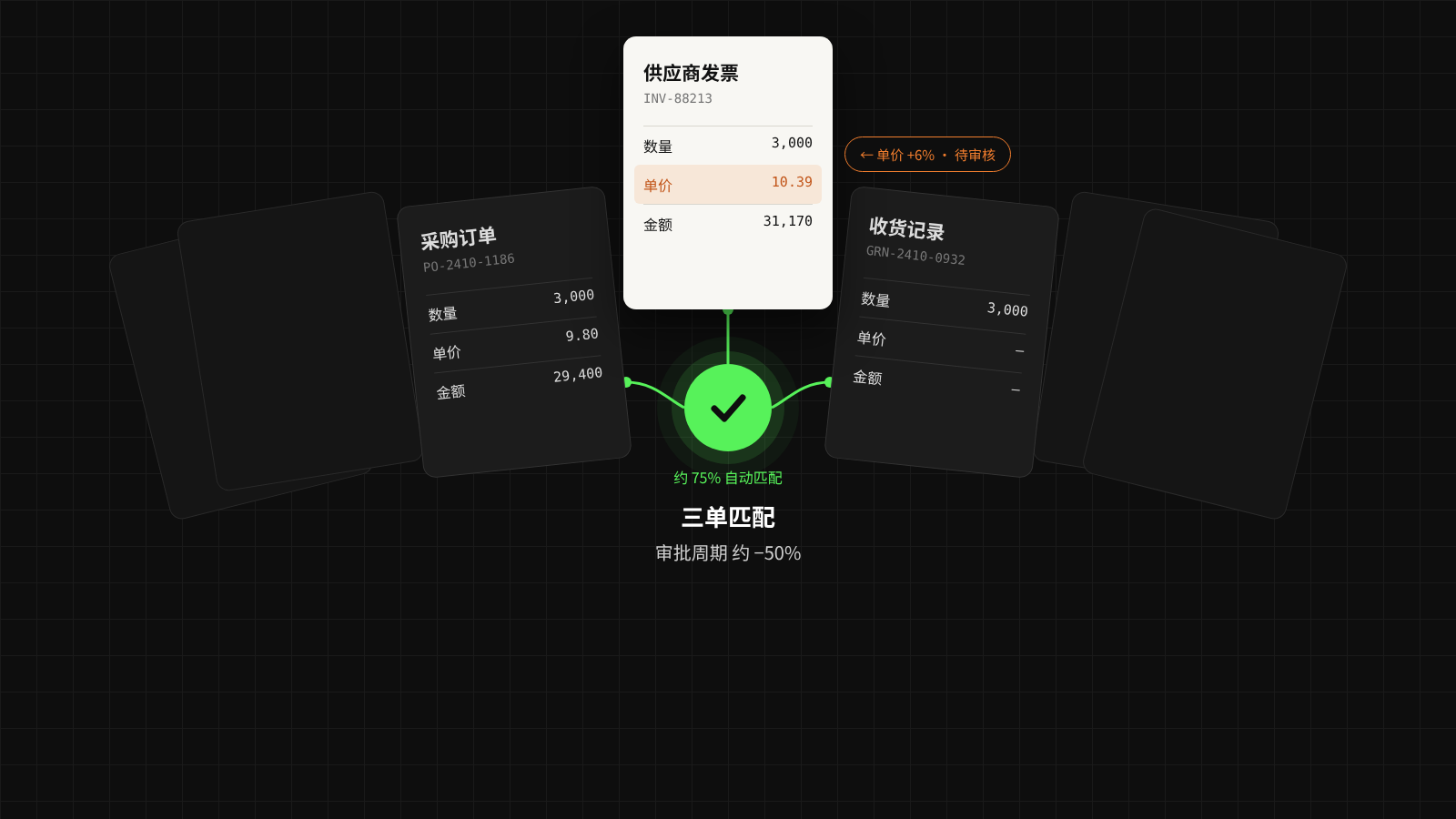
Step 4: Implement three-way matching
Purchase orders, goods receipts and supplier invoices are reconciled through three-way matching.
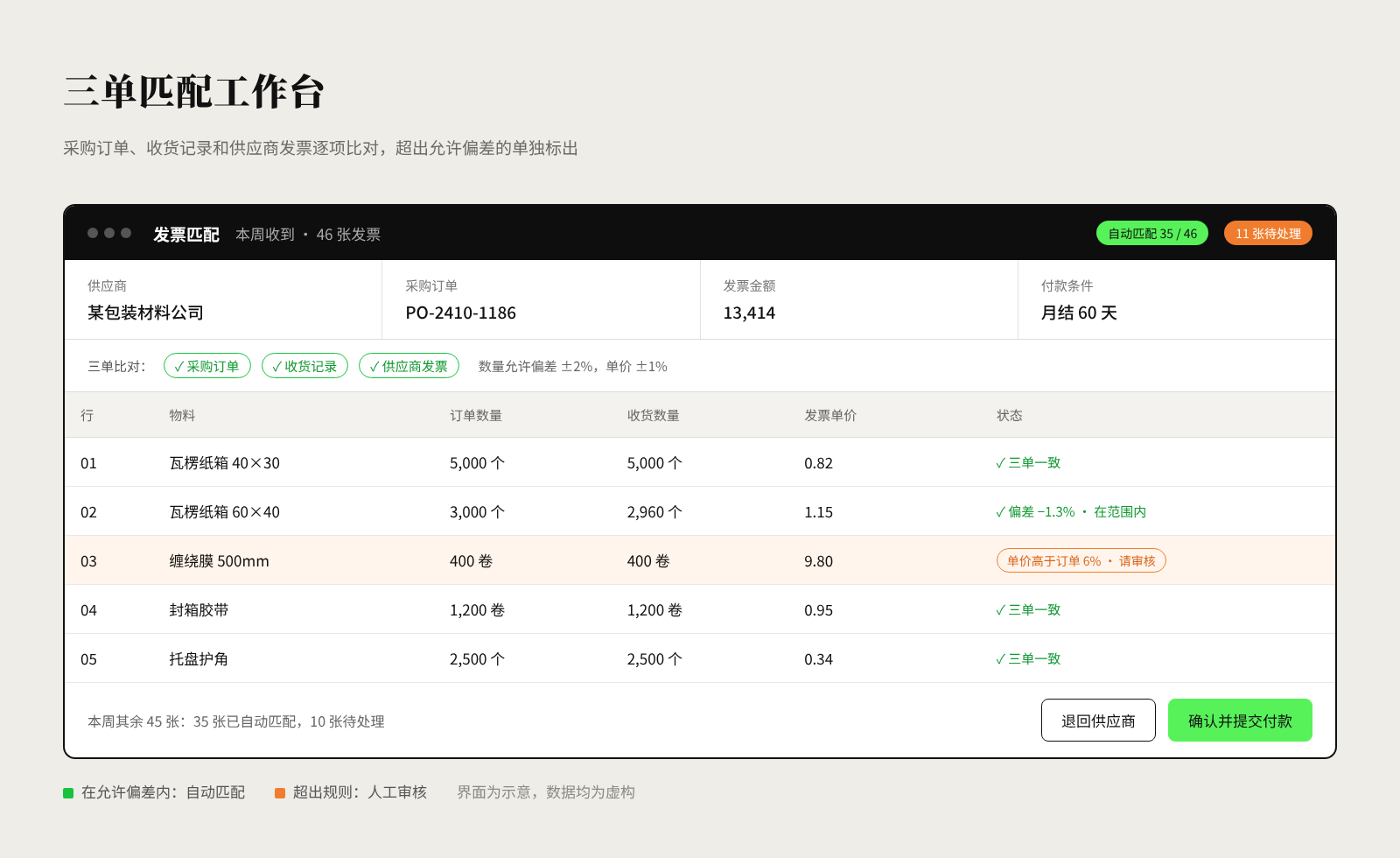
The system checks quantities, unit prices and the relevant tolerances.
Discrepancies outside the rules automatically create review items, while invoices that meet the rules move on to payment approval.
Step 5: Build spend analytics
Spend is analysed by supplier, department, material category and purchasing project.
Duplicate purchases, unusual price changes and supplier delivery issues are identified.
Three-way matching workbench (illustrative interface; all data fictitious)
Implementation approach
We first cleaned up suppliers and purchasing categories, then unified purchase requests and approvals.
Next, purchase orders, goods receipts and invoices were linked digitally.
Finally, three-way matching and spend analytics were deployed.
Business value
Purchasing can control buying behaviour more consistently, finance can spot invoice discrepancies faster, and management has visibility of future spend and payment schedules.
Results (approximate): Automatic three-way match rate approx. 75%; approval cycle approx. −50%; purchase order coverage approx. 95%.
Metrics tracked on an ongoing basis: Purchase request approval cycle, purchase order coverage, automatic three-way match rate, purchase price variance, supplier on-time delivery rate, uncommitted budget balance.
What this case teaches us
The goal of purchasing management is not simply to move approval forms from paper to screen.
*To protect client confidentiality, company details in this case study have been anonymised; screenshots are illustrative and results are rounded approximations.*
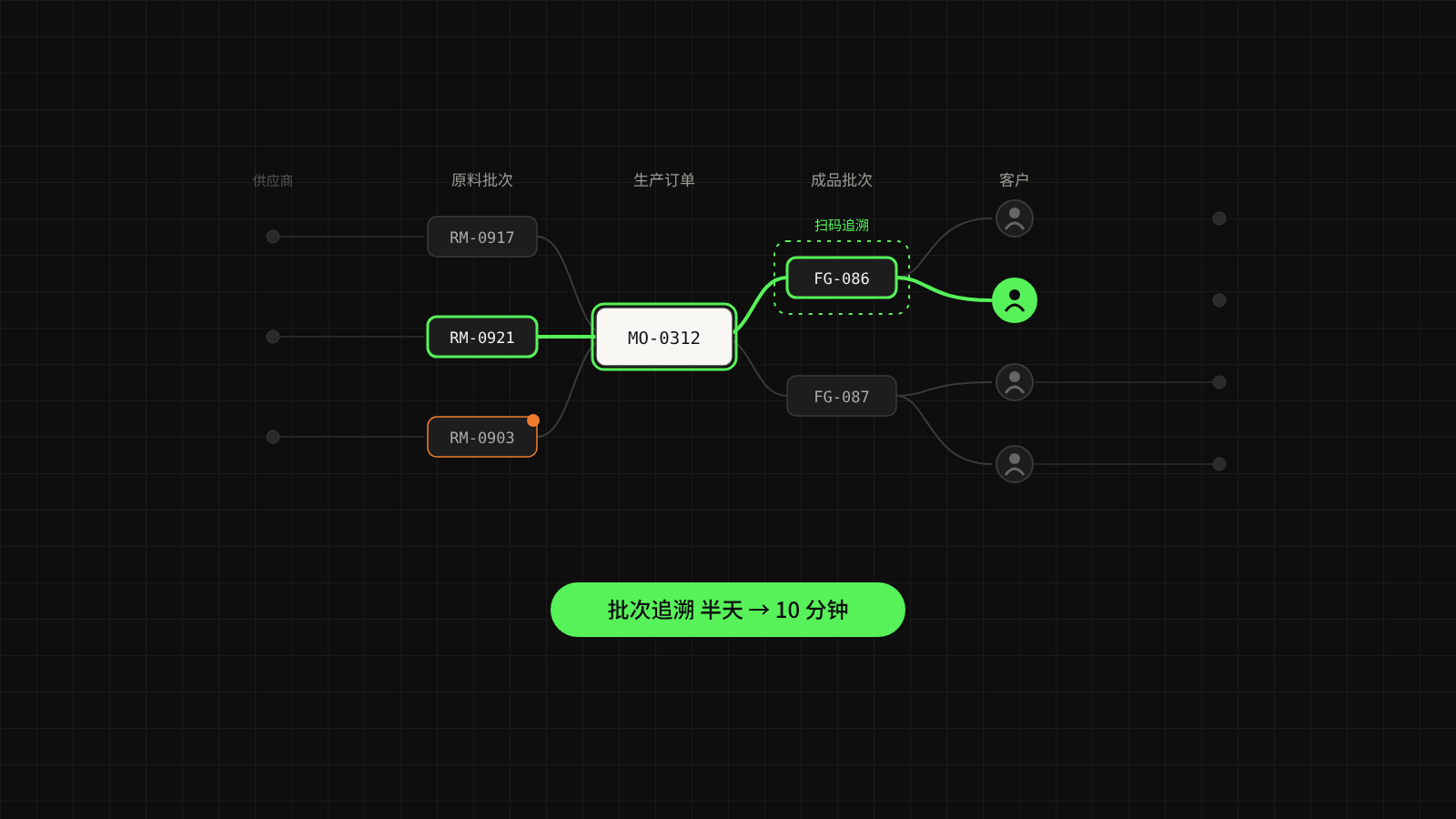
Batch Traceability Cut from Half a Day to 10 Minutes, with Every Batch Accounted For
A multi-category food manufacturer linked purchasing, production, warehousing and sales delivery into a single data chain. Any finished-goods batch can now be traced back to its raw material sources and forward to its customers, and batch traceability has dropped from about half a day to under 10 minutes.
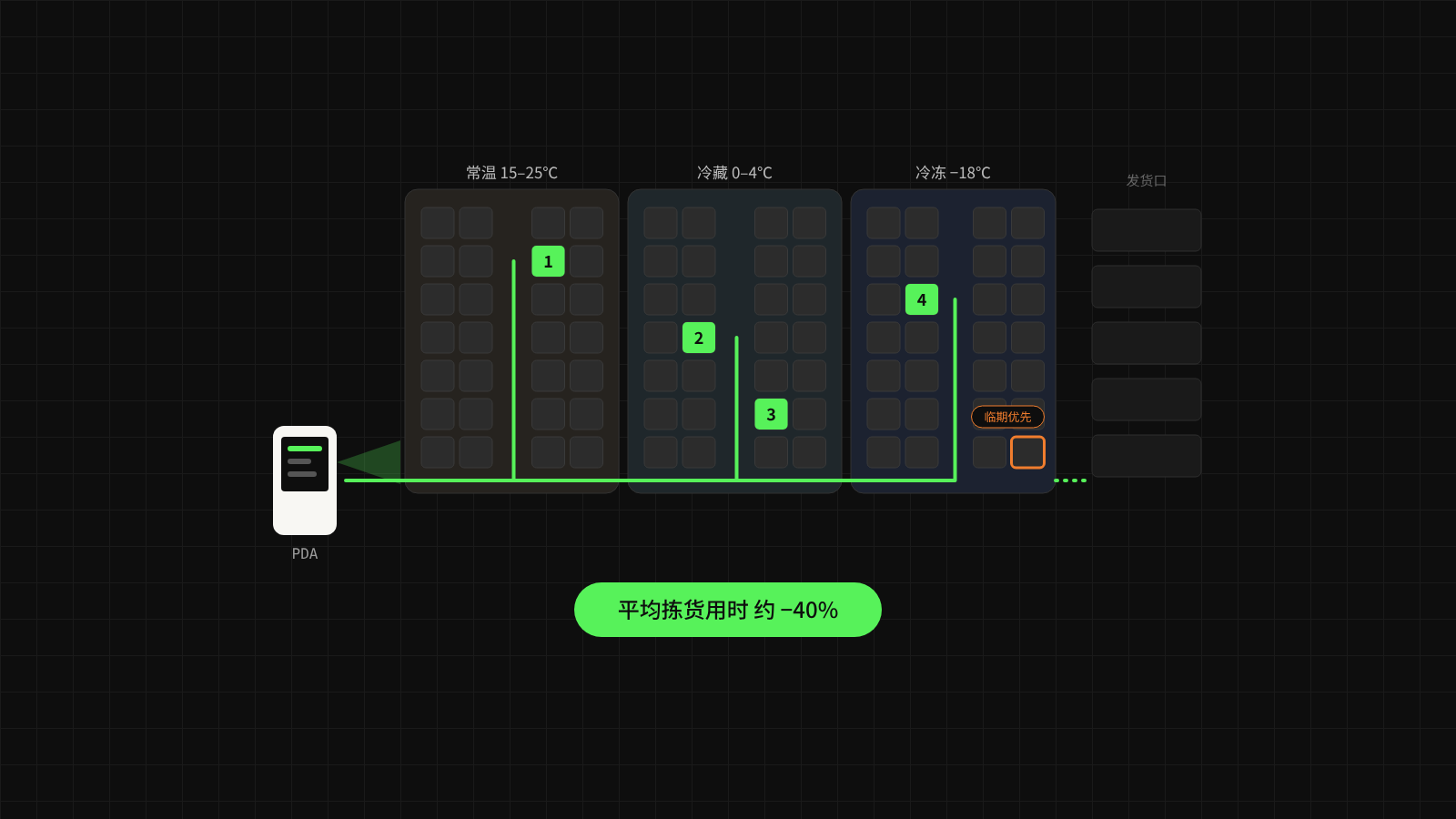
Three-Temperature Inventory Tracked to the Bin, Average Picking Time Down About 40%
A wholesaler of ambient, chilled and frozen food tracked inventory down to bin location and batch, used PDAs for receiving, replenishment and picking, and dispatched stock on a first-expired, first-out basis. Average picking time fell by about 40%, and the value of stock nearing expiry dropped significantly.
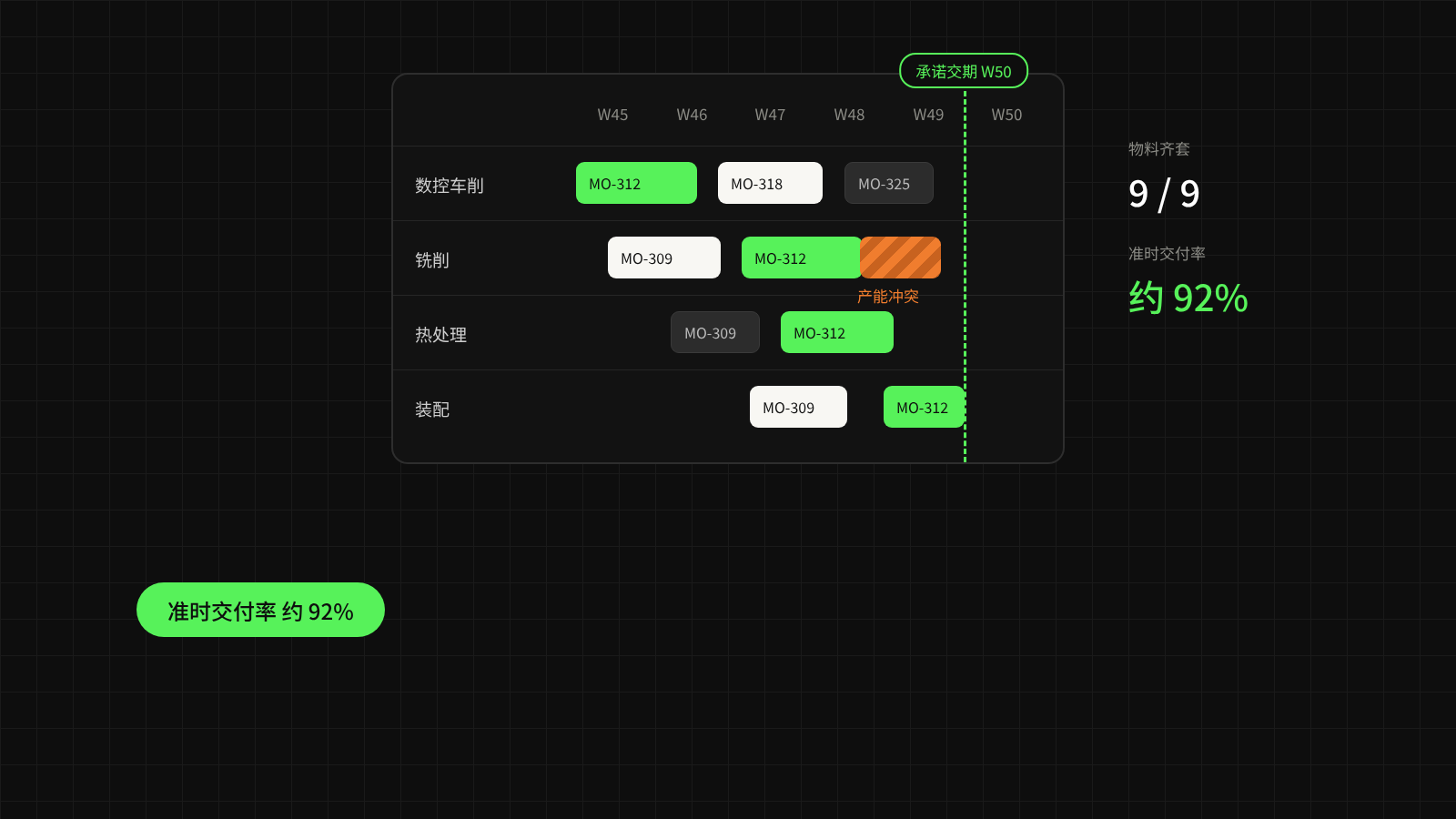
Sales Orders Drive the Production Plan Directly, Lifting On-Time Delivery to About 92%
A high-mix, low-volume machining company let sales orders drive material requirements and capacity checks directly, with shop-floor terminals reporting progress in real time. Delivery promises are now grounded in data, on-time delivery rose from about 75% to about 92%, and stoppages due to material shortages fell markedly.