Case Studies · Engineering consultancy and professional services firm
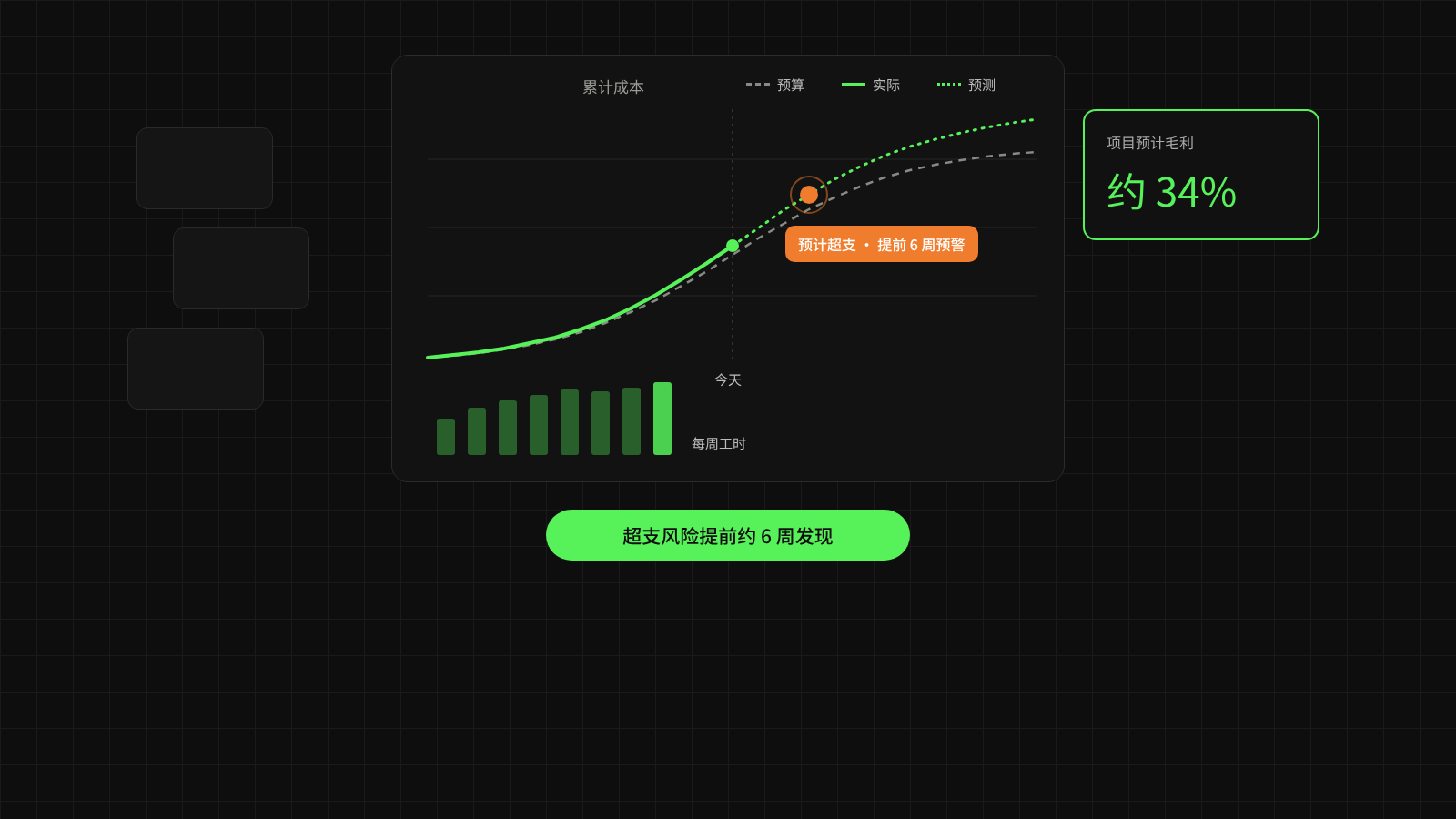
Project profit visible at any time, with overruns spotted about 6 weeks earlier
A professional services firm running a large number of client projects in parallel connected opportunities, contracts, project budgets, timesheets and invoicing. Project managers can now follow cost and profit trends at any time, and overrun risks are identified on average about 6 weeks earlier.
The company provides engineering consulting, technical implementation and professional services to corporate clients. Its project teams kept growing, and so did the number of client projects running at the same time.
Sales managed opportunities in a CRM, project managers planned work in a separate task tool, staff logged hours in Excel, and finance managed project revenue from contracts and invoices.
Each tool did its own job, but none of them could show the true commercial position of a project while it was being delivered.
The company knew how much it had signed, but not necessarily how much labour cost each project had already consumed, how much work remained, or whether it would ultimately hit its target margin.
When signing, salespeople usually estimate the person-days and delivery costs a project will require.
During delivery, however, changing requirements, extra coordination, rework and scope creep can push actual costs steadily away from budget.
Timesheet data did not support management decisions
Hours were logged mainly for administrative reporting and were not fully linked to project phases, tasks or cost centres.
Revenue recognition was detached from delivery progress
Some projects were billed by milestone, some at a fixed price, and others on actual time spent.
Without a common way of managing these different commercial models, finance found it hard to assess unbilled revenue and true project profitability in good time.
SHEPHARD's digital solution
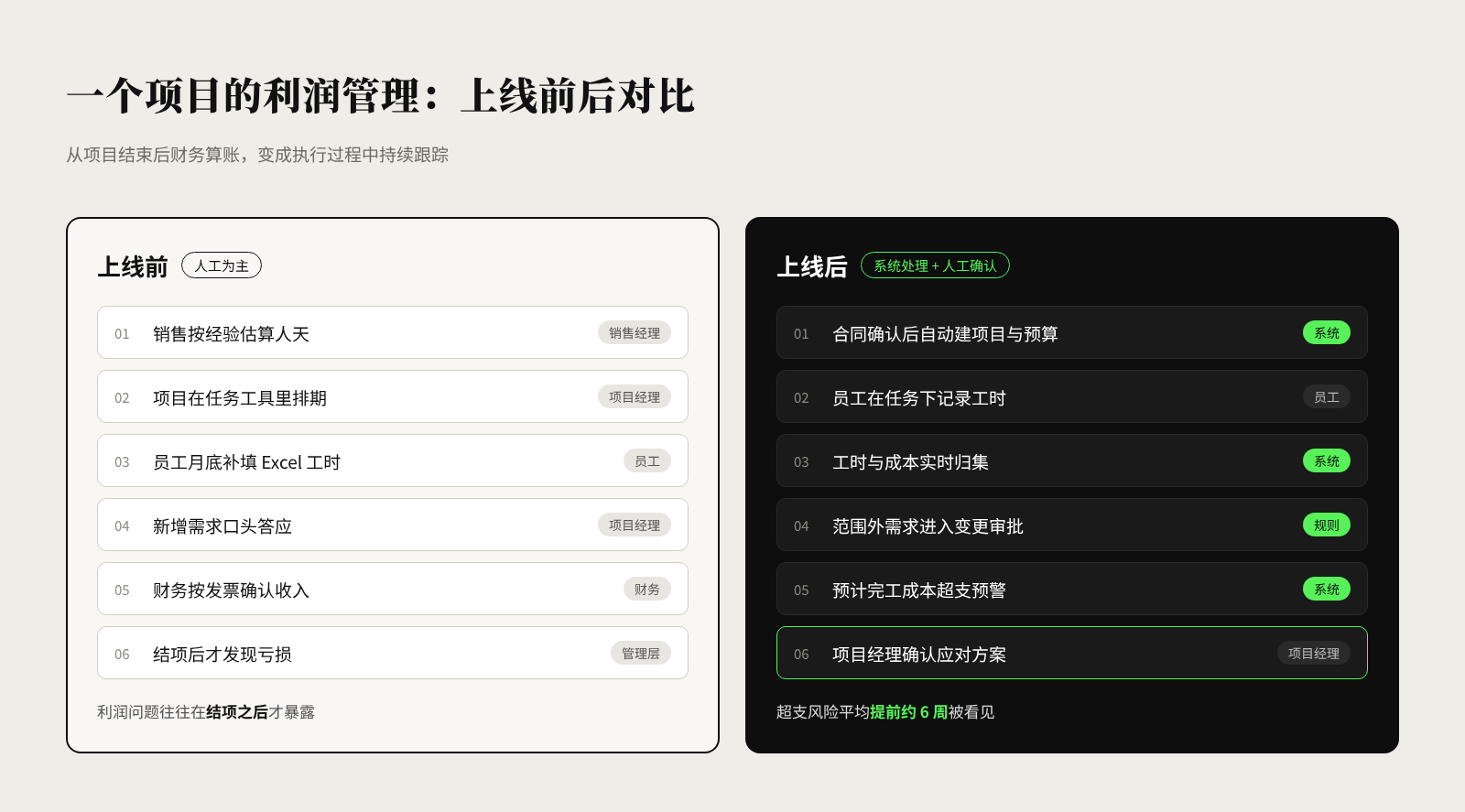
Managing profit on a single project: before and after go-live
Step 1: Unify the process from sale to project
We linked CRM opportunities, client contracts, quotes, projects and delivery tasks.
Once a contract is confirmed, the matching project structure, delivery phases and budget are created according to project type.
Step 2: Build a project cost model
A project costing framework was built from staff roles, hourly cost rates, external supplier fees, travel and other direct expenses.
It distinguishes between budgeted cost, cost incurred to date and estimated cost at completion.
Step 3: Introduce task and time management
Staff record the time they actually spend against project tasks.
Project managers approve the hours, ensuring the records reflect real project activity.
Fixed-price and time-and-materials projects follow different billing and profitability rules.
Step 4: Put change and scope management in place
Requests outside the contracted scope go through a change request, effort estimate and approval process.
Additional work is tied to the corresponding commercial agreement, so project teams are less often left absorbing new work for free.
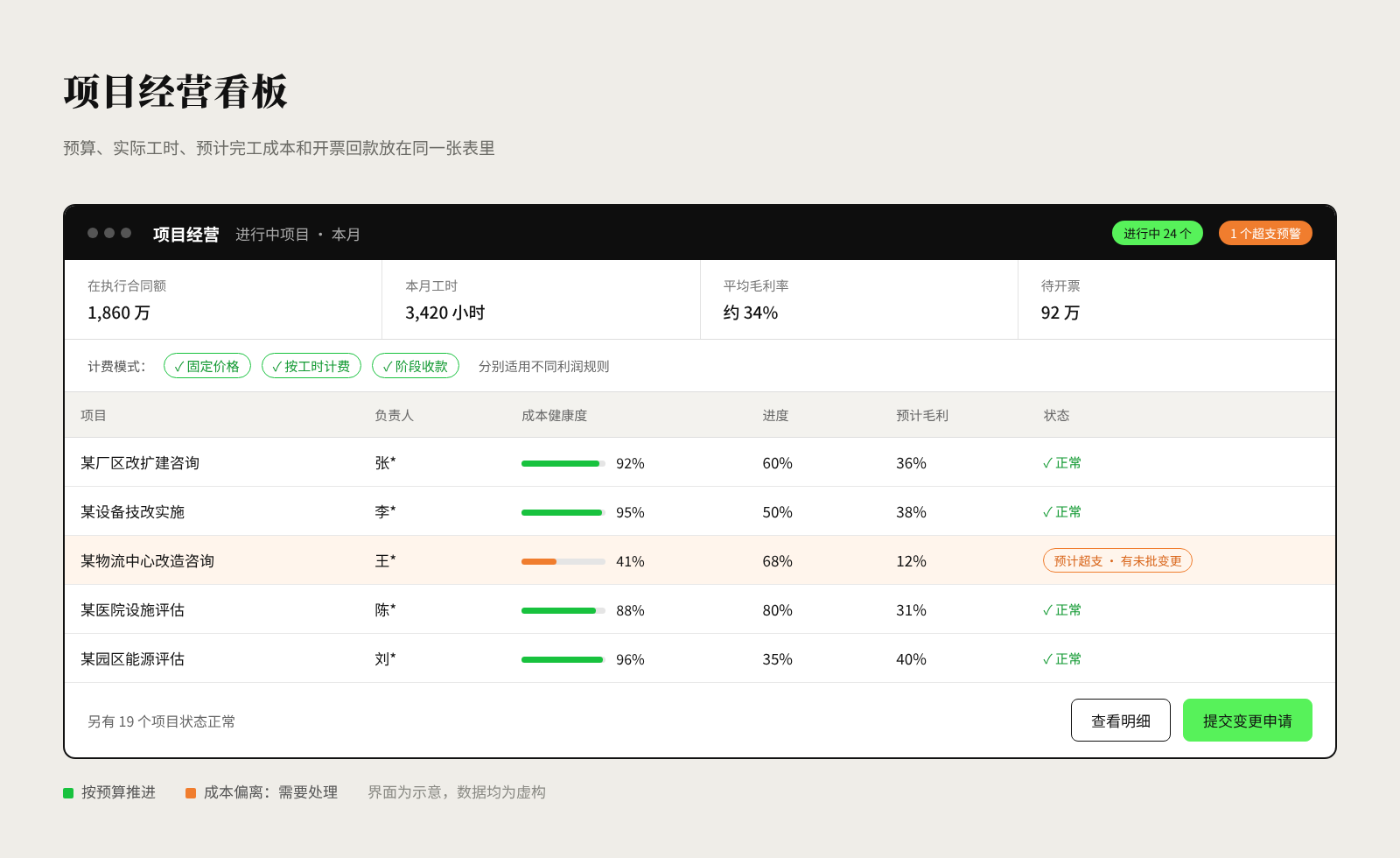
Step 5: Build a project performance dashboard
The dashboard brings together budget, actual hours, cost incurred, remaining effort, invoicing and collections to show where each project currently stands.
Owners are alerted proactively to cost overruns, schedule slippage and change requests that have not yet been commercially agreed.
Project performance dashboard (illustrative interface; all data fictitious)
Implementation approach
We first established a single, consistent relationship between contracts, projects and cost centres.
Time recording and project budgeting went live next, followed by project performance analysis.
Before any profit is calculated, the allocation of staff costs, overheads and revenue recognition rules has to be agreed with the finance team.
Business value
Project managers no longer manage only the schedule; they also manage delivery cost and commercial risk.
Management can identify projects with deteriorating margins early, instead of discovering budget overruns only once a project has closed.
In a professional services firm, the core productive resources are people's time and expertise.
Only when project, people, contract and financial data are truly connected can a firm move from managing tasks to managing the economics of its projects.
*To protect client confidentiality, company details in this case study have been anonymised; screenshots are illustrative and results are rounded approximations.*
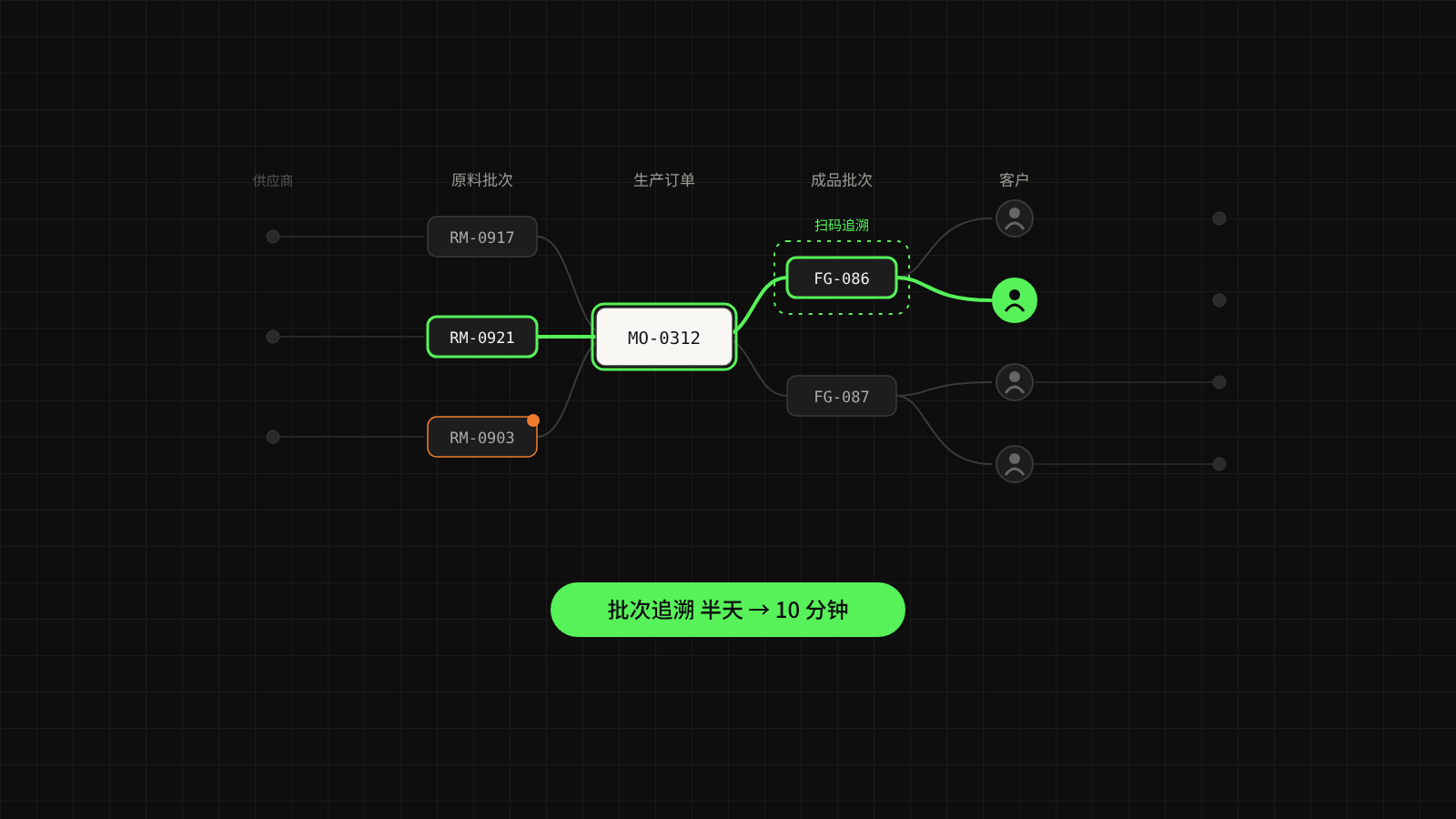
Batch Traceability Cut from Half a Day to 10 Minutes, with Every Batch Accounted For
A multi-category food manufacturer linked purchasing, production, warehousing and sales delivery into a single data chain. Any finished-goods batch can now be traced back to its raw material sources and forward to its customers, and batch traceability has dropped from about half a day to under 10 minutes.
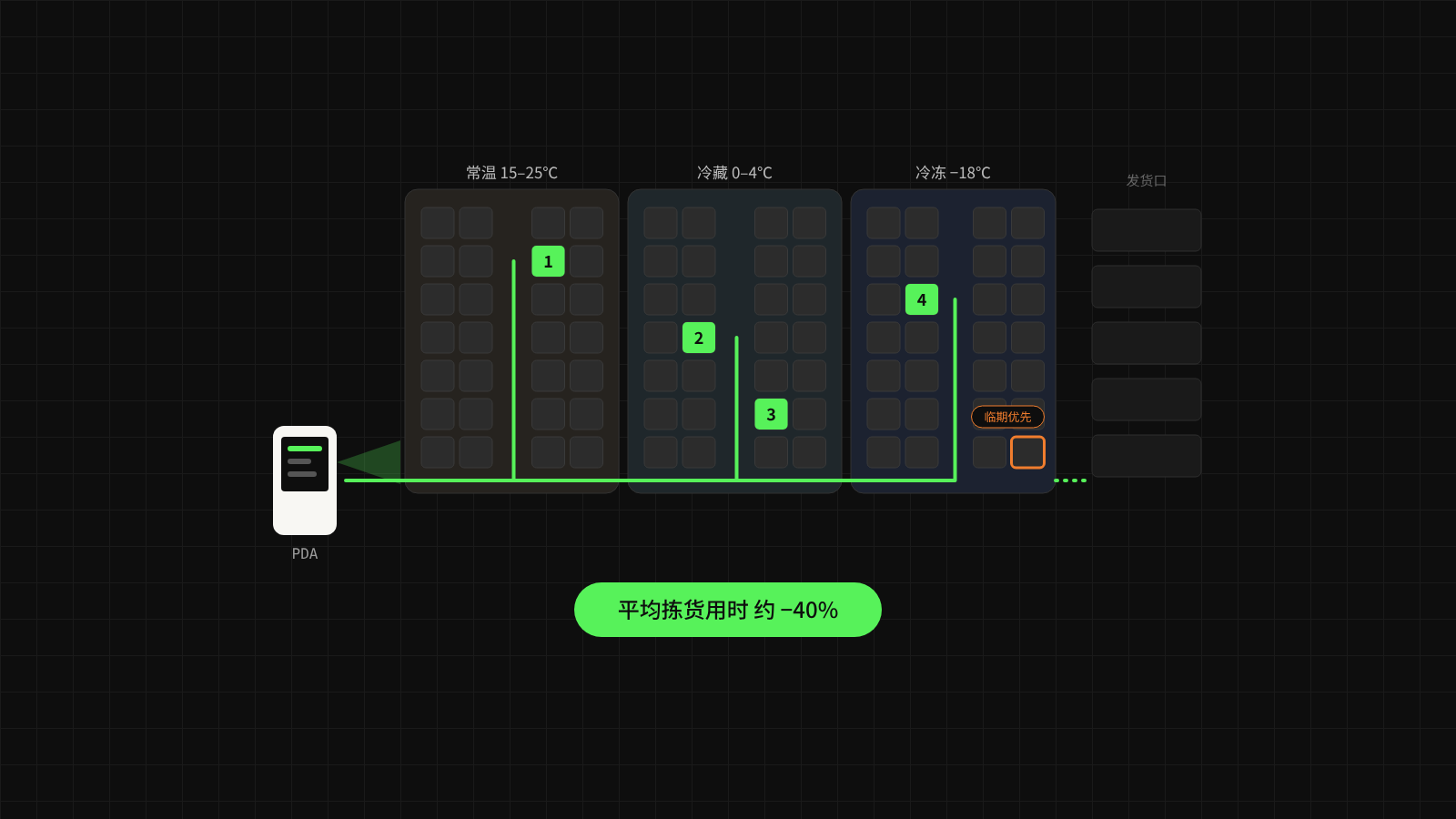
Three-Temperature Inventory Tracked to the Bin, Average Picking Time Down About 40%
A wholesaler of ambient, chilled and frozen food tracked inventory down to bin location and batch, used PDAs for receiving, replenishment and picking, and dispatched stock on a first-expired, first-out basis. Average picking time fell by about 40%, and the value of stock nearing expiry dropped significantly.
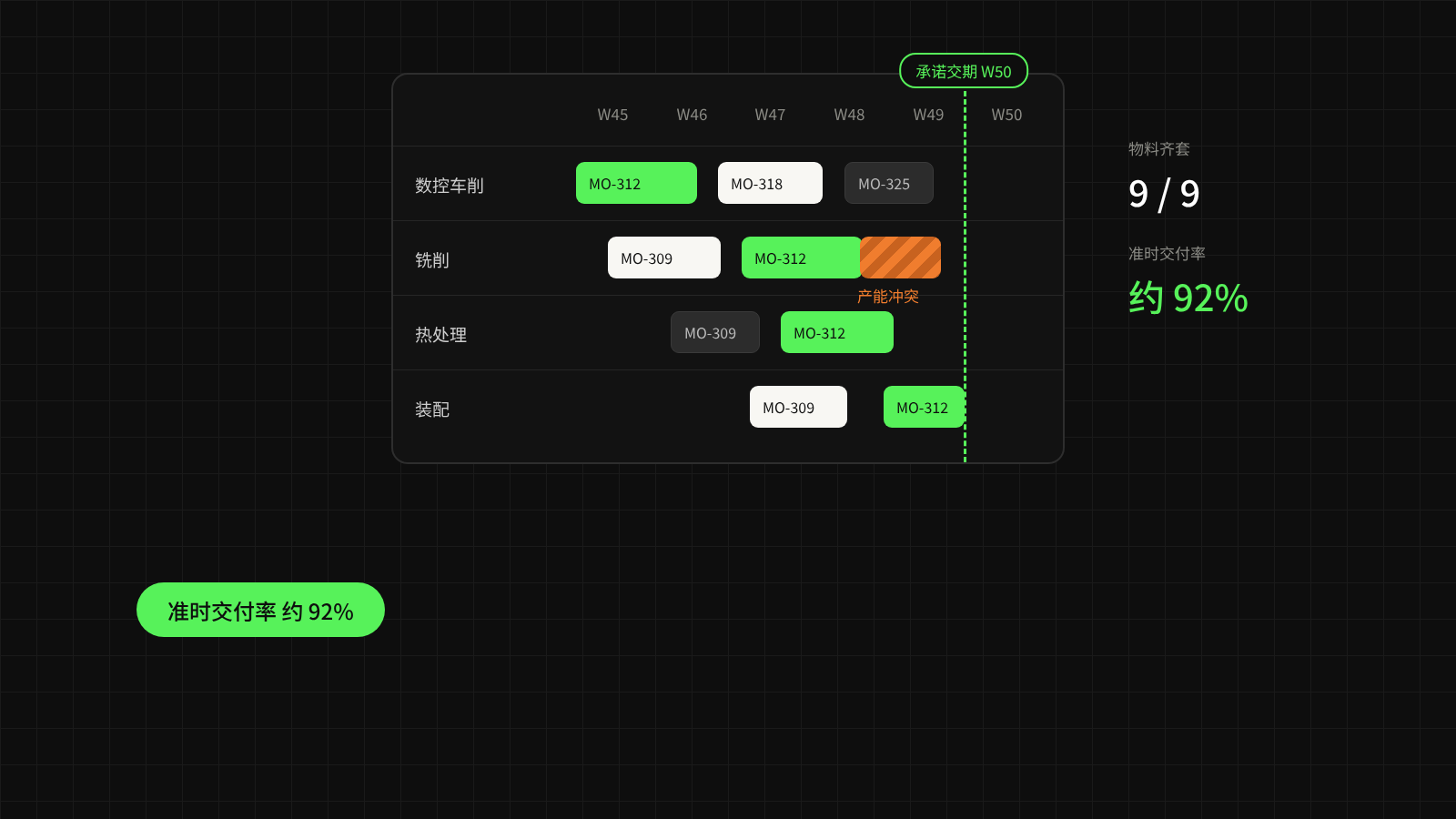
Sales Orders Drive the Production Plan Directly, Lifting On-Time Delivery to About 92%
A high-mix, low-volume machining company let sales orders drive material requirements and capacity checks directly, with shop-floor terminals reporting progress in real time. Delivery promises are now grounded in data, on-time delivery rose from about 75% to about 92%, and stoppages due to material shortages fell markedly.